How TEMU and SHEIN Are Reshaping Global Supply Chains With New Models of Speed and Efficiency

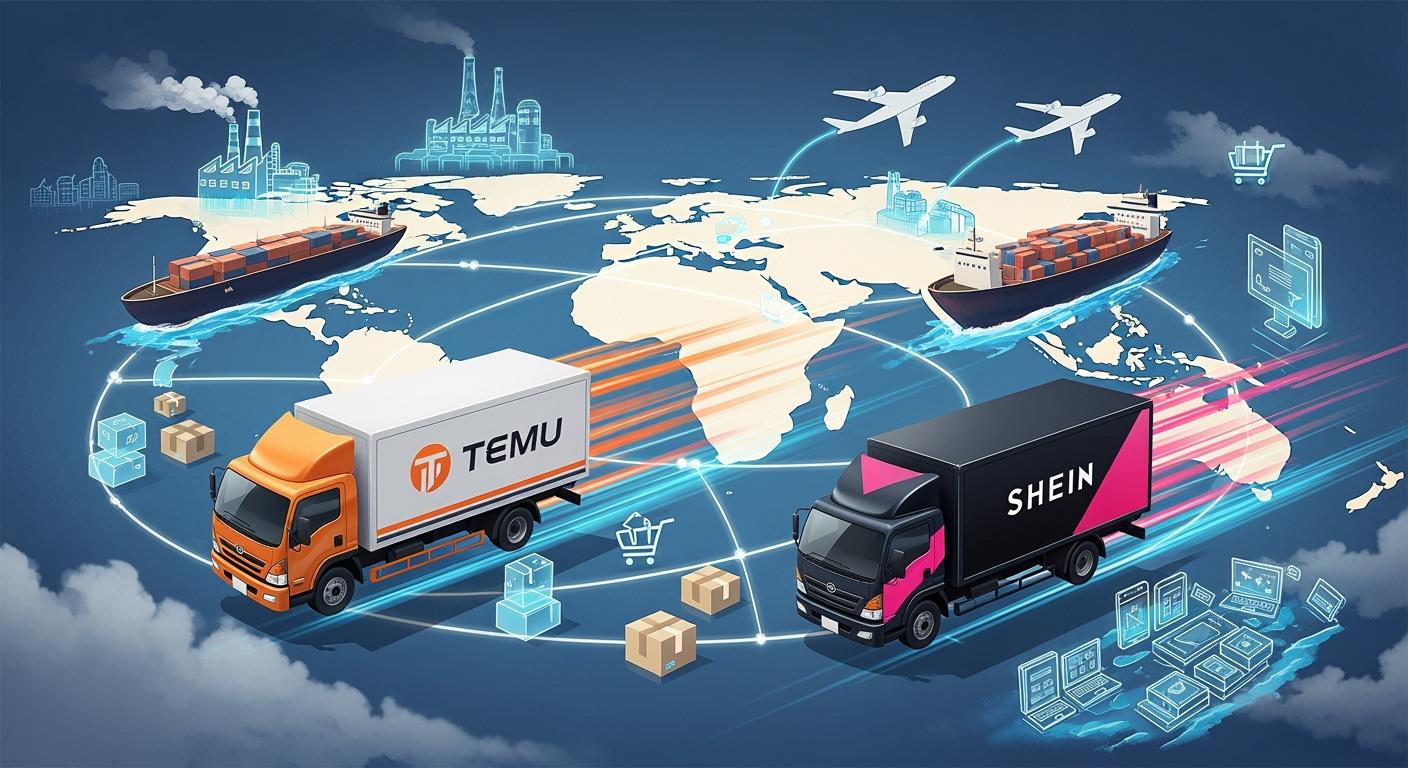
TEMU and SHEIN drive a new era of speed and efficiency in global supply chains. Their impact is clear in the numbers:
Metric | Volume | Comparison to Competitors |
|---|---|---|
Inventory Dispatch | 4x AliExpress | |
Package Shipments | 1.6M daily | 5x TikTok Shop |
Annual Packages | 584M | 20% below Shein |
Delivery Time | Longer | Below Amazon |
These companies stand out by using direct supplier connections and innovative fulfillment models. TEMU’s half-custody policy and SHEIN’s direct-to-consumer approach redefine logistics, making rapid delivery and flexible inventory possible.
Key Takeaways
TEMU and SHEIN revolutionize supply chains with real-time sourcing and production, reducing waste and aligning production with actual demand.
Small-batch production allows for quick responses to market trends, minimizing inventory risk and enabling rapid adjustments based on sales data.
Dynamic supplier collaboration enhances resilience, allowing companies to adapt to market changes and regulatory challenges effectively.
JUSDA's logistics innovations, like the China-Europe Express Rail, provide efficient cross-border delivery, balancing speed and cost for global e-commerce.
AI-driven tools like JusLink improve forecasting accuracy and inventory management, helping companies avoid stockouts and optimize operations.
Ultra-Fast Supply Chains: The TEMU and SHEIN Model
Real-Time Sourcing and Production
TEMU and SHEIN have transformed global supply chains by implementing real-time sourcing and production strategies. Their on-demand business model aligns production closely with demand signals. This approach minimizes waste and reduces the risk of overproduction. They diversify sourcing by building partnerships in alternative markets such as India and Vietnam. This strategy lowers dependency on Chinese suppliers and increases supply chain resilience.
Both companies utilize digital supplier management systems. These platforms provide real-time insights into supplier performance and inventory levels. Accurate production planning becomes possible when companies have immediate access to data. The result is a supply chain that responds quickly to market changes and consumer preferences.
Key features of their real-time sourcing and production model include:
On-demand manufacturing that matches production with actual sales data.
Strategic partnerships in multiple countries to ensure supply continuity.
Digital platforms that enable instant communication and decision-making.
This model allows TEMU and SHEIN to maintain agility and efficiency in a highly competitive market.
Rapid Design-to-Shelf Cycles
Speed defines the design-to-shelf cycles at TEMU and SHEIN. These companies compress the timeline from product conception to market launch. Suppliers play a critical role in this process. High on-time delivery rates and frequent reorders indicate strong supplier performance.
The following table highlights supplier metrics that support rapid cycles:
Supplier Name | On-Time Delivery | Reorder Rate |
|---|---|---|
Shenzhen Zheshijia Clothing Co., Ltd. | 99.5% | 24% |
Nantong Youzi Environmental Protection Tech | 98.5% | 12% |
Fuzhou Linghuancai Trading Co., Ltd. | 100.0% | 7% |
Yuanyang Jiayun Department Store Co., Ltd. | 97.4% | 31% |
Shenzhen Yannisfashion Commerce Co., Ltd. | 98.4% | 14% |
Quanzhou Minshan Import And Export Trading | 94.2% | 12% |
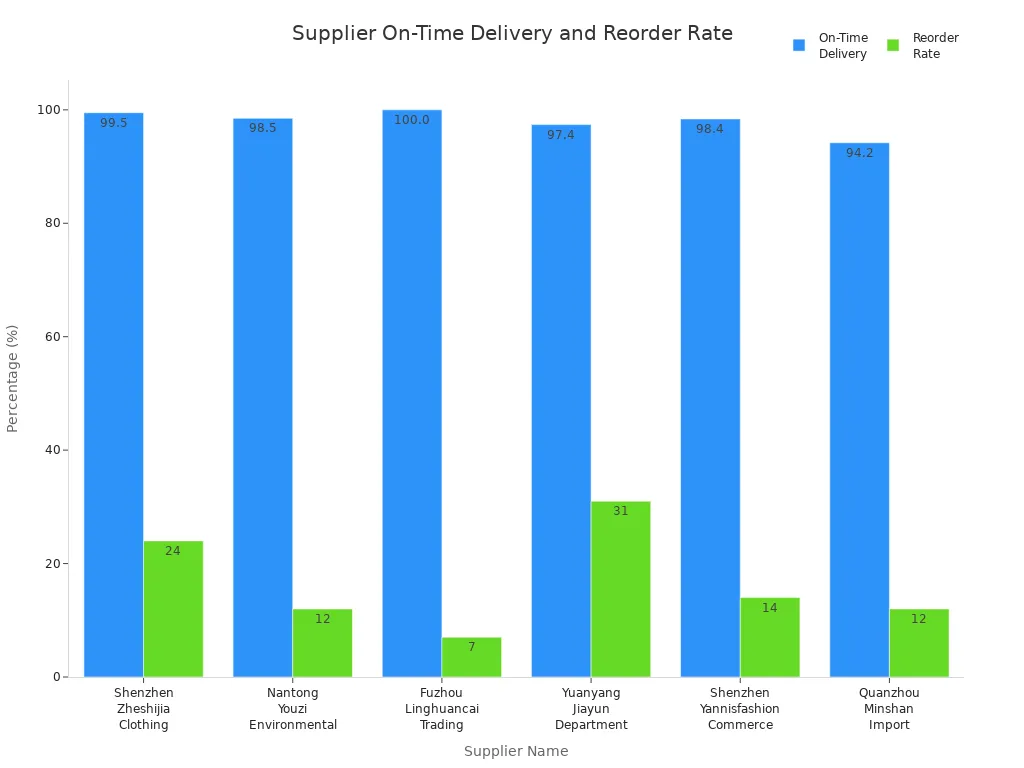
Suppliers consistently deliver products on time, which supports fast inventory turnover. High reorder rates reflect the ability to replenish popular items quickly. TEMU and SHEIN leverage these supplier relationships to introduce new products at a pace unmatched by traditional retailers.
Note: Rapid cycles enable companies to respond to fashion trends and consumer demands almost instantly. This agility sets a new standard for speed and efficiency in global supply chains.
Flexible Manufacturing and Supplier Networks
Small-Batch Production
SHEIN and TEMU have redefined supply chain flexibility by embracing small-batch production. This approach allows them to respond quickly to market trends and consumer preferences. SHEIN, which began as a wedding dress retailer, now leads fast fashion by launching products in limited quantities—often between 100 and 200 units per design. They track real-time sales data to evaluate product performance. Successful designs scale up, while underperforming items are discontinued. This strategy reduces waste and minimizes inventory risk.
Small-batch production supports a flexible cooperation model, especially for smaller merchants. The process involves micro-batch testing and responsive restocking. Companies can adjust inventory rapidly based on consumer demand. Key benefits include:
Low waste and reduced inventory risk through micro-batch testing.
Quick adjustments to product offerings based on real-time sales data.
Enhanced supply chain flexibility with a test-and-restock strategy.
Other fast fashion leaders, such as H&M and Zara, also use AI and just-in-time inventory systems to predict customer behavior and manage limited order production. SHEIN’s real-time supply chain adjustments set a benchmark for responsiveness.
Dynamic Supplier Collaboration
TEMU and SHEIN maintain supply chain resilience through dynamic supplier collaboration. They adapt pricing and fulfillment planning in response to changing market conditions, such as increased operating costs from U.S. tariff policies. Both companies have shifted market strategies by reducing advertising expenditures and exploring alternative fulfillment models. Regional distribution centers help mitigate tariff exposure and customs complexity.
SHEIN invites suppliers to list directly on its U.S. site, transferring customs liability and diversifying production through agreements with Vietnamese factories. Adjusted pricing strategies help manage consumer perception and maintain sales. TEMU upgrades logistics by removing China-origin listings and contracting with local suppliers to fill its app with domestically warehoused goods. A hybrid checkout system transparently communicates duties to customers.
Dynamic supplier collaboration enables rapid adaptation to regulatory changes and market demands. This agility strengthens supply chain resilience and supports global expansion.
Logistics Innovation: JUSDA and China-Europe Express Rail
Efficient Cross-Border Delivery
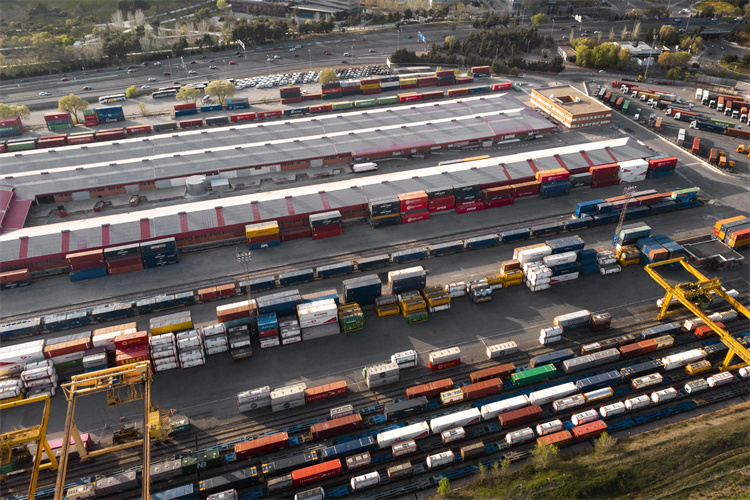
JUSDA has transformed cross-border logistics with its China-Europe Express Rail service. This rail network connects major cities in China with key destinations in Europe. The service offers a balanced solution between speed and cost. Goods can move from China to Europe in 15 to 20 days, which is much faster than sea freight and more affordable than air transport. Companies that rely on rapid market response, such as TEMU, benefit from this reliable delivery schedule. The rail service supports a wide range of products, including electronics, clothing, and medical supplies. JUSDA’s expertise in customs operations ensures that shipments move smoothly across borders, reducing the risk of delays. The rail network also supports intermodal solutions, connecting Southeast Asian markets to Europe through China. This flexibility helps global e-commerce companies maintain steady inventory levels and meet customer expectations for fast delivery.
Warehouse Solutions for Global E-Commerce
JUSDA supports global e-commerce with advanced warehouse solutions. In Vietnam, JUSDA operates bonded warehouses in major industrial provinces. These facilities cover 130,000 square meters and meet international standards. The warehouses feature dual-layer security and a multilingual professional team. Strict management processes improve operational efficiency and accuracy. These features are essential for companies that need to process large volumes of orders quickly and reliably. By shifting to a model where goods are pre-stocked in overseas warehouses, companies like TEMU can fulfill orders faster. Products are available for immediate shipping, which reduces delivery times and shipping errors. Localized warehousing also allows for quicker returns and fewer customs delays. Multi-warehouse fulfillment strategies store inventory closer to customers, cutting shipping times and costs. JUSDA’s warehouse network gives e-commerce businesses the tools they need to compete in a fast-paced global market.
Digital Supply Chain: JusLink and AI Integration
AI-Driven Forecasting and Inventory
JUSDA’s JusLink platform brings advanced AI-driven forecasting and inventory management to global supply chains. JusLink uses deep learning algorithms to analyze historical sales data and market trends. This approach enables companies to predict demand with high accuracy and adjust inventory levels dynamically. JusLink’s intelligent replenishment system helps businesses avoid overstocking and stockouts. The platform generates automated replenishment suggestions and triggers real-time inventory updates.
The impact of AI integration is clear. Companies using JusLink have seen significant improvements in supply chain performance. The following table highlights measurable gains:
Improvement Type | Percentage/Value |
|---|---|
Reduction in stockouts | Up to 65% |
Reduction in forecasting errors | 20-50% |
Reduction in logistics costs | 15% |
Improvement in service levels | 65% |
Improvement in forecast accuracy | 85% |
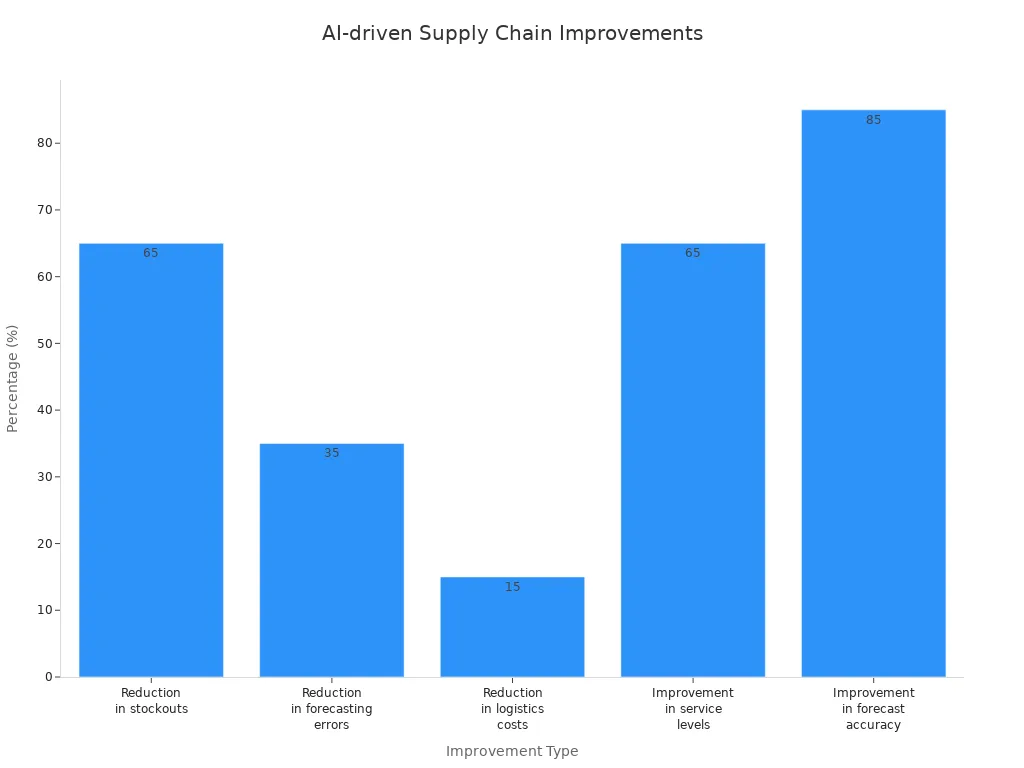
JusLink’s AI capabilities support global manufacturing and finished goods delivery, giving companies the tools to optimize supply chain operations.
Real-Time Risk Management
JusLink’s Control Tower Intelligent Risk Management system monitors supply chain risks in real time. The platform integrates external data sources and uses intelligent algorithms to detect disruptions and provide early warnings. JusLink’s AI agents help users track shipments, assess risks, and respond to exceptions quickly. This proactive approach reduces operational losses and ensures supply chain stability.
TEMU and SHEIN also use digital platforms to manage supply chain risks, but JusLink stands out with its comprehensive AI-powered solution. JusLink’s microservices architecture allows for customization, making it adaptable to different business scenarios. The integration of DeepSeek’s natural language processing enhances user interactions and streamlines complex operations.
JUSDA’s digital supply chain model sets a benchmark for visibility, forecasting, and risk control. Companies gain full transparency and control over their supply chains, supporting efficient global expansion.
Customs and Compliance: JusTrade and Global Expansion
Navigating Tariffs and Regulations
JusTrade delivers streamlined customs clearance for global e-commerce companies. Its intelligent SAAS platform integrates AI algorithms and big data analysis, connecting procurement, logistics, customs declaration, warehousing, and finance. This system enables rapid matching of clients with optimal customs solutions, reducing manual errors and improving efficiency. JusTrade’s expertise in handling complex customs operations supports companies as they expand into new markets.
TEMU and SHEIN encounter significant regulatory challenges during global expansion. These challenges include compliance with safety standards, customs regulations, data privacy, and localization efforts. The table below summarizes the main obstacles:
Regulatory Challenge | Description |
|---|---|
Compliance with Safety Standards | Concerns over product safety and adherence to EU Digital Services Act |
Removal of 'de minimis' tariff exemption in the US, requiring logistics adjustments | |
Data Privacy Issues | Investigations regarding user data handling in multiple jurisdictions |
Product Safety Issues | Reports of non-compliant products leading to regulatory actions |
Localization Efforts | Establishing local warehouses and recruiting sellers to meet regulations |
JusTrade’s platform addresses these challenges by offering real-time tracking, automated compliance checks, and seamless communication between all supply chain stakeholders. Companies benefit from reduced delays and optimized logistics, which are essential for maintaining competitiveness in international markets.
Ensuring Transparency and Trust
Transparency and trust have become critical in global supply chains. JusTrade enhances transparency through continuous audits, clear communication, and proactive compliance measures. Its digital platform provides real-time insights and analytics, allowing businesses to monitor customs processes and ensure regulatory compliance.
Regulatory bodies in the EU and US demand greater accountability from e-commerce platforms. They require companies to clarify product origins and manufacturing conditions. The table below highlights transparency challenges:
Issue | Description |
|---|---|
Regulatory Compliance | Platforms must ensure algorithmic product compliance to build digital trust |
Transparency Challenges | Lack of proper digital transparency protocols raises concerns about oversight and monitoring |
JusTrade’s commitment to transparency strengthens consumer trust and supports ongoing compliance. Regular audits and continuous training help companies meet evolving regulatory standards. As consumer awareness grows, transparency initiatives become essential for building lasting trust and supporting sustainable global expansion.
Market Impact and Future Trends
Setting New Standards in Speed and Efficiency
Shein and TEMU have set new benchmarks for speed and efficiency in global supply chains. Shein's Xcelerator program allows third-party brands to transform designs into finished products within five to seven days. This initiative supports emerging designers and enables rapid scaling of successful products. Shein diversifies its revenue streams and strengthens resilience against global trade volatility. TEMU has reported a doubling of pre-tax profits in the EU, reaching nearly 120 million dollars. This growth demonstrates improved operational efficiency and deeper market penetration.
Companies now recognize the importance of agility and responsiveness. The following list highlights how leading platforms have raised industry standards:
Shein's production system accelerates design-to-market cycles.
TEMU's profit growth signals operational excellence.
Emerging designers gain access to advanced distribution networks.
These achievements encourage other businesses to adopt similar models, driving industry-wide improvements.
The Role of Innovation in Global Supply Chains
Ongoing innovation remains essential for maintaining a competitive edge. TEMU adapts quickly to changing trade environments by decentralizing its supply chain. The company prioritizes local fulfillment and shifts to U.S.-based vendors, reducing shipping costs and delivery times. Shein and TEMU optimize logistics and leverage technology to enhance customer experience.
Technological advancements continue to transform supply chain management. Companies use artificial intelligence to accelerate sourcing and transactions. Advanced data analytics integrate multiple data sources, improving decision-making. IoT devices enable real-time monitoring and predictive maintenance, enhancing planning and reliability.
Industry leaders such as Amazon, Unilever, and Walmart have adopted automation, digital twin technology, and AI-driven inventory management. Blockchain platforms like OpenSC and TradeLens improve transparency and traceability. These innovations set new standards for efficiency and sustainability in global supply chains.
Note: Companies that embrace innovation and technology will shape the future of global commerce, setting new expectations for speed, transparency, and customer satisfaction.
TEMU and SHEIN have set new benchmarks for speed and efficiency in global supply chains. JUSDA’s China-Europe Express Rail, advanced warehouse network, JusLink’s AI-driven management, and JusTrade’s customs platform exemplify these trends. The future of global commerce will rely on technological advancements, last mile logistics, and optimized freight utilization.
Implication | Description |
|---|---|
Technological Advancements | AI and digital tools reshape supply chain operations. |
Last Mile Logistics | Faster delivery improves customer satisfaction. |
Freight Utilization | Efficient freight use reduces costs and environmental impact. |
Organizations must build adaptive, digitally enabled supply networks.
Automation and AI streamline operations and enhance decision-making.
Blockchain technology increases transparency and trust.

JUSDA Solutions
To provide you with professional solutions and quotations.
FAQ
What makes JUSDA’s China-Europe Express Rail service unique?
JUSDA’s China-Europe Express Rail offers door-to-door delivery in 15–20 days. The service balances speed and cost, making it faster than sea freight and more affordable than air freight. It supports electronics, clothing, and medical supplies.
How does JusLink improve supply chain forecasting?
JusLink uses AI-driven algorithms to analyze sales data and market trends. The platform predicts demand accurately and adjusts inventory levels in real time. Companies reduce stockouts and improve forecast accuracy by up to 85%.
What industries benefit most from JUSDA’s warehouse solutions?
JUSDA’s warehouses serve electronics, automotive, FMCG, new energy, and medical health sectors. Facilities offer advanced inventory tracking, clean rooms, and value-added services. Companies gain efficiency and transparency in global logistics.
How does JusTrade simplify customs clearance for global e-commerce?
JusTrade’s SAAS platform integrates AI and big data. The system connects procurement, logistics, customs, and finance. Companies experience faster, more accurate customs clearance and real-time tracking across 35 locations in China and 20 countries.
What are the main advantages of JusLink’s AI Intelligent Agents?
Capability | Benefit |
|---|---|
Material Preparation | Optimizes procurement plans |
Delivery Stocking | Ensures timely product supply |
Risk Management | Detects and responds to risks |
JusLink’s AI agents help companies manage inventory, logistics, and risks efficiently.
See Also
Transforming Industries Through Innovative Cloud Supply Chain Solutions
Enhancing Supply Chain Efficiency With AI Innovations
Addressing Global Supply Chain Growth Challenges Effectively