Towards net zero land freight

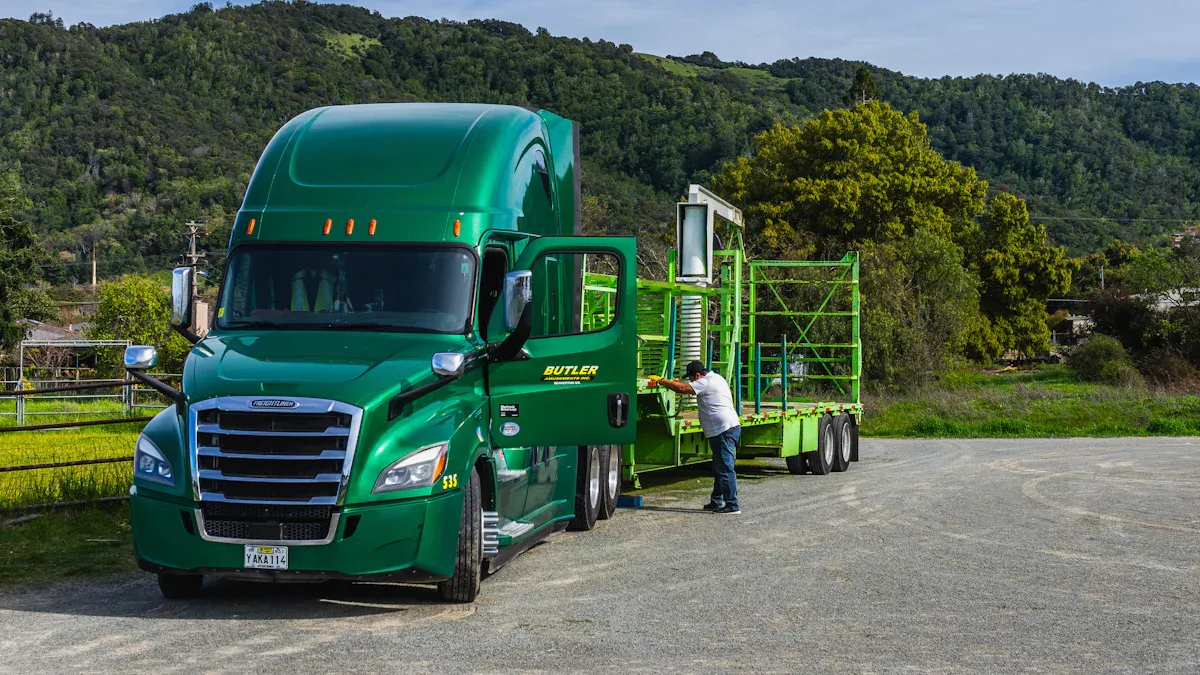
Land freight plays a pivotal role in global carbon emissions, making its decarbonization essential to combating climate change. In 2022, the transportation sector generated 29% of total U.S. greenhouse gas emissions, with medium- and heavy-duty trucks contributing 23%. These figures highlight the immense environmental footprint of freight operations. Transitioning this sector to net zero demands addressing interconnected challenges, such as fossil fuel dependency and outdated infrastructure. However, this transformation also presents opportunities. Advancements in technology and collaborative efforts among stakeholders could revolutionize the industry, driving sustainable solutions on a global scale.
Key Takeaways
Cutting pollution from land freight is very important. It adds a lot to greenhouse gases, so we must act now to help the environment.
Using clean vehicles and fuels like hydrogen and biofuels can help. These are good ways to lower freight pollution to zero.
Governments, businesses, and groups need to work together. Programs like Net Zero Freight Systems can bring new ideas and set rules for all areas.
Building things like charging stations and using green energy is needed. These will help make freight systems better for the planet.
Mixing technology, planning, and rules is the best way to cut emissions. This will make land freight cleaner and safer for the future.
Challenges in Achieving Net Zero in Land Freight
The scale and complexity of the land freight sector
The land freight industry operates as a vast and intricate network, spanning continents and involving diverse stakeholders. Its complexity stems from the sheer volume of goods transported, the variety of vehicles used, and the regional differences in infrastructure and regulations. The global freight forwarding market, for instance, is projected to grow at a compound annual growth rate (CAGR) of 4.6% from 2023 to 2030, reaching USD 285.60 billion by the end of the decade.
Regional dynamics further illustrate this complexity. Asia-Pacific, which held the largest market share in 2022, continues to expand due to rapid urbanization and infrastructure development in countries like China. Meanwhile, North America and Europe face unique challenges related to aging infrastructure and stringent environmental regulations. These regional disparities highlight the need for tailored strategies to achieve net zero emissions in land freight.
The urgency of addressing this sector's emissions becomes evident when considering its disproportionate contribution to global carbon output. Heavy Goods Vehicles (HGVs), which account for only 5% of total road vehicles, are responsible for over 21% of CO2 emissions from transportation. With freight transport activities expected to nearly double by mid-century, the associated emissions will rise significantly unless immediate action is taken.
Dependence on fossil fuels and outdated infrastructure
The land freight sector remains heavily reliant on fossil fuels, with diesel-powered trucks dominating the industry. This dependence not only contributes to greenhouse gas emissions but also creates vulnerabilities to fluctuating fuel prices and supply chain disruptions. Despite advancements in alternative energy sources, the transition to cleaner fuels has been slow, hindered by the lack of widespread infrastructure to support technologies like electric and hydrogen-powered vehicles.
Outdated infrastructure compounds the problem. Many regions lack the charging stations, hydrogen refueling networks, and smart logistics systems needed to support a modern, low-carbon freight system. In addition, existing road networks and freight hubs were designed for traditional vehicles, making retrofitting a costly and time-consuming endeavor. Addressing these challenges requires significant investment in infrastructure upgrades and the adoption of innovative technologies.
Financial barriers to adopting sustainable technologies
The financial hurdles to decarbonizing land freight are substantial. High initial costs often deter companies from investing in sustainable technologies, even when long-term savings are evident. For smaller firms, the lack of access to green financing options exacerbates this issue, creating a disparity in the adoption of eco-friendly solutions.
A closer look at the financial barriers reveals several key challenges:
These financial barriers underscore the importance of policy interventions and incentives to accelerate the transition to net zero. Governments and private stakeholders must collaborate to create funding mechanisms, subsidies, and tax incentives that make sustainable technologies more accessible to all players in the freight industry.
Current Pathways to Net Zero Land Freight

Electrification and the shift to zero-emission vehicles
Electrification represents a transformative pathway toward achieving net zero emissions in land freight. Electric vehicles (EVs) and plug-in hybrid electric vehicles (PHEVs) offer significant environmental advantages over conventional diesel-powered trucks. When operating solely on electricity, EVs produce zero tailpipe emissions, making them a cleaner alternative for freight transport. Additionally, regions with low-polluting electricity sources amplify the life cycle emissions benefits of EVs, as these vehicles rely on cleaner energy inputs.
The adoption of zero-emission vehicles also addresses the broader environmental impact of freight operations. Life cycle emissions, which include fuel-cycle and vehicle-cycle emissions, are substantially lower for EVs compared to traditional vehicles. This reduction extends beyond the operational phase, encompassing production and end-of-life processes. As a result, electrification not only reduces greenhouse gas emissions but also mitigates the environmental footprint of vehicle manufacturing and disposal.
To accelerate this transition, governments and private stakeholders must invest in charging infrastructure and battery technology. Expanding the network of charging stations will enable long-haul freight operations to adopt EVs without compromising efficiency. Furthermore, advancements in battery capacity and durability will enhance the feasibility of electrification for heavy-duty vehicles, which currently face limitations in range and payload capacity.
Alternative fuels: hydrogen, biofuels, and renewable energy
Alternative fuels provide another critical pathway to decarbonizing land freight. Hydrogen, biofuels, and renewable energy sources offer diverse solutions for reducing greenhouse gas emissions while maintaining operational efficiency. Hydrogen, for instance, can be produced from domestic resources with near-zero emissions potential. Hydrogen fuel cells emit only water vapor and warm air, significantly reducing pollutants compared to diesel engines. This makes hydrogen an attractive option for regions seeking to transition away from fossil fuels.
Biofuels derived from waste materials also play a pivotal role in achieving net zero goals. These fuels can reduce greenhouse gas emissions significantly compared to traditional fossil fuels. Production methods like pyrolysis utilize agricultural residues, avoiding competition with food crops and ensuring sustainability. However, the high production costs of biofuels remain a barrier to widespread adoption. Investments in research and development, coupled with strong climate policies, are essential to scaling these technologies.
Renewable energy sources, such as solar and wind power, further complement the shift to alternative fuels. These energy sources can power freight operations directly or support the production of green hydrogen and biofuels. By integrating renewable energy into the supply chain, the freight sector can achieve substantial emissions reductions while enhancing energy security.
Sustainable logistics and supply chain optimization
Optimizing logistics and supply chain operations is a crucial strategy for reducing emissions in land freight. Efficient route planning, load optimization, and the use of smart technologies can minimize fuel consumption and operational inefficiencies. For example, advanced telematics systems enable real-time tracking and data analysis, allowing freight operators to identify and address inefficiencies promptly.
Collaboration among stakeholders is essential to implementing sustainable logistics practices. Shippers, carriers, and technology providers must work together to develop integrated solutions that align with net zero objectives. Shared freight networks, for instance, can reduce empty miles by consolidating shipments across multiple operators. This approach not only lowers emissions but also reduces costs for all parties involved.
Digitalization also plays a significant role in supply chain optimization. Technologies like blockchain and artificial intelligence (AI) enhance transparency and decision-making, enabling more sustainable practices. Blockchain can track the carbon footprint of goods throughout the supply chain, while AI can predict demand patterns and optimize inventory management. These innovations contribute to a more efficient and environmentally friendly freight system.
By adopting sustainable logistics and leveraging technology, the land freight sector can make significant strides toward achieving net zero emissions. These efforts, combined with electrification and alternative fuels, form a comprehensive approach to decarbonizing freight operations.
Collaborative initiatives like the Net Zero Freight Systems Program
Collaboration among stakeholders has emerged as a cornerstone for achieving sustainability in the land freight sector. Programs like the Net Zero Freight Systems Program exemplify how collective efforts can drive meaningful progress toward decarbonization. By uniting governments, private enterprises, and non-governmental organizations, these initiatives create a platform for sharing knowledge, aligning goals, and accelerating the adoption of low-carbon technologies.
The Net Zero Freight Systems Program leverages frameworks like the Global Logistics Emissions Council (GLEC) Framework to standardize the calculation and reporting of greenhouse gas (GHG) emissions in logistics. This approach ensures consistency and transparency, enabling stakeholders to measure their environmental impact accurately. The program also aligns its objectives with the Paris Climate Agreement, emphasizing the importance of collective action in reducing emissions.
Callout: Freight transport is projected to account for 8-10% of global GHG emissions by 2050. Collaborative initiatives like the Net Zero Freight Systems Program aim to mitigate this impact by fostering innovation and cooperation.
The program's collaborative model allows members to pool resources and expertise, addressing challenges that individual entities might struggle to overcome. For instance, participants can share best practices for integrating alternative fuels, optimizing supply chains, and deploying zero-emission vehicles. This collective approach not only accelerates the transition to sustainable freight systems but also reduces costs by spreading the financial burden across multiple stakeholders.
The impact of such initiatives can be summarized as follows:
Evidence Type | Description |
|---|---|
GLEC Framework | A standardized method for calculating and reporting GHG emissions in logistics. |
Emission Impact | Freight transport is projected to account for 8-10% of global GHG emissions by 2050. |
Collaborative Efforts | Members can accelerate GHG reduction efforts collectively, aligning with the Paris Climate Agreement. |
By fostering collaboration, the Net Zero Freight Systems Program demonstrates the potential of unified efforts in addressing the environmental challenges of land freight. It highlights the importance of partnerships in achieving net zero emissions, offering a blueprint for other sectors to follow.
The Role of Global Collaboration in Decarbonization
Building international partnerships for research and innovation
Global collaboration fosters innovation by pooling resources, expertise, and knowledge across borders. Partnerships between governments, private enterprises, and research institutions accelerate the development of sustainable technologies for land freight. For example, international alliances have enabled advancements in hydrogen fuel cells, electric vehicle batteries, and renewable energy integration. These partnerships reduce duplication of efforts and ensure that breakthroughs benefit all stakeholders.
Joint research initiatives also address region-specific challenges. Countries with advanced infrastructure can share insights with developing regions, enabling tailored solutions for diverse freight systems. Collaborative platforms, such as the International Transport Forum, provide opportunities for stakeholders to exchange ideas and align their efforts toward achieving net zero emissions. By working together, nations can overcome technical and financial barriers more effectively.
Harmonizing global standards and regulations
Standardized regulations play a critical role in decarbonizing land freight. Harmonization ensures consistency in emissions reporting, vehicle certifications, and fuel standards, reducing inefficiencies in cross-border operations. The GLEC Framework exemplifies this approach by standardizing emissions calculations across all transport modes. It aligns with the GHG Protocol, offering a trusted method for companies to meet sustainability goals. This framework also helps businesses optimize logistics operations and identify cost-saving opportunities.
Unified standards simplify the adoption of emerging technologies. Electric and hydrogen-powered vehicles, for instance, require compatible charging and refueling infrastructure. Standardized policies encourage investment in these systems, ensuring their availability across regions. Moreover, harmonized regulations reduce the complexity of compliance, enabling manufacturers and logistics providers to focus on innovation rather than navigating fragmented policies.
Sharing technologies and best practices across borders
Sharing technologies and best practices accelerates the global transition to sustainable freight systems. Developed nations can provide technical expertise and funding to support the adoption of low-carbon technologies in emerging economies. For instance, sharing advancements in telematics and AI-powered logistics can help optimize freight operations worldwide.
Knowledge-sharing platforms facilitate the exchange of successful strategies. Case studies from regions that have implemented zero-emission vehicles or alternative fuels can guide others in replicating these efforts. Collaborative programs also enable stakeholders to learn from failures, avoiding costly mistakes and improving the efficiency of decarbonization projects.
By embracing global collaboration, the land freight sector can achieve system-wide benefits. Partnerships, standardized regulations, and shared innovations create a cohesive framework for reducing emissions and advancing toward net zero goals.
Future Innovations and the Road to Net Zero by 2050
Emerging technologies transforming the freight industry
Emerging technologies are reshaping the freight industry, offering innovative solutions to reduce emissions and improve efficiency. Autonomous vehicles, equipped with advanced sensors and artificial intelligence, are revolutionizing freight transport. These vehicles optimize routes, reduce fuel consumption, and minimize human error, contributing to a more sustainable system.
Electric and hydrogen-powered trucks are also gaining traction. Manufacturers are developing heavy-duty electric trucks with extended ranges, making them viable for long-haul operations. Hydrogen fuel cells, which emit only water vapor, provide an alternative for regions lacking robust charging infrastructure.
Digitalization further enhances freight operations. Internet of Things (IoT) devices enable real-time tracking of shipments, while predictive analytics optimize supply chain management. These technologies reduce idle times, improve load efficiency, and lower overall emissions.
The role of policy frameworks and financial incentives
Policy frameworks and financial incentives play a pivotal role in accelerating the transition to sustainable freight systems. Governments can implement carbon pricing mechanisms, such as taxes or cap-and-trade systems, to encourage companies to adopt low-emission technologies. Subsidies for electric and hydrogen-powered vehicles reduce the financial burden on businesses, making these options more accessible.
Public-private partnerships also drive innovation. Collaborative initiatives between governments and industry stakeholders fund research and development for emerging technologies. Policies that mandate emissions reporting and set clear reduction targets create accountability, ensuring progress toward net zero goals.
Scaling infrastructure for zero-emission freight systems
Scaling infrastructure is essential for supporting zero-emission freight systems. Expanding charging networks for electric vehicles and building hydrogen refueling stations are critical steps. Urban planning must integrate these facilities into existing freight hubs to ensure seamless operations.
Investments in renewable energy sources, such as solar and wind, are equally important. These energy sources can power charging stations and hydrogen production, creating a sustainable ecosystem. Governments and private entities must collaborate to fund and deploy this infrastructure at scale.
By prioritizing infrastructure development, the freight sector can overcome logistical barriers and accelerate its journey toward net zero emissions.
Achieving net zero in land freight requires addressing significant challenges, including fossil fuel dependency, outdated infrastructure, and financial barriers. Solutions such as electrification, alternative fuels, and sustainable logistics offer promising pathways. Collaborative initiatives, like the Net Zero Freight Systems Program, demonstrate the power of unified efforts in driving innovation and reducing emissions.
International partnerships and harmonized policies play a pivotal role in fostering innovation and aligning global efforts. For instance, supply-side policies, such as R&D investments, directly support low-emission technologies, while demand-side policies influence market adoption. Community-based advocacy for expanded reporting requirements has also improved clarity on pollution sources, enabling more effective regulations.
A systems-based approach remains essential. By integrating vehicle technology, infrastructure, and logistics, stakeholders can address emissions holistically. Governments, industries, and communities must act collectively to transform the freight sector. Together, they can pave the way for a sustainable future, ensuring that the journey toward net zero becomes a shared success story.
Call to Action: Stakeholders must seize this opportunity to innovate, collaborate, and lead the charge toward a decarbonized freight system. The time to act is now.
FAQ
What are the main challenges in achieving net zero land freight?
Key challenges include:
Heavy reliance on fossil fuels.
Outdated infrastructure.
High costs of sustainable technologies.
Regulatory inconsistencies across regions.
Addressing these requires innovation, investment, and global collaboration.
How can governments support the transition to net zero freight?
Governments can implement policies like carbon pricing, provide subsidies for zero-emission vehicles, and invest in infrastructure for alternative fuels. They can also harmonize regulations across regions to streamline adoption of sustainable technologies and foster international collaboration.
What role does technology play in decarbonizing land freight?
Technology drives innovation in zero-emission vehicles, alternative fuels, and logistics optimization. Digital tools like AI and IoT enhance supply chain efficiency, while advancements in battery and hydrogen fuel cell technology enable cleaner freight operations. These innovations accelerate the path to net zero.
See Also
A Detailed Look at the Future of LTL Freight
Discovering Innovations in Sea Freight Logistics for 2024
Transforming Logistics: The Role of Digital Technology Ahead
Getting Prepared: New Transport Technologies for Supply Chains
Achieving Success in High-Tech Manufacturing Through Lean Logistics