Trump’s Latest Tariffs and their impact as the new normal for retailers and manufacturers


Trump’s Latest Tariffs have changed how retailers and manufacturers operate in the United States. Average tariff rates now reach 18.6%, the highest since 1933. Many products, including steel and aluminum, face tariffs up to 55%. Retailers have kept prices stable for a while, but grocery and furniture prices started rising in June. Companies like General Motors expect billions in extra costs this year. These changes push businesses to rethink supply chains and plan for higher expenses.
Key Takeaways
Trump’s tariffs have raised costs for retailers and manufacturers, forcing them to rethink budgets and pricing.
Supply chains face disruption, so companies diversify suppliers and shift production to reduce risks.
Retailers use smart strategies like negotiating with suppliers and adjusting inventories to keep prices stable.
Manufacturers adopt lean operations and transparent pricing to manage tariff impacts and stay competitive.
JUSDA offers technology and logistics solutions that help businesses adapt quickly and maintain efficiency.
Impact of Trump’s Latest Tariffs

Cost Increases
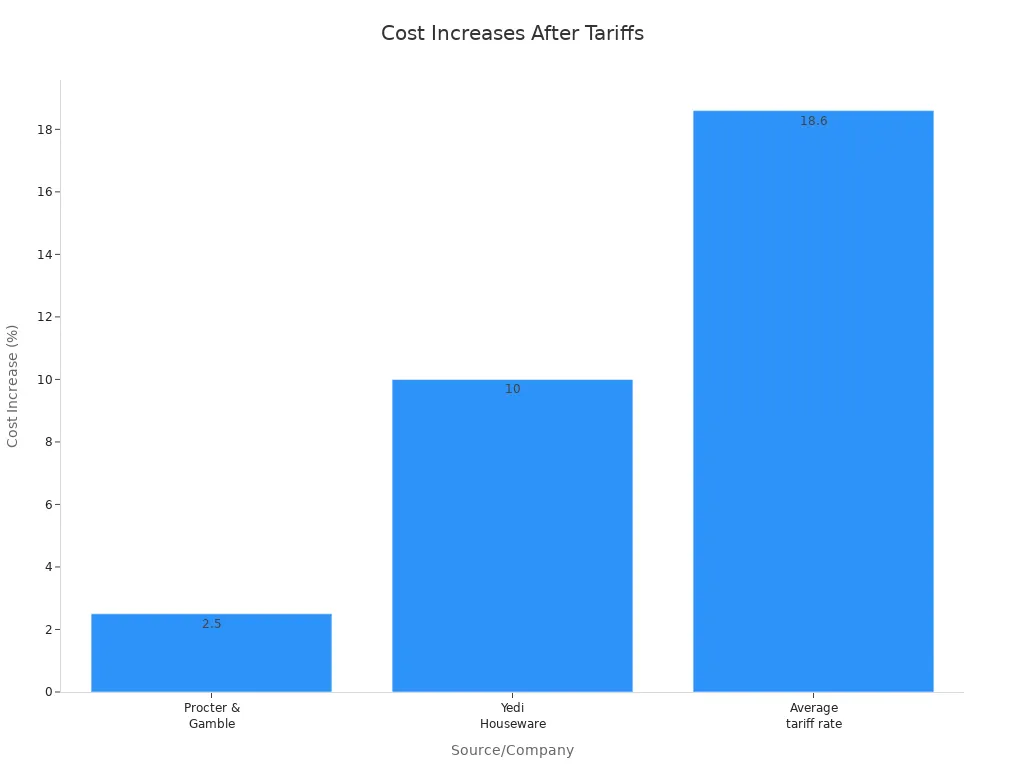
Trump’s Latest Tariffs have driven up costs for both retailers and manufacturers across the United States. The average effective tariff rate has jumped from 2.2% to as high as 17.0%. Many companies now face an average tariff rate of 18.6%, the highest since 1933. These higher rates have forced businesses to rethink their budgets and pricing strategies.
Manufacturing firms report that over 30% rank tariffs as their top concern.
About one-third of these companies plan to reduce hiring and capital spending.
Employment losses in manufacturing and related sectors are estimated between 220,000 to 320,000 jobs.
Retailers feel the impact through higher consumer prices and reduced demand.
Regions like Michigan, Ohio, and Indiana, which rely on North American supply chains, face the greatest economic burden.
The cost increases vary by company and industry. For example, Procter & Gamble plans to raise prices on about 25% of its products by an average of 2.5%. Yedi Houseware increased prices by about 10% but absorbed the rest to keep customers. Many companies try to shield consumers from the full impact, but the pressure remains strong.
Industries hit hardest by Trump’s Latest Tariffs include:
Clothing: Consumers pay about 40% more for shoes and 38% more for apparel.
Equipment manufacturing: Companies like Caterpillar and Eaton report profit declines.
Health services: Higher equipment costs lead to postponed projects.
Accommodation and food services: Firms delay purchases and planning.
Broad product categories: Appliances from the EU, Japanese cars, food, furniture, toys from China, and TVs from South Korea all see higher prices.
JUSDA supports clients in these industries by offering tailored supply chain solutions. The company helps businesses manage increased costs through smarter logistics, better inventory management, and technology-driven platforms like JusLink. JUSDA’s expertise allows clients to adapt quickly and maintain efficiency, even as tariffs raise expenses.
Note: The National Retail Federation warns that these tariffs act as taxes on importers, leading to higher prices, reduced hiring, and slower innovation.
Supply Chain Disruption
Trump’s Latest Tariffs have also disrupted supply chains for many companies. Tariffs on steel, aluminum, and Chinese imports have created uncertainty and forced businesses to rethink their sourcing and production strategies.
HiberSense, a technology startup, moved production from China to Pennsylvania. This shift will take nearly three years and has already led to higher prices.
European automakers like BMW and Volkswagen report production disruptions and lower profits.
A survey by the Institute for Supply Chain Management found that most businesses worry about tariff impacts. Many now plan for contingencies and renegotiate with suppliers.
Experts recommend several strategies to manage these disruptions:
Diversify suppliers across different locations.
Review contracts and adjust demand forecasts.
Shift production to lower-cost countries.
Strengthen communication with suppliers.
International tensions add more risk. Countries like India, Canada, Brazil, and Vietnam are negotiating or resisting tariffs, which makes global supply chains less stable. Some nations form new partnerships or coordinate responses to counteract tariffs, increasing uncertainty for U.S. retailers and manufacturers.
Companies that adapt quickly can turn disruption into opportunity. For example:
Williams-Sonoma reduced China sourcing by 50% and shifted production to Vietnam and Mexico.
Ralph Lauren expanded its supplier base to Vietnam, Cambodia, and Italy.
Columbia Sportswear and Converse changed product designs to qualify for lower tariffs.
LG Electronics opened a U.S. factory to avoid washing machine tariffs.
U.S. manufacturers are reshoring to Mexico and Central America to reduce trade risks.
JUSDA plays a key role in helping clients manage these disruptions. The company offers end-to-end supply chain visibility, real-time tracking, and flexible logistics solutions. JUSDA’s platforms, such as JusLink, use advanced technology to forecast demand, coordinate shipments, and track customs processes. This support helps businesses stay agile and competitive, even as global trade rules change.

JUSDA Solutions
To provide you with professional solutions and quotations.
Pricing and Consumer Effects
Retailer Strategies
Retailers face higher costs due to Trump’s Latest Tariffs. Many companies have responded with creative strategies to protect consumers from sudden price hikes. Walmart negotiates with suppliers for price cuts and sources more products domestically. Target reduces its reliance on China and shortens supply lead times. Best Buy works closely with vendors to manage pricing and prepares customers for possible increases. Macy’s uses a flexible supply chain to shift orders and adjust styles quickly. TJX keeps inventories lean and treats tariffs as buying opportunities.
Retailer | Strategy | Impact |
|---|---|---|
Walmart | Maintains low prices, stable supply | |
Target | Reduced China sourcing, operational agility | Prioritizes affordability, quick adjustments |
Best Buy | Vendor relationships, transparent messaging | Manages price increases, informs customers |
Macy’s | Flexible supply chain | Fast response to disruptions |
TJX | Lean inventory, agility | Attracts cost-conscious shoppers |
Retailers also use promotions, loyalty programs, and dynamic pricing to help consumers manage higher costs. Over 80% of shoppers have changed their buying habits, with many seeking discounts or delaying non-essential purchases. Retailers monitor competitor pricing and optimize promotions by region and demographic.
JUSDA supports retailers by providing real-time analytics and supply chain visibility. Its JusLink platform helps companies track costs, manage inventory, and respond quickly to market changes. These tools allow retailers to maintain price stability and build customer trust.
Manufacturer Adjustments
Manufacturers adjust their operations to absorb tariff costs and stay competitive. They diversify supply chains, expand supplier bases, and explore domestic production. Many renegotiate supplier agreements for better terms and volume discounts. Lean manufacturing, automation, and optimized inventory management help reduce waste and control expenses.
Manufacturers analyze tariff exposure at the product level and run impact scenarios to guide pricing decisions. They communicate price changes transparently, sometimes listing tariff surcharges on invoices. Agility remains key, as companies must adjust prices and production quickly when tariffs shift.
JUSDA assists manufacturers with end-to-end supply chain solutions. Its platforms enable demand forecasting, shipment coordination, and customs tracking. By leveraging technology, manufacturers can optimize costs, improve efficiency, and maintain profitability despite tariff pressures.
Tip: Transparent communication and flexible pricing help businesses maintain customer loyalty during periods of economic uncertainty.
Supply Chain Solutions by JUSDA
JUSDA in North America
JUSDA in North America delivers strategic logistics solutions for businesses facing tariff volatility and supply chain disruption. The company supports nearshoring by helping manufacturers move production closer to the United States and Mexico. This approach reduces exposure to global trade risks and shortens delivery times. JUSDA’s cross-border logistics network covers the US East Coast and the US-Mexico border, providing reliable transport for electronics, automotive parts, medical devices, and oil and gas equipment.
Risk management stands as a core strength. JUSDA ensures safe handling of hazardous materials, including lithium batteries, by following strict safety regulations. The company uses a quote management system to maintain transparency and compliance. Businesses benefit from simplified booking and quoting processes, especially for shipments from India and Vietnam to the US. JUSDA’s carrier network supports efficient cross-border transport, helping clients adapt to changing market conditions.
Industry | JUSDA Solution | Benefit |
|---|---|---|
Electronics | Nearshoring, cross-border logistics | Faster delivery, lower risk |
Automotive | Hazardous material handling | Safety, compliance |
Medical Devices | Specialized transport | Reliability, security |
Oil & Gas | Regional expansion | Market access |
Technology Integration
JUSDA invests in advanced technology to improve supply chain efficiency for retailers and manufacturers. The JusLink Smart Supply Chain Management Platform integrates RFID and Warehouse Management Systems (WMS), offering end-to-end visibility and control. Automation in warehousing reduces manual errors and boosts operational speed. Real-time tracking and predictive analytics help companies respond quickly to market changes.
JUSDA leverages AI and digital supply chain trends to provide a vertically integrated solution from component manufacturing to end consumers. The company uses dynamic inventory management, auto procurement, and digital customs processes to optimize operations. Multimodal transport solutions combine rail, road, and maritime shipping, allowing businesses to choose the best route for each shipment.
JUSDA’s technology-driven approach enhances supply chain responsiveness, accuracy, and agility. Manufacturers and retailers gain the tools needed to manage costs, reduce risks, and maintain competitiveness in a changing trade environment.
Adaptation and Advocacy
Exemption Efforts
Industry groups and companies have responded to Trump’s Latest Tariffs with active advocacy and strategic lobbying. Many sectors, including steel, autos, pharmaceuticals, and semiconductors, have secured temporary exemptions or relief from the steepest tariffs. Companies often negotiate behind the scenes, hiring lobbying firms with strong government connections. For example, Reyes Holdings, a Coca-Cola bottler, worked with Ballard Partners to push for tariff exemptions. The American Farm Bureau Federation claimed success in securing exemptions for agricultural inputs like peat and potash.
Industry groups and companies seek relief through lobbying and negotiation.
Some exemptions cover goods already en route to the US, offering short-term reprieve.
The exemption process remains opaque, with decisions made privately and concerns about favoritism.
Major retail groups, such as the National Retail Federation and Retail Industry Leaders Association, have lobbied for exemptions or delays.
Retailers like Lowe’s partner with domestic manufacturers to reduce tariff exposure.
Companies adjust product assortments and negotiate with suppliers to share costs.
Despite these efforts, many businesses still face higher costs. Some exemptions do not clearly fit the stated categories, which suggests that lobbying and political connections play a role. The rollback of tariffs from 145% to 30% after negotiations shows some policy responsiveness, but challenges remain for smaller businesses.
Note: Exemption efforts help limit the impact of tariffs, but consumers often still see price increases.
Regulatory Compliance
Companies must navigate complex trade agreements and maintain strict regulatory compliance in the current tariff environment. Many businesses integrate trade volatility and geopolitical risk into their risk management frameworks. They conduct audits and diversify supply chains to optimize sourcing and reduce exposure. Strategic customs planning includes reassessing rules of origin, valuation, and classification.
Companies leverage Free Trade Agreements to reduce tariff burdens.
They review and renegotiate contracts to include tariff-related risk allocation clauses.
Rigorous compliance minimizes costs and legal risks.
Cross-functional teams assess exposure and map supply chains to avoid high-risk regions.
Technology investments, such as AI and automation, improve speed and insight.
JUSDA stands out by prioritizing compliance and risk management, especially for hazardous materials like lithium batteries. The company follows strict safety regulations and uses a quote management system to ensure transparency. JUSDA’s approach includes employee training and adherence to regulatory frameworks such as CFR, IMDG, and IATA. This commitment helps clients maintain safety, reliability, and compliance in a volatile trade landscape.
Compliance Strategy | Benefit |
|---|---|
Rigorous audits | Reduced legal risk |
Technology integration | Faster, accurate reporting |
Employee training | Improved safety |
Regulatory adherence | Reliable operations |
JUSDA’s expertise in regulatory compliance and risk management supports businesses as they adapt to new trade realities.
Future Outlook
Long-Term Planning
Retailers and manufacturers face a landscape shaped by Trump’s Latest Tariffs. Ongoing risks include higher costs from tariffs on imports from Mexico, Canada, and China. Companies must reassess sourcing and procurement strategies to manage these impacts. Supply chain disruptions often occur when firms shift production outside China or diversify suppliers. Inflationary pressures may lead to increased consumer prices. The trade environment remains uncertain, which complicates planning for the future.
Many businesses respond by reducing sourcing from high-tariff regions. Steve Madden, for example, has cut sourcing from China. Ralph Lauren uses a global production footprint to spread risk. Regulatory changes, such as Mexico restricting duty-free apparel imports, add complexity. Some experts predict that US-only supply chains may emerge, but this increases operational challenges.
Note: Long-term planning requires companies to anticipate regulatory shifts and build flexible supply chains.
Resilience Strategies
To remain resilient, businesses adopt several adaptation strategies. They diversify sourcing by moving production to countries like Vietnam, India, or Colombia. Nearshoring brings manufacturing and warehousing closer to primary markets, such as Mexico or US-based facilities. Companies use bonded warehouses and Foreign Trade Zones to defer or eliminate duties. Tariff engineering helps by modifying products to qualify for lower tariffs.
Collaboration with suppliers on cost-sharing agreements stabilizes pricing. Advanced forecasting tools and demand planning optimize consumer pricing. Businesses analyze total landed costs to understand all expenses. AI-driven pricing and dynamic models allow companies to adjust prices in real time. Financial hedging, such as commodity futures, helps manage raw material cost volatility.
JUSDA’s innovative supply chain solutions support these strategies. JusLink platforms provide real-time visibility, automate cross-border shipping, and enable dynamic rerouting. JUSDA’s expertise in regulatory compliance and risk management helps clients navigate tariff changes and maintain operational agility. Companies using JUSDA’s services gain the flexibility and insight needed to thrive in a volatile trade environment.
Tip: Agility and proactive planning help businesses respond quickly to tariff changes and protect profitability.
Trump’s Latest Tariffs have created a new normal for retailers and manufacturers. Companies now focus on innovation, digital infrastructure, and diversified supplier networks to stay competitive. Many invest in AI and blockchain to optimize costs and ensure compliance.
Proactive adaptation remains essential. Businesses should:
Diversify suppliers and automate warehouses.
Use advanced analytics for inventory and demand planning.
JUSDA and JUSDA in North America offer solutions that help businesses manage these challenges and build resilient supply chains.
FAQ
What are Trump’s Latest Tariffs?
Trump’s Latest Tariffs are new taxes on imported goods. These tariffs raise costs for retailers and manufacturers. Many products, such as steel, aluminum, and electronics, now cost more to bring into the United States.
How do tariffs affect consumer prices?
Tariffs increase the cost of imported goods. Retailers and manufacturers often pass these costs to consumers. Shoppers may see higher prices on items like clothing, furniture, and electronics.
How does JUSDA help businesses manage tariff challenges?
JUSDA provides supply chain solutions that reduce costs and improve efficiency. The company uses technology platforms like JusLink and JusElsa to track shipments, manage inventory, and support nearshoring. These tools help businesses adapt quickly to changing trade rules.
What industries benefit most from JUSDA’s services?
JUSDA supports industries such as electronics, automotive, medical devices, and oil and gas. The company offers specialized logistics and risk management for hazardous materials. Businesses in these sectors gain reliable transport and compliance support.
Can companies avoid tariffs by changing suppliers?
Many companies switch suppliers or move production to countries with lower tariffs. Nearshoring and diversifying sourcing help reduce tariff exposure. JUSDA assists with cross-border logistics and supplier management to support these changes.
See Also
Understanding Inflation Effects Amid Supply Chain Challenges
Exploring How Global Trade Rules Shape Economic Growth
Analyzing Emerging Trends In Logistics Risk Management