Types of International Air Transport

International air transport moves goods quickly across borders using several main types of air freight. You will find scheduled airline services, charter airline options, air cargo consolidation, combined air-land transport, and express air freight. Each type fits different needs. For example, scheduled flights run on set times, while charter flights let you book the whole aircraft for special cargo. Express air freight companies like DHL and FedEx focus on urgent shipments. In 2017, airlines transported about 56 million tonnes of air cargo worldwide. The different types of air transport offer choices in speed, cost, and flexibility, helping you match your cargo with the right airline and service. Both military air transport and civil-commercial air transport play roles in moving air cargo globally.
Key Takeaways
Scheduled air freight offers reliability and speed for regular shipments. Use it for electronics, textiles, and pharmaceuticals to ensure timely delivery.
Charter air freight provides flexibility for urgent or oversized cargo. Consider it for time-sensitive deliveries or shipments to remote locations.
Consolidation services save money by combining smaller shipments into one. This option is ideal for businesses looking to reduce shipping costs without sacrificing speed.
Express air freight is the fastest choice for urgent deliveries. Use it for high-value items or medical supplies when every hour counts.
Understanding the different types of air transport helps you choose the best option for your cargo needs, balancing speed, cost, and delivery requirements.
International Air Transport Categories
Scheduled Air Freight
Scheduled air freight is one of the main types of air freight you will encounter in global cargo transport. Airlines operate these flights on fixed routes and regular schedules. You can think of them like buses or trains for cargo. This method uses both passenger and cargo aircraft, which are two common types of airlines in the industry. Scheduled air freight services offer reliability and predictability. You can plan your shipments in advance and trust that your cargo will move on time.
Tip: Scheduled air freight is ideal for regular shipments, such as electronics, textiles, or pharmaceuticals. You can use it for both general cargo and special cargo, depending on your needs.
Here is a table showing how scheduled air freight operates and its typical use cases:
Operation Process | Typical Use Cases |
|---|---|
Booking and planning | E-commerce (electronics, luxury items) |
Preparing and packing | Manufacturing (critical components) |
Collection and consolidation | Humanitarian aid (emergency supplies) |
Customs clearance | Perishables (fresh produce, seafood) |
Air transport | Pharmaceuticals (drugs, vaccines) |
Arrival and final delivery |
You benefit from several advantages when you choose scheduled air freight:
Reliability: Airlines follow strict schedules, so you can manage your inventory better.
Security: Airports have strong security, which lowers the risk of theft or damage.
Accessibility: Scheduled flights reach many destinations, even remote areas.
However, you should know that scheduled air freight can be more expensive than other types of air transport. Space and weight limits may also restrict the types of cargo you can send. Weather can sometimes delay flights, affecting your delivery schedule. Low cost airlines sometimes offer scheduled air freight services, making this option more affordable for certain routes.
Charter Air Freight
Charter air freight gives you flexibility and control over your shipments. You can rent an entire aircraft or part of it for your cargo. This type of air freight is perfect for urgent deliveries, oversized cargo, or shipments to places that regular flights do not reach. Charter air freight services are popular in industries like oil and gas, emergency response, and high-value goods.
You can use charter air freight in these situations:
Time-critical emergencies, such as delivering life-saving medical equipment.
Moving oversized cargo, like machinery or prototypes.
Shipping to remote locations not served by scheduled flights.
Emergency relief operations in disaster zones.
Transporting high-value or sensitive items that need extra security.
Charter flights offer speed and flexibility. You can choose your departure time and route. This saves time and reduces employee downtime. Charter air freight services can access smaller airports and unconventional destinations, which is helpful for global cargo transport. While the initial cost may seem high, you often save money by avoiding delays and meeting tight deadlines. Low cost airlines sometimes provide charter services, making them a practical choice for urgent or specialized shipments.
Note: Charter air freight is the most expensive among the types of air freight, but it delivers unmatched flexibility and speed.
Consolidation Services
Consolidation services are one of the most cost-effective types of air freight. You can combine smaller shipments from different shippers into one large shipment. This approach helps you save money and makes managing your cargo easier. Air freight forwarders handle the process, using a master waybill for the group shipment and house waybills for each individual shipment.
Here is how consolidation services work:
Shipments from different shippers share space on the same aircraft.
Each shipment keeps its own documentation for easy tracking.
You only pay for the space your cargo uses, sharing costs for fuel and handling.
Consolidation works best for shipments in the same product category and on similar routes.
Air Freight Option | Cost Ranking | Efficiency Description |
|---|---|---|
Air Cargo Charter Service | Most Expensive | Renting an entire plane for guaranteed service on a set schedule. |
Express and Next Flight Out | Expensive | Premium service for time-critical freight with fast transit times. |
Standard Air Freight | Moderate | Popular option for individual shipments, faster than non-air options. |
Deferred Air Freight | Less Expensive | Cost-effective for non-urgent freight, lower priority for loading. |
Air Cargo Consolidation | Least Expensive | Cheapest option by sharing costs, providing speed at a reduced expense. |
You can save 30% to 50% on shipping costs compared to sending individual shipments. Consolidated shipments move a bit slower than dedicated air freight, but they are much faster than sea freight. Low cost airlines often support consolidation services, making them accessible for small and medium businesses.
Tip: Use consolidation services when you have smaller shipments and want to lower your shipping costs without sacrificing too much speed.
The main types of cargo handled in these categories include general cargo, like retail items and textiles, and special cargo, such as perishables or dangerous goods. By understanding the types of air transport and the types of air freight available, you can choose the best option for your business. These air freight services play a key role in global cargo transport, helping you move cargo efficiently and affordably.
Types of Air Freight Services
Air Express
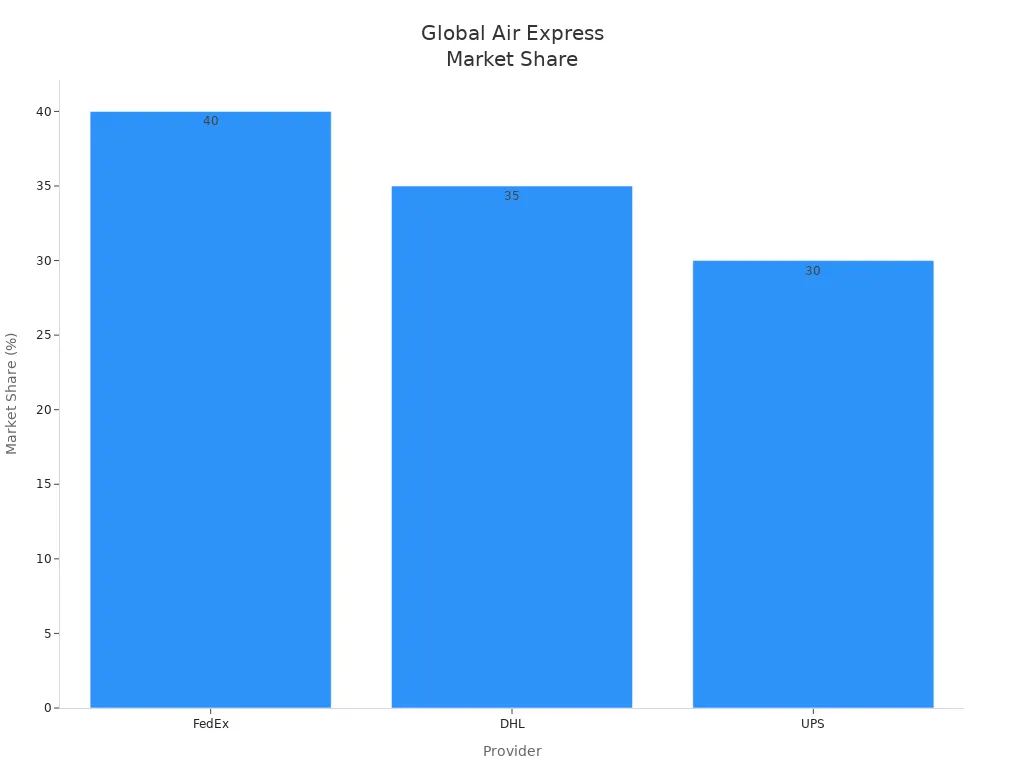
You can choose express air freight when you need your cargo delivered fast. Express air freight stands out as the quickest option for urgent shipments. Companies like FedEx, DHL, and UPS lead the global market, moving high value cargo and pharmaceutical cargo with speed and reliability. These services often deliver within two to three days, much faster than standard air freight, which usually takes about a week. You pay more for this speed, but you gain peace of mind for time-sensitive cargo.
Provider | Market Share (%) |
|---|---|
FedEx | |
DHL | 35 |
UPS | 30 |
Emirates SkyCargo | N/A |
Express air freight uses dedicated flights and streamlined processes. You get real-time tracking and door-to-door service. This makes it ideal for shipping documents, small parcels, high value cargo, and pharmaceutical cargo that cannot wait.
Tip: Use express air freight for urgent deliveries, such as medical supplies or high value cargo, when every hour counts.
Combined Air-Land Transport
Combined air-land transport, also called multimodal transportation, links different types of air transport with land routes. You can move cargo by truck or train to an airport, then send it by air freight to its final destination. This method increases efficiency and reduces costs, especially for inland cargo sources.
Aspect | Description |
|---|---|
Definition | Combined air-land transport integrates different transport modes. |
Benefits | Increases efficiency, reduces costs, and enhances global presence. |
Logistics Chains | Transfers cargo between modes, optimizing strengths to minimize costs and transit times. |
Example City | Memphis uses multimodal transport, including air, land, and even water taxis. |
You can use combined air-land transport for large shipments or when your cargo starts far from a major airport. This approach works well for general air cargo, pharmaceutical cargo, and high value cargo that needs both speed and cost savings. You get flexibility by choosing the best route for your cargo.
Special Cargo Transport
Special cargo transport handles shipments that need extra care or special rules. You may need this service for live animals, human remains, perishable goods, high value cargo, or dangerous items. Airlines and freight companies follow strict regulations to keep your cargo safe.
Live animals (AVI)
Human remains (HUM)
Perishable goods (PER)
Valuable goods (VAL)
Strongly smelling goods
Live human organs (LHO)
Diplomatic pouch (DIP)
Dangerous goods
Air freight companies use certified packaging, clear labeling, and detailed documentation. They follow rules from organizations like IATA and DOT to prevent accidents and protect your cargo. Special cargo flights often use dedicated equipment and trained staff to handle sensitive shipments.
Note: Always check the rules for your cargo type before booking special cargo transport. This ensures safe and legal delivery.
You can see that the types of air transport cover many needs. Express air freight, combined air-land transport, and special cargo transport help you move cargo quickly, safely, and efficiently.
Types of Air Transport Equipment
Combi Aircraft
You can find combi aircraft in many international air freight operations. These planes carry both passengers and cargo on the same flight. Airlines like KLM used combi aircraft, such as the Boeing 747, to maximize revenue. You see a section for passengers in the front and a large cargo area in the back. This setup helps airlines adjust to changing demand for passenger air travel and air cargo.
Combi aircraft allow you to move both people and goods on long-haul flights.
Airlines can switch between more passenger seats or more cargo space, depending on the route.
This flexibility makes combi aircraft a smart choice for routes with mixed demand.
You benefit from efficient use of space and resources. Combi aircraft played a big role in the growth of international air freight, especially when airlines needed to balance cargo and passenger needs.
Cargo Aircraft
Cargo aircraft, also called freighters, are designed only for air cargo. You use these planes when you need to move large or heavy shipments. Cargo aircraft have wide doors, reinforced floors, and special loading systems. They handle everything from small packages to oversized machinery.
Aircraft Model | Range | |
|---|---|---|
Boeing 727-200F | 24,000 kg | 1,800 km |
Boeing 737-300SF | 15,000 kg | 2,700 km |
Boeing 757-200F | 33,000 kg | 5,500 km |
Airbus A321-200F | 27,000 kg | 4,100 km |
Antonov An-124 Ruslan | 150,000 kg | N/A |
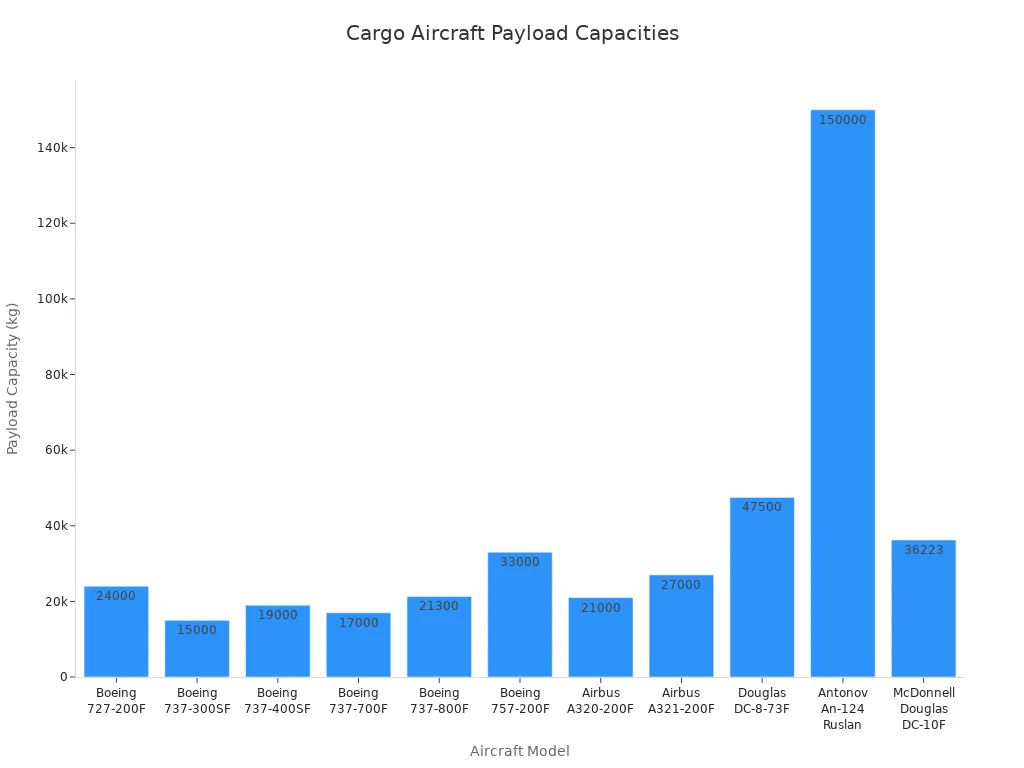
You can choose from different types of air transport equipment in this category:
All-cargo aircraft: These planes carry only cargo and have large doors for easy loading.
Feeders and regional freighters: These handle medium-haul air freight, carrying up to 65 tonnes.
Large freighters: These move the heaviest air cargo, with some models carrying up to 150,000 kg.
Cargo aircraft help you move goods quickly and safely across long distances. They play a key role in the global supply chain for air freight.
Passenger Aircraft
Passenger aircraft, or airliners, mainly serve people, but you can also use them for air cargo. Airlines load cargo into the belly hold under the passenger cabin. This space is smaller than in cargo aircraft, but it still supports many types of air freight.
Passenger aircraft have strict rules for cargo size and weight.
For example, an A321 can carry cargo up to 120x100x100 cm and 100 kg per piece.
Larger planes, like the A350 or B777, can handle cargo up to 300x240x160 cm and 4,000 kg.
Feature | Passenger Aircraft | Dedicated Cargo Planes |
|---|---|---|
Design | Configured for both passengers and cargo | |
Capacity | Limited due to passenger space | Maximized for freight transport |
Operational Considerations | Subject to passenger regulations | More flexible in cargo handling |
You often see passenger aircraft used for air freight on busy routes. Airlines use commercial aircraft to move both passengers and cargo, making the most of every flight. This dual use supports the efficiency of many types of air transport.
International Air Freight Services
Major Service Providers
You have many choices when selecting international air freight services. Leading companies offer different types of air transport to meet your needs. Each air freight service provider brings unique strengths to the market.
FedEx Express specializes in time-sensitive air cargo. You can rely on their large fleet of over 650 aircraft for urgent shipments.
UPS Airlines covers more than 220 countries. Their air freight network supports a wide range of cargo and flights.
DHL Aviation is known for speed and reliability. They serve over 220 countries and offer express air freight service for fast delivery.
Lufthansa Cargo uses both dedicated freighter aircraft and passenger flights. This gives you flexibility for different types of air transport.
Emirates SkyCargo connects East and West. Their network reaches over 155 destinations, making them a strong choice for global air cargo.
These international air freight services stand out by offering express options for urgent cargo, consolidated freight for cost savings, charter flights for oversized cargo, and temperature-controlled shipping for sensitive goods.
Company | Global Courier Revenue Share |
|---|---|
DHL | ~15% |
UPS | 11% |
FedEx |
Tip: Choose a provider based on your cargo type, delivery speed, and destination. Each air freight service has strengths for different shipments.
Documentation and Process
You must follow clear steps and prepare the right documents for successful air freight. International air freight services require you to complete several forms and follow strict rules.
Key documents for air cargo include:
Commercial Invoice: Lists financial details, sender, receiver, and EORI number.
Packing List: Describes cargo, dimensions, and weight.
Airway Bill (AWB): Serves as a receipt and contract for the air freight service.
Certificate of Origin: Shows where your cargo comes from.
Declaration for Dangerous Goods: Needed for hazardous cargo.
Material Safety Data Sheet (MSDS): Required for chemicals.
Other documents: May include insurance, export licenses, and handling receipts.
You should follow these steps for a smooth air freight process:
Plan your shipment and check cargo requirements.
Prepare all documents with accurate details.
Select a trusted air freight service provider.
Package and label your cargo correctly.
Book your air freight and compare flights.
Track your cargo using the AWB number.
Clear customs by submitting documents and paying duties.
Arrange final delivery to the destination.
International rules, such as IATA and ICAO standards, guide how you prepare documents and handle cargo. These rules help keep air freight safe and efficient. If you miss a document or make a mistake, your cargo may face delays.
Note: Always double-check your paperwork before booking your flight. Proper documentation keeps your air cargo moving without problems.
You have many options when choosing between types of air transport. Each type of air freight offers unique benefits for moving air cargo. Fast flights help you deliver urgent air cargo, while consolidation saves money for smaller shipments. You should always consider transit time, cost, and the nature of your cargo.
Real-world examples show that electronics, apparel, and pharmaceuticals all rely on air cargo for speed and reliability.
Factor | Impact on Air Freight Choice |
|---|---|
Weight | Heavier air cargo increases costs |
Distance | Longer flights raise expenses |
Urgency |
Understanding these differences helps you select the best air freight solution for your next flight.
FAQ
What are the main types of air transport for international shipping?
You can choose from several types of air transport. These include scheduled air freight, charter services, consolidation, combined air-land, and express options. Each type fits different cargo needs and delivery times.
How do scheduled flights differ from charter flights?
Scheduled flights run on fixed routes and times. You can book space for your cargo in advance. Charter flights let you rent an entire plane or part of it. This gives you more control over timing and destination.
When should you use express air freight services?
You should use express air freight when you need fast delivery. Express services work best for urgent shipments, small parcels, or important documents. These flights offer door-to-door service and real-time tracking.
Can you combine different types of air transport for one shipment?
Yes, you can combine different types of air transport. For example, you might use land transport to reach an airport, then send your cargo on international flights. This approach helps you save money and time.
See Also
Transforming Efficiency With Smart Indigenous Transport Innovations
Get Prepared: Discovering New Transport Tech for Supply Chains
Affordable Transportation Management: Your Budget's Ideal Companion
Comprehensive Guide to Eco-Friendly Supply Chain Transportation
Prepare Yourself for the Transport Technology Revolution Ahead