As Duty-Free Rules End, U.S. Cross-Border E-Commerce Enters a New Era of Rising Costs and Rerouted Supply Chains

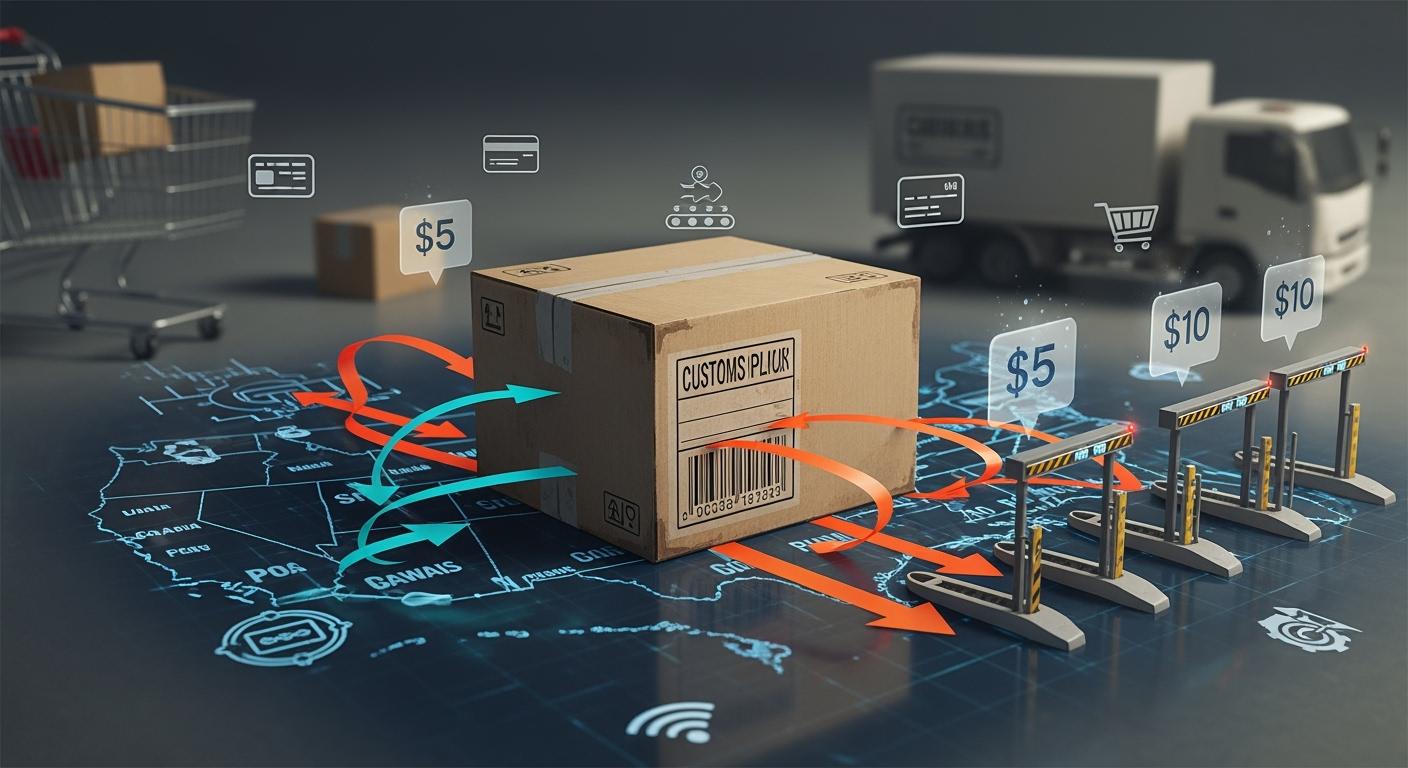
The end of the de minimis exemption will immediately increase costs and disrupt cross-border e-commerce shipping for businesses and consumers in the United States. Shipping costs rise, with parcels now facing duties or flat fees. The table below shows the immediate impact on ecommerce shipping costs:
Change Description | Impact on Shipping Costs |
|---|---|
Removal of duty-free threshold of $800 | |
Duties applied as a percentage or flat fee | Additional fees ranging from $80 to $200 depending on origin |
Higher risk of failed deliveries | Potential surprise charges at delivery leading to package refusals |
Slower delivery times | All shipments subject to formal customs clearance, increasing delivery times |
Consumer purchasing behavior also shifts:
74% of Americans admit to overspending.
55% consider themselves reckless spenders.
Consumers rush to purchase before tariffs take full effect, especially in electronics and children's products.
JUSDA uses its logistics expertise to help ecommerce businesses and customer operations adapt to this new e-commerce landscape.
Key Takeaways
The removal of the duty-free threshold means all parcels entering the U.S. now incur tariffs, increasing shipping costs significantly.
Consumers are changing their purchasing habits, with many rushing to buy before tariffs fully take effect, especially on electronics.
Businesses must adopt transparent pricing strategies that include duties to maintain customer trust and avoid surprise charges.
Investing in advanced logistics technology, like AI and automation, can help businesses streamline operations and reduce costs.
Companies should focus on compliance and localization to enhance customer experience and minimize cart abandonment rates.
Cross-Border E-Commerce Shipping Costs Rise
Tariffs And Duties Impact Ecommerce Shipping
The removal of the de minimis exemption has transformed the landscape of cross-border e-commerce shipping. Every parcel entering the United States now faces tariffs or flat fees, which increases the total landed cost for businesses and consumers. Companies must prepare full customs documentation, classify tariffs accurately, and collect duties for each shipment. This process adds complexity and time to ecommerce shipping logistics.
Source | Impact on Ecommerce Shipping Costs |
|---|---|
FlavorCloud | Costs rise as brokers, compliance intermediaries, and platforms fill in the gaps. |
PNG Worldwide | Customers experience higher prices, slower delivery times, and increased complexity. |
Fulfillrite | Most commercial packages require full customs documentation, proper tariff classification, duty collection, and remittance. |
The elimination of the duty-free threshold means all shipments, regardless of value, are now subject to tariffs. Businesses must adjust pricing strategies or absorb higher costs. New reciprocal tariffs and increased rates complicate the cost structure. The introduction of a 10% blanket tariff on most imports and specific high rates for countries like China and Vietnam further raises the total landed cost for cross-border ecommerce shipping. Retailers face reduced profit margins and must remain agile to navigate these fluctuations. For example, a 25% tariff on a $100 product results in an additional $25 cost, which influences pricing strategies and consumer purchasing behavior.
JUSDA leverages its expertise in shipping solutions to help businesses manage these rising costs. The company provides comprehensive logistics support, including customs compliance and documentation, to streamline cross-border ecommerce shipping. JUSDA’s advanced supply chain management platform enables businesses to optimize shipping logistics and maintain competitiveness in a volatile environment.
Last-Mile Delivery And Consumer Expectations
Delivery expectations continue to shape the cross-border ecommerce experience. U.S. consumers expect fast shipping for essential items, with most demanding delivery within one to two days. Standard retail products have a slightly more flexible window, with two to three days considered acceptable. Custom or personalized products allow for longer delivery times, up to seven days. Luxury items prioritize quality over speed.
Product Type | Expected Delivery Time |
|---|---|
Essential items | 1-2 days maximum |
Standard retail | 2-3 days acceptable |
Custom/personalized products | 3-7 days tolerated |
Luxury items | Quality over speed |
Up to 50% of global shoppers are willing to wait one week for cross-border orders. Many consumers prefer free shipping over faster delivery, especially for international shipping. Rising shipping costs and longer delivery times challenge retailers to meet these expectations. JUSDA’s shipping solutions address these challenges by offering efficient last-mile delivery and advanced logistics management. The company’s cloud warehousing and real-time tracking capabilities help businesses maintain fast shipping and reliable delivery, even as regulations evolve.
JUSDA’s commitment to innovation and efficiency positions it as a leader in cross-border ecommerce shipping logistics. The company supports businesses in adapting to new tariffs, optimizing shipping costs, and meeting consumer expectations for fast shipping and reliable delivery.
Rerouting Supply Chains In Cross-Border Ecommerce
New Shipping Routes And Logistics Strategies
Regulatory changes and new tariffs have forced businesses to rethink their cross-border ecommerce supply chains. The end of the de minimis exemption means every shipment, regardless of value, now requires a full customs declaration and may incur duties. Apparel, consumer electronics, and beauty products face the greatest impact, as these industries previously relied on low-value, duty-free shipments. Exporters and suppliers overseas experience lower order volumes and tougher customs hurdles. Cross-border platforms and marketplaces invest in compliance and customs brokerage to maintain access to the U.S. market.
Businesses adopt several strategies to manage these challenges:
Automating customs processes reduces processing time and minimizes delays.
Electronic Data Interchange (EDI) technology streamlines the submission of declarations.
AI systems identify high-risk shipments, enhancing compliance and reducing risk.
Companies reevaluate supply chain footprints to optimize efficiency.
Sourcing diversifies beyond China, with businesses seeking alternative suppliers.
Foreign Trade Zones (FTZs) help delay duty payments and improve cash flow.
Investments in customs automation and technology support faster, more reliable operations.
New logistics strategies focus on improving delivery times and customer satisfaction. AI and advanced technologies optimize supply chains, enhance route planning, and streamline customs processes. Predictive analytics and real-time tracking enable better resource allocation and faster deliveries. The global cross-border ecommerce market continues to grow, increasing demand for efficient logistics and reliable delivery.
Strategy | Benefit |
|---|---|
Customs automation | Faster processing, fewer delays |
EDI technology | Streamlined declarations |
AI compliance systems | Reduced risk, improved accuracy |
Diversified sourcing | Lower risk, increased flexibility |
FTZ utilization | Delayed duty payments, improved cash flow |
Route optimization | Faster deliveries, reduced costs |
JUSDA In North America: Adapting To Market Shifts
JUSDA in North America plays a vital role in supporting businesses as they adapt to new market conditions. The company focuses on nearshoring and regional logistics, helping clients respond to shifting supply chain dynamics. JUSDA expands logistics services on the U.S. East Coast and strengthens ties with the U.S.-Mexico border region. This approach enables businesses to capitalize on manufacturing shifts and nearshoring trends.
JUSDA provides a comprehensive carrier network for cross-border transport, ensuring reliable movement of goods. The company offers a quote management system that enhances transparency and compliance. Specialized services for handling hazardous materials, such as lithium batteries, ensure strict adherence to safety regulations. JUSDA supports regional expansion efforts, particularly for industries like electronics, automotive, medical devices, and oil and gas.
Key advantages of JUSDA in North America include:
Risk management in freight forwarding, especially for hazardous materials.
Simplified booking and quoting processes for LCL partners.
Expanded carrier network supporting cross-border logistics.
Data tools for market analysis and customer relationship building.
Compliance with regulatory frameworks such as CFR, IMDG, and IATA.
JUSDA’s investment in customer relationships and market analysis positions the company as a preferred partner for businesses seeking customized logistics solutions. By adapting to market shifts and regulatory changes, JUSDA helps clients optimize their cross-border ecommerce supply chains and maintain competitiveness in a rapidly evolving environment.
Technology And Compliance In Ecommerce Shipping
JusLink AI Solution For Cross-Border E-Commerce
Technology now plays a central role in optimizing cross-border e-commerce shipping and compliance. JusLink’s AI solution from JUSDA delivers advanced capabilities that help businesses manage complex logistics networks and regulatory requirements. JusLink uses artificial intelligence, machine learning, and real-time tracking to improve shipping efficiency and reduce delivery times. Blockchain secures transactions and increases supply chain transparency. IoT devices enable real-time visibility of shipments, allowing businesses to monitor goods throughout the journey.
Technology | Impact on Cross-Border E-commerce Shipping |
|---|---|
AI | Enhances shipping efficiency and reduces delivery times. |
Machine Learning | Optimizes route planning and inventory management. |
Real-time Tracking | Provides up-to-the-minute updates on shipment status. |
Blockchain | Secures transactions and improves supply chain transparency. |
IoT Devices | Enables real-time tracking and visibility of shipments. |
JusLink’s AI solution also supports logistics optimization by analyzing supply chain trends, predicting freight rates, and forecasting sales demand. The platform’s risk control tower monitors disruptions and provides early warnings, helping businesses maintain stable operations.
Managing Regulatory Changes And Risk
U.S. cross-border e-commerce businesses face several regulatory risks. Compliance with data privacy laws, export control regulations, and cross-border employee rules requires careful management. JusLink’s technology maps data flows and corporate structures to identify applicable laws and controlled technologies early. Access controls and compliance measures help companies meet regulatory standards.
Regulatory Risk | Technology Management Strategy |
|---|---|
Compliance with data privacy laws | Map data flows to identify applicable jurisdictions' laws |
Export control regulations | Map corporate structure and identify controlled technologies early |
Cross-border employee regulations | Implement access controls and compliance measures |
Businesses must address compliance challenges such as penalties for non-compliance, complex banking systems in foreign markets, and anti-money laundering checks. Increasing regulatory scrutiny and changing trade policies require rigorous compliance. Advanced technologies like JusLink AI help companies adapt quickly and maintain compliance, even as tariffs and duties add costs. JUSDA’s approach to risk management combines technology and expertise to support clients in a changing regulatory environment.
Evolving Consumer Behavior In Cross-Border E-Commerce
Response To Higher Shipping Costs
U.S. shoppers now face higher shipping costs in cross-border ecommerce. Many shoppers previously chose international sellers for lower prices. Over half of global shoppers buy internationally because of cost savings. Free delivery remains a powerful incentive. About 55% of shoppers say they would buy from international sellers more often if free delivery is available. The end of the duty-free threshold for goods under $800 from China and Hong Kong has changed pricing and fulfillment for shoppers. These changes force shoppers to reconsider their purchasing decisions and focus on value.
Statistic | Description |
|---|---|
51% | Over half of global shoppers buy internationally due to lower prices. |
55% | About 55% of shoppers are convinced to buy from international sellers more often if free delivery is offered. |
Duty-free threshold change | The U.S. ended its duty-free threshold for goods under $800 from China and Hong Kong, impacting pricing and fulfillment for consumers. |
Shoppers now expect more transparency in shipping costs and delivery options. They look for clear checkout processes and trust brands that offer reliable cross-border ecommerce experiences. Localization of checkout pages and shipping information builds trust and increases conversion rates. Shoppers want to see total costs before completing checkout. Brands that provide accurate shipping estimates and localized checkout pages earn more trust and higher conversion.
Delivery Time And Cart Abandonment Trends
Delivery timeframes play a major role in cross-border ecommerce. U.S. shoppers show reluctance to accept longer delivery times. They often require additional incentives to change their behavior. Perceived benefits such as free shipping or faster delivery influence their willingness to wait. Shoppers value trust and conversion in every checkout experience.
Consumer Behavior | Response to Delivery Times | Willingness to Change | Incentives Needed |
|---|---|---|---|
U.S. Consumers | Reluctant to accept longer delivery times | Influenced by perceived benefits | Require additional incentives for behavioral changes |
Cart abandonment rates have reached new highs in cross-border ecommerce. Over 70% of U.S. shoppers abandon their carts during checkout. The global average cart abandonment rate is 74.7%, with mobile rates reaching 85%. Poor checkout experiences and unexpected costs drive shoppers away. Luxury goods see even higher abandonment rates, exceeding 80%. Surprise costs and mandatory account creation also contribute to abandonment.
The cart abandonment rate in U.S. ecommerce has risen to over 70%.
The global average cart abandonment rate is 74.7%, with mobile rates reaching 85%.
High abandonment rates are often linked to poor checkout experiences and unexpected costs.
Cart abandonment is particularly high in luxury goods, exceeding 80%.
Factors contributing to abandonment include surprise costs and barriers like mandatory account creation.
Localization of checkout pages, transparent shipping costs, and clear delivery timeframes help build trust and improve conversion. Shoppers respond positively to brands that prioritize customer experience in cross-border ecommerce. Reliable checkout processes and accurate delivery estimates increase trust and drive conversion.
JUSDASR: Optimizing Cross-Border Ecommerce Shipping
Warehousing And Last-Mile Delivery Solutions
JUSDASR streamlines cross-border ecommerce shipping for merchants by providing advanced warehousing and last-mile delivery solutions. The company operates warehouses on the West Coast, East Coast, and Central regions of the United States. These facilities sit near major ports and airports, which improves network agility and aligns warehouse placement with key trade routes. JUSDASR uses AI demand forecasting tools to select sites based on data, ensuring efficient shipping and delivery. Border-proximate warehousing reduces costs and shortens transit times for ecommerce shipments.
JUSDASR partners with major carriers like FedEx and UPS to guarantee reliable last-mile delivery. Merchants benefit from direct accounts with these carriers, which ensures products reach consumers quickly and accurately. The company’s logistics network supports a variety of product types, including high-power energy storage products, with specialized storage solutions. JUSDASR’s operational excellence, technology integration, and logistics optimization help international brands expand in the U.S. ecommerce market.
Tip: Partnering with experienced logistics providers like JUSDASR can ease cross-border operations and improve shipping outcomes.
Dropshipping And Inventory Management
JUSDASR empowers ecommerce merchants with flexible dropshipping and inventory management strategies. Merchants can select suppliers based on operational priorities and maintain backup vendors in both domestic and overseas regions. This approach helps manage seasonal demand fluctuations and ensures compliance with regulations. Automation tools support efficient inventory management, allowing merchants to respond quickly to market changes.
Effective dropshipping strategies include defining product types, analyzing demand regions, and evaluating shipping priorities. Merchants assess item characteristics and choose suppliers that match fulfillment speed and delivery reliability. JUSDASR’s dropshipping capabilities enable merchants to manage inventory with ease and optimize shipping costs. The company’s specialized support for high-power energy storage products ensures compliant storage and delivery.
JUSDASR’s competitive advantages include strategic warehouse locations, cost-effective transportation, and efficient last-mile delivery. The company’s comprehensive service suite helps merchants reduce logistics expenses and improve operational efficiency in the evolving ecommerce landscape.
Actionable Strategies For U.S. Cross-Border E-Commerce
Cost Optimization And Supply Chain Efficiency
U.S. cross-border ecommerce businesses face rising shipping costs and complex delivery requirements. Companies optimize costs by leveraging local logistics networks. Storing inventory in local warehouses reduces customs processing and shortens delivery times. JUSDA’s cloud warehousing and consolidation services support this approach, helping businesses minimize expenses and improve shipping outcomes.
Adopting flexible cost models allows companies to pay only for the resources they use. JUSDA’s pay-as-you-go logistics solutions enable merchants to scale operations during peak periods. For example, JUSDA’s warehouse in Bucharest processed up to 1,500 orders daily for an electronics retailer. During high-demand events, the facility scaled to handle 18,000 orders per day, demonstrating operational efficiency.
Integrating multiple marketplaces through a centralized logistics system streamlines inventory management and order fulfillment. JUSDA’s JusLink intelligent supply chain platform provides real-time collaboration and visibility, enhancing shipping and delivery performance. Businesses benefit from predictive analytics and AI-driven demand forecasting, which improve supply chain efficiency and reduce costs.
Tip: Companies that invest in automation and advanced logistics technology can respond quickly to market changes and maintain competitive shipping strategies.
Enhancing Customer Experience And Compliance
Maintaining a positive customer experience requires robust compliance and effective localization. JUSDA’s solutions help businesses navigate regulatory changes while ensuring smooth shipping and delivery. Flexible compliance infrastructure supports operations across different markets. Employee training builds a culture of compliance, and localized data storage enhances customer trust.
Strategy | Description |
|---|---|
Flexible compliance infrastructure | Investing in adaptable systems to meet varying regulations across different markets. |
Employee training | Ensuring staff are knowledgeable about data protection and compliance frameworks to build a culture of compliance. |
Localized data storage | Storing data in compliance with local regulations to enhance customer trust and experience. |
Technology for payment solutions | Utilizing advanced payment technologies to streamline transactions and improve customer satisfaction. |
AI-driven real-time product translations and automated currency conversions improve localization and customer experience. JUSDA’s JusLink platform supports multi-currency checkout and local payment options, making transactions seamless for international shoppers. Fraud detection systems ensure secure shipping and delivery, building customer confidence.
Companies establish compliance with local regulations, set up adaptable payment systems, and offer local payment options to reduce cart abandonment. Automation and technology enhance the shopping experience, leading to higher conversion rates and improved customer satisfaction in cross-border ecommerce.
The end of duty-free rules marks a new era for cross-border e-commerce in the United States. Businesses must adapt to higher shipping costs and rerouted supply chains. Key strategies include:
Implement transparent, duty-inclusive pricing for every shipment.
Recover duties on re-exported goods.
Audit product classifications and explore tariff engineering.
Build compliance into operations for customer reliability.
Develop flexible playbooks for changing regulations.
Advanced logistics solutions from JUSDA and JUSDASR support businesses by providing localized fulfillment centers, AI-driven shipping management, and enhanced transparency. Companies that stay informed and proactive will meet customer expectations and maintain competitive shipping performance.

JUSDA Solutions
To provide you with professional solutions and quotations.
FAQ
What industries does JUSDA support in North America?
JUSDA provides logistics solutions for electronics, automotive, medical devices, oil and gas, and FMCG. The company tailors its services to meet the unique needs of each industry.
How does JUSDA manage hazardous materials during shipping?
JUSDA uses strict risk management protocols and complies with safety regulations for hazardous materials, including lithium batteries. The company ensures safe handling and regulatory compliance.
Where are JUSDASR’s warehouses located in the United States?
JUSDASR operates warehouses on the West Coast, East Coast, and Central regions. These locations sit near major ports and airports, enabling efficient distribution and faster delivery.
What technology does JusLink’s AI solution offer for supply chain management?
JusLink’s AI solution provides supply chain trend analysis, freight rate prediction, sales demand forecasting, replenishment strategies, and real-time risk monitoring. The platform uses AI and big data for enhanced decision-making.
Does JUSDASR support dropshipping for e-commerce merchants?
JUSDASR offers dropshipping services. Merchants can manage inventory efficiently and respond quickly to market changes. The company supports flexible supplier selection and compliance with regulations.
See Also
Exploring Supplier Connections in Global E-commerce Innovations
Addressing Global Supply Chain Growth Issues Effectively
Transforming Industries Through Cloud-Based Supply Chain Innovations
Enhancing Global E-commerce Success With Supply Chain Transparency
Revolutionizing Supply Chain Management With Cloud Technologies