Last Mile Delivery Gets Smarter with Advanced Warehouse Automation Show Efficiency Gains

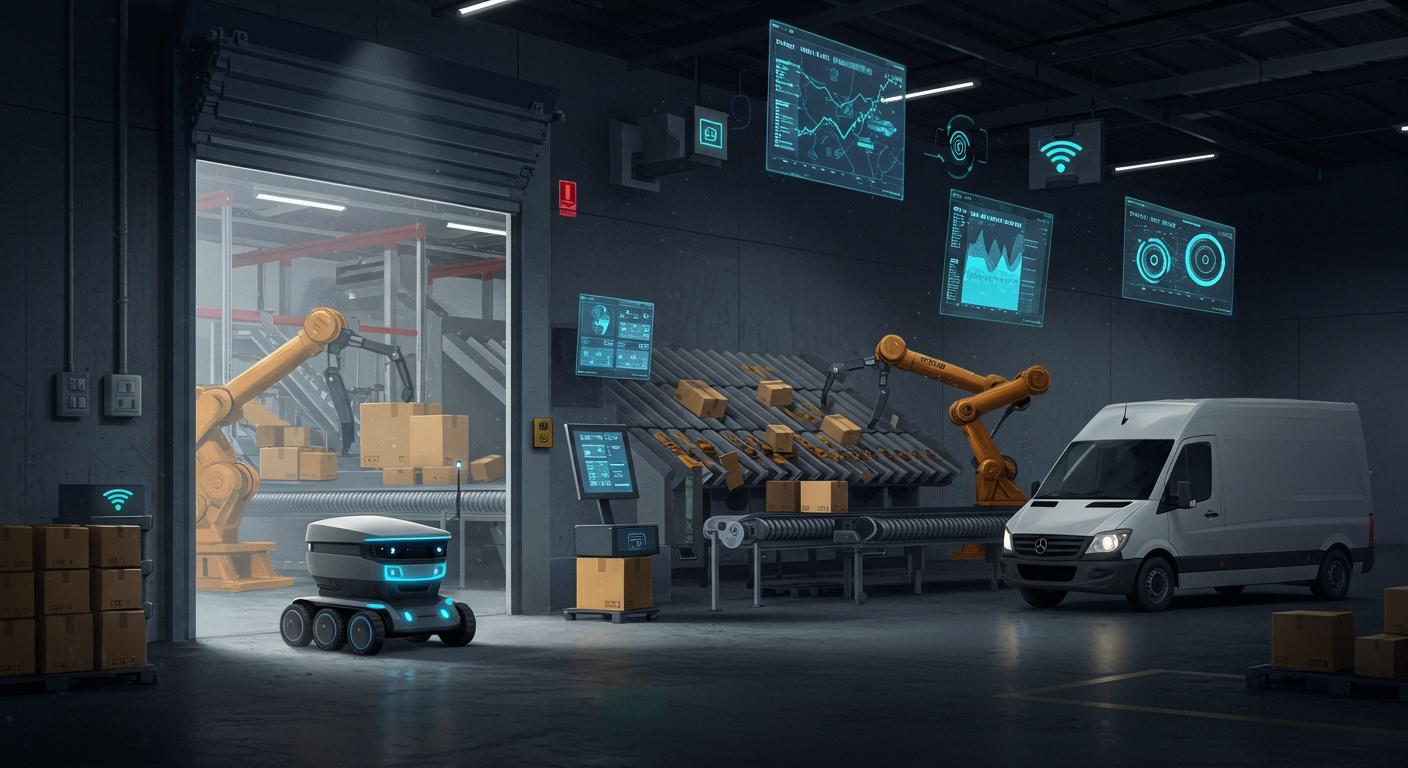
Warehouse automation is changing last-mile delivery by boosting speed, reliability, and efficiency. JUSDA leads this shift with advanced warehouse solutions that support smarter logistics. AI, robotics, and real-time data play a vital role. Machine learning adjusts routes instantly, while drones and autonomous vehicles ensure rapid, reliable deliveries. Predictive analytics help companies manage inventory and improve customer satisfaction. These innovations invite businesses to rethink their supply chain strategies for better results.
Key Takeaways
Warehouse automation significantly speeds up last-mile delivery, with companies reporting a 300% increase in order processing speed.
AI-driven solutions can reduce operational costs by up to 40%, making logistics more efficient and profitable.
Order accuracy improves dramatically with automation, often exceeding 99.9%, leading to higher customer satisfaction.
Integrating robotics and drones enhances delivery speed and reduces emissions, supporting sustainable logistics practices.
Investing in training for employees ensures smooth adaptation to new technologies, boosting productivity and collaboration.
Efficiency Gains
Faster Fulfillment
JUSDA’s advanced warehouse automation solutions have transformed the speed of last-mile delivery. By integrating AI-powered platforms and real-time data, JUSDA enables rapid order processing and efficient dispatching. Companies using these systems report significant improvements in delivery speed and productivity. The following table highlights key performance metrics observed after implementing automation:
Improvement Type | Percentage Improvement |
|---|---|
Last mile delivery efficiency | 15-20% |
Reduction in last mile delivery times | 20% |
Increase in driver productivity | 15% |
Overall productivity increase | 25% |
Reduction in order processing times | 30% |
Improvements in last mile delivery | 20-40% |
Industry benchmarks show that average order processing time drops from three hours to just one hour after warehouse automation deployment. This 300% increase in speed allows businesses to fulfill more orders in less time, meeting rising customer expectations for fast delivery.
Metric | Before Automation | After Automation | Improvement |
|---|---|---|---|
Average Order Processing Time | 3 hours | 1 hour | 300% faster |
JUSDA’s JusLink platform leverages AI to optimize routing and inventory management, ensuring that products reach customers quickly and efficiently.
Cost Reduction
Warehouse automation not only accelerates fulfillment but also delivers substantial cost savings. JUSDA’s AI-driven solutions help companies reduce operational expenses across the supply chain. Key benefits include:
AI-driven automation leads to a 30% reduction in delivery times.
Operational costs decrease by up to 40% with advanced AI solutions.
Autonomous delivery methods lower labor costs.
Optimized routing reduces fuel costs by up to 20%.
Efficient dispatching minimizes unnecessary mileage and idle time, resulting in significant cost savings.
JUSDA’s value-added services, such as real-time inventory tracking and automated picking, further reduce manual labor and associated costs. These improvements allow businesses to allocate resources more effectively and improve their bottom line.
Note: Companies that adopt JUSDA’s warehouse automation solutions often see a rapid return on investment due to these ongoing cost reductions.
Accuracy Improvement
Accuracy in order fulfillment is critical for customer satisfaction and operational efficiency. JUSDA’s AI-powered platforms and robotics have set new standards for precision in warehouse operations. Fully optimized AI-led warehouses now achieve order accuracy rates exceeding 99.9%. Inventory accuracy has also improved by up to 99% with the integration of automation technologies.
Order accuracy rates in optimized warehouses often exceed 99.9%.
AI and robotics integration improves inventory accuracy by up to 99%.
A comparison of error rates between manual and automated processes underscores the impact of automation:
Process Type | Error Rate / Efficiency Metric | Source |
|---|---|---|
Manual Warehouse Management | 30-40% of total errors due to data entry | Accenture report |
Manual Warehouse Management | 65-75% average inventory accuracy | ARC Advisory Group |
Manual Transportation | 10-15% of total production costs | Capgemini research |
Automated Transportation | 15-20% reduction in delivery times | McKinsey report |
JUSDA’s advanced inventory management systems, such as eVMI and JusLink, provide real-time tracking and control, reducing errors and ensuring that customers receive the correct products on time.
Warehouse Automation Technologies

Warehouse automation technologies have become essential for modern supply chains. JUSDA leverages a suite of advanced tools to streamline last-mile delivery and inventory management. These technologies include robotics, drones, artificial intelligence (AI), and the Internet of Things (IoT), all integrated through JUSDA’s JusLink platform.
Robotics and Drones
Robotics and drones play a central role in JUSDA’s warehouse operations. The company deploys a range of automated systems to handle goods efficiently and accurately. The following table outlines the most widely adopted robotics and drone technologies in warehouse automation:
Technology Type | Description |
|---|---|
Autonomous Mobile Robots (AMRs) | Navigate dynamic environments for zone picking and goods-to-person operations. |
Automated Guided Vehicles (AGVs) | Follow fixed routes for repetitive material transport. |
Collaborative Robots (Cobots) | Work alongside staff for assembly and packing tasks. |
Autonomous Case-handling Robots (ACRs) | Manage heavier loads and multiple cases per cycle. |
Automated Storage and Retrieval Systems (ASRS) | Increase vertical density and reduce space requirements. |
Aerial Drones | Deliver small packages, bypassing road congestion for faster last-mile delivery. |
Ground Delivery Robots | Navigate urban areas using cameras and radar for precise delivery. |
These technologies enhance operational efficiency. Drones, for example, can reduce delivery times from hours to minutes and operate in areas where traditional vehicles face delays. Companies using drones for last-mile delivery report improved speed, lower costs, and reduced emissions.
AI and IoT Integration
JUSDA integrates AI and IoT to optimize warehouse and delivery operations. AI automates decision-making, while IoT devices provide real-time data on inventory and fleet performance. This integration brings several benefits:
IoT devices track inventory and monitor fleet conditions.
AI automates complex processes, reducing errors and labor costs.
IoT-enabled systems ensure accurate inventory tracking and timely order fulfillment. AI-driven analytics help JUSDA customize delivery routes, further reducing costs and improving customer satisfaction.
JUSDA’s JusLink Platform
JUSDA’s JusLink platform serves as the backbone of its intelligent supply chain. The platform connects robotics, AI, and IoT systems, enabling seamless data sharing and collaboration. JusLink provides real-time visibility into inventory, automates replenishment, and supports dynamic routing for last-mile delivery. This unified approach ensures that JUSDA’s clients benefit from faster, more accurate, and cost-effective logistics solutions.
JUSDA Warehouse Solutions
Global Network
JUSDA operates a robust global warehouse network that supports efficient last-mile delivery. The company manages over 155 service points worldwide, with warehouse facilities in China, Hong Kong, Taiwan, Japan, Vietnam, India, the United States, and Mexico. This extensive network allows JUSDA to position products closer to customer hubs, reducing transit times and improving logistics efficiency. Warehouses located near highways and urban centers help minimize delivery distances and avoid congestion, especially during peak seasons. Access to a well-established transportation network enhances delivery speed and reliability. Real-time tracking systems provide visibility throughout the delivery journey, giving customers accurate ETAs and improving their overall experience.
Strategic warehouse placement reduces transit times.
Regional fulfillment centers minimize last-mile challenges.
Proximity to urban centers ensures faster fulfillment.
Advanced Inventory Systems
JUSDA’s advanced inventory management systems, such as eVMI and JusLink, set a new standard for accuracy and efficiency. These systems use real-time demand capture to prevent both overstock and stockouts. Unlike traditional methods that rely on manual tracking and historical data, JUSDA’s approach leverages AI and automation for smarter demand forecasting. Inventory optimization tools balance availability and efficiency, creating a more agile supply chain. This agility is crucial in today’s rapidly changing market, where businesses must respond quickly to shifts in demand. Optimized inventory management provides a competitive edge by ensuring products are always available without excess stock.
Real-time systems prevent overstock and stockouts.
AI-driven forecasting avoids overproduction or under-ordering.
Inventory optimization enhances supply chain agility.
Value-Added Services
JUSDA offers a comprehensive suite of value-added services that elevate customer satisfaction and streamline last-mile delivery. Services such as picking, packing, labeling, kitting, and repacking allow businesses to customize orders and differentiate themselves in the market. These offerings provide personalized support and ongoing maintenance, leading to positive customer experiences and stronger brand loyalty. Automated quality checks and faster processing reduce lead times and improve delivery accuracy. By involving customers early in the process, JUSDA tailors solutions to specific needs, ensuring a seamless and efficient delivery experience.
Custom packaging and assembly enhance customer satisfaction.
Streamlined operations reduce miscommunication and rework.
Faster processing and quality checks cut down lead times.
JUSDA’s warehouse automation solutions integrate these elements to deliver superior efficiency, accuracy, and customer service across global supply chains.
Real-World Examples

Automotive Supply Chain
JUSDA has played a key role in transforming the automotive supply chain. The company partnered with Foton Blue Ocean to create a new model for automotive logistics. This partnership brought digital tools and AI-driven platforms into the supply chain. Automotive manufacturers now benefit from real-time tracking, dynamic inventory management, and improved risk control. JUSDA’s solutions help companies manage just-in-time production and respond quickly to market changes. As a result, automotive clients have seen faster delivery times and better supply chain resilience. The use of JUSDA’s JusLink platform allows for full visibility across all supply chain nodes, which helps prevent disruptions and ensures timely deliveries.
Electronics Manufacturing
Electronics manufacturers face complex global supply chains. JUSDA supports these companies by providing advanced warehouse automation and intelligent inventory systems. The company’s eVMI and JusLink platforms enable real-time data sharing and accurate demand forecasting. Electronics clients have reported fewer stockouts and reduced excess inventory. JUSDA’s clean room facilities meet strict environmental standards, which is important for sensitive electronic components. The company’s global network ensures that products move efficiently from factories to end customers. This approach helps electronics brands maintain high product quality and meet tight delivery schedules.
Customer Success Stories
Many leading manufacturers have adopted JUSDA’s warehouse automation solutions. These companies have achieved measurable results in cost savings and sustainability. The table below highlights key outcomes:
Outcome | Percentage Reduction |
|---|---|
Material Costs | 30% |
Emissions | 50% |
JUSDA’s clients have also gained industry recognition for their efficient and sustainable supply chains. The company’s AI-powered platforms and value-added services support global expansion and process standardization. Customers report improved transparency, reduced manual handling, and faster order fulfillment. These success stories show how JUSDA’s solutions drive real efficiency gains in today’s competitive markets.
Supporting Factors
Integration and Infrastructure
Successful warehouse automation depends on seamless technical integration and robust infrastructure. Many warehouse managers face challenges with system compatibility. In fact, 54% of them identify system incompatibility as a major barrier to automation. JUSDA addresses this by implementing API and cloud-based solutions, which can boost operational efficiency by 32%. These technologies allow different systems to communicate and share data in real time. JUSDA’s JusLink platform connects robotics, AI, and IoT devices, creating a unified environment for warehouse operations. Reliable infrastructure ensures that automated systems run smoothly and support rapid last-mile delivery.
System compatibility remains a top concern for warehouse managers.
API and cloud-based solutions drive efficiency and enable real-time data sharing.
Unified platforms like JusLink streamline integration across technologies.
Workforce Adaptation
The human element remains essential in automated warehouses. Workforce training and adaptation help teams work effectively with new technologies. Training programs reduce resistance to change and encourage a culture of continuous improvement. JUSDA invests in educating employees about automated systems, highlighting how automation enhances their roles rather than replacing them. This approach fosters collaboration between human workers and robots, leading to higher productivity and smoother operations.
Invest in training programs to educate employees on automated systems.
Show how automation can enhance employee roles.
Foster collaboration between staff and automated technologies.
Tip: Embracing advanced technologies allows warehouse teams to adapt quickly and improve productivity.
Collaboration
Collaboration drives the success of warehouse automation projects. Engaging the workforce early in the process builds trust and increases adoption rates. JUSDA prioritizes transparency and provides hands-on training to ensure employees feel confident using new systems. The company also creates "technology champion" roles, encouraging frontline feedback and continuous improvement. Automation opens opportunities for upskilling and cross-training, allowing employees to focus on critical thinking and teamwork.
Early engagement and transparency support successful adoption.
Hands-on training builds confidence in new systems.
Technology champions encourage feedback and innovation.
Collaboration between people and technology ensures that warehouse automation delivers lasting efficiency gains.
Challenges and Considerations
Regulatory Issues
Warehouse automation introduces new regulatory challenges. Companies must comply with local and international standards for safety, labor, and environmental impact. JUSDA ensures that its automated warehouses meet all necessary regulations, including fire safety and environmental health standards. For example, JUSDA’s clean room facilities in Vietnam follow strict guidelines set by major technology brands. Regular audits and certifications help maintain compliance. By working closely with regulatory bodies, JUSDA reduces the risk of operational disruptions and ensures smooth last-mile delivery.
Investment and ROI
Investing in warehouse automation requires careful financial planning. Companies often evaluate the return on investment using several key metrics:
Metric | Description |
|---|---|
Measures the value of future cash flows, discounted to present value. A positive NPV signals a good investment. | |
Internal Rate of Return (IRR) | Shows the percentage return where NPV equals zero. A higher IRR than the company’s target rate means the project is viable. |
Time Value of Money | Recognizes that money today is more valuable than money in the future, affecting both NPV and IRR calculations. |
Companies also look at practical benefits when calculating ROI:
Labor savings by comparing current productivity with projected gains after automation.
Space savings from optimized storage, which can delay or eliminate the need for facility expansion.
Increased revenue through better service levels and higher order accuracy, leading to more repeat business.
JUSDA’s clients often see rapid ROI due to reduced operational costs and improved efficiency.
Data Security
Automation brings new data security risks. JUSDA addresses these risks by designing systems with safety and compliance in mind. The following table outlines common risks and mitigation strategies:
Risk Type | Mitigation Strategy |
|---|---|
Fire | Design for fire accessibility and follow FM Global standards. |
Electrical Shock | Use low-voltage batteries to remove electrocution risks. |
Mechanical Impact | Deploy collision-proof robots and limit robot speed at picking stations. |
Radiation | Use class 1 or 2 lasers and limit power for safe operation. |
Hearing Damage | Create workspaces that minimize noise exposure for operators. |
JUSDA’s approach ensures that automation does not compromise safety or data integrity. Regular system updates and employee training further strengthen security across all warehouse operations.
Future Trends
AI-Driven Logistics
JUSDA continues to lead the way in AI-driven logistics. The company uses digital twin technology to create virtual replicas of warehouses. These digital twins allow teams to test scenarios and optimize operations before making changes in the real world. Advanced robotics handle complex tasks, improving automation and reducing manual labor. AI-driven predictive maintenance helps JUSDA schedule repairs before equipment fails, which reduces downtime and keeps operations running smoothly. Collaborative robots, known as cobots, work alongside employees to boost productivity and safety. Enhanced data analytics give managers deeper insights into warehouse performance, supporting better decision-making.
Innovation | Description |
|---|---|
Digital Twin | Real-time virtual replica of a physical warehouse for scenario testing and optimization. |
Advanced Robotics | Sophisticated robots capable of handling complex tasks to enhance automation. |
AI-Driven Predictive Maintenance | Predicts equipment failures and schedules maintenance to reduce downtime. |
Collaborative Robots (Cobots) | Work alongside humans to enhance productivity and safety. |
Enhanced Data Analytics | Improves insights into operations for better decision-making. |
Sustainable Practices | Optimizes energy usage and reduces waste for sustainability. |
Predictive Analytics
JUSDA’s JusLink platform uses predictive analytics to forecast demand, optimize inventory, and manage risks. The system analyzes large amounts of data from IoT devices and warehouse management systems. This approach helps JUSDA anticipate market changes and adjust supply chain strategies quickly. Predictive analytics also support replenishment planning, reducing the risk of stockouts and overstock. Managers use these insights to make informed decisions and improve service levels. Real-time monitoring and early warnings from JusLink’s risk control tower help prevent disruptions and maintain smooth operations.
Note: Predictive analytics empower JUSDA to deliver reliable, efficient, and responsive last-mile solutions.
Sustainable Solutions
Sustainability remains a top priority for JUSDA. The company optimizes energy usage and reduces waste through advanced automation and data-driven practices. Clean room facilities in Vietnam meet strict environmental standards, supporting responsible manufacturing. JUSDA’s global network uses efficient routing and consolidation to lower emissions. Automated systems track resource consumption and identify areas for improvement. By focusing on sustainable practices, JUSDA helps clients achieve their environmental goals while maintaining high operational standards.
JUSDA’s automation reduces energy consumption.
Efficient routing lowers carbon emissions.
Clean room facilities support environmental health.
JUSDA’s commitment to innovation and sustainability positions the company as a leader in the future of warehouse automation.
Warehouse automation delivers measurable efficiency gains in last-mile delivery. JUSDA drives these improvements with advanced AI, robotics, and real-time data solutions. Companies see faster fulfillment, lower costs, and higher accuracy. JUSDA’s global network and intelligent platforms set new standards for supply chain excellence.
Businesses seeking future-ready logistics should explore JUSDA’s automation solutions. The evolution of warehouse automation will continue to shape smarter, more resilient supply chains worldwide.

JUSDA Solutions
To provide you with professional solutions and quotations.
FAQ
What types of warehousing services does JUSDA offer?
JUSDA provides general storage, bonded warehouses, distribution centers, and finished goods storage. The company also supports clean room facilities that meet strict environmental health standards for technology brands.
How does JUSDA ensure inventory transparency and accuracy?
JUSDA uses advanced management systems like eVMI and JusLink. These platforms enable real-time inventory tracking, demand forecasting, and automated replenishment, which help maintain high accuracy and transparency.
What value-added services can clients expect from JUSDA?
Clients benefit from picking, packing, labeling, kitting, switch doc, and repacking. JUSDA also offers software upgrades and rework services to optimize warehouse operations and support customized logistics solutions.
Where does JUSDA operate its global warehouse network?
JUSDA manages over 155 service points worldwide. Warehouses are located in China, Hong Kong, Taiwan, Japan, Vietnam, India, the United States, and Mexico. The network supports efficient last-mile delivery and global supply chain management.
How does JUSDA address data security in automated warehouses?
JUSDA designs systems with safety and compliance in mind. The company uses fire accessibility standards, low-voltage batteries, collision-proof robots, and secure laser technology. Regular audits and employee training further strengthen data security.
See Also
Maximizing Productivity: Understanding Robotics in Warehousing
Transforming Warehouse Operations: The Impact of Robotics
Embracing Automation: Advantages of Advanced Manufacturing Warehouses