Tracking World Container Index Movements and Global Freight Rate Shifts in 2025

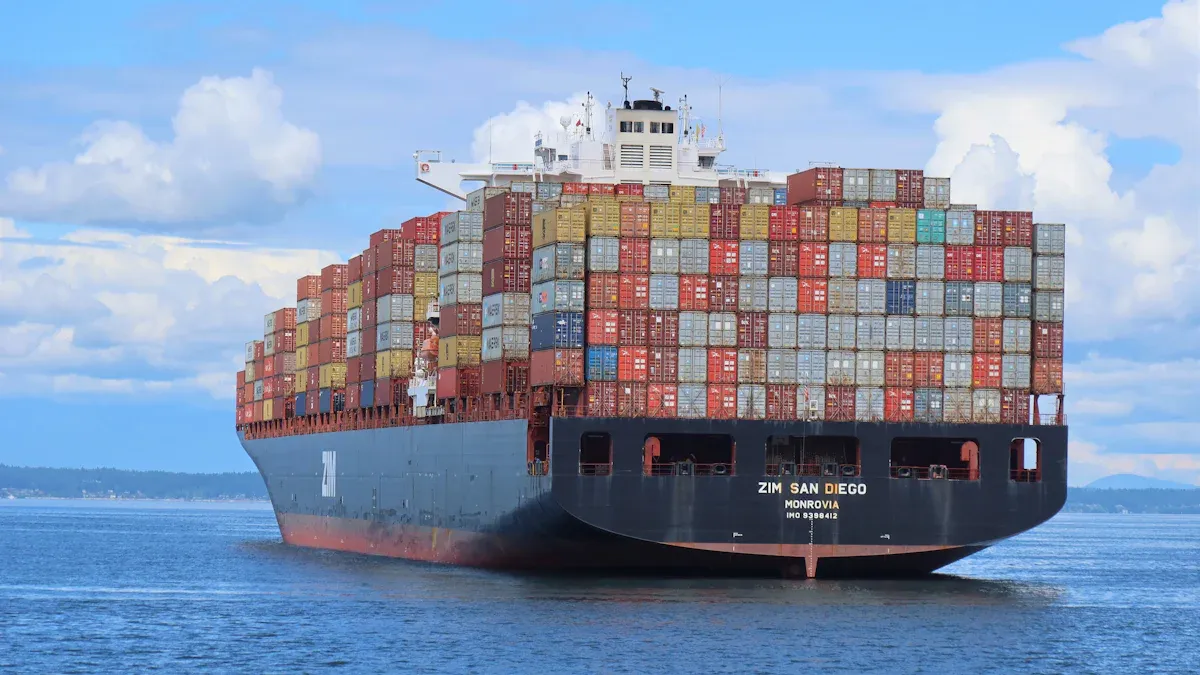
You notice big changes in the world container index in 2025. The Drewry world container index is at $1,852. The containerized freight index is 1,393.56. It dropped 0.71% in one month. It also fell 35.49% in one year.
Metric | Value |
|---|---|
Drewry World Container Index | $1,852 |
You should watch the world container index to make smart choices. By checking the world container index, you can compare rates. You can also look at quotes and see changes early. The world container index helps you get ready for seasonal changes. It also helps you guess future prices. Good data and smart tools help you decide. JUSDA brings new ideas and better ways to your supply chain.
Key Takeaways
Watch the Drewry World Container Index to help with shipping choices and know when prices might change.
Look at weekly rate updates to plan shipments well and keep costs down.
Think about using JUSDA’s China-Europe Express Rail for quick and cheaper shipping.
Pay attention to changes in rates from world events and where things are made.
Check spot rates often so you can change your shipping plans and not get surprised by costs.
World Container Index Trends
Weekly Rate Movements
Every week in 2025, the world container index changes a lot. The drewry index helps you see how rates go up or down. Look at the table to find the biggest weekly changes. On September 18, 2025, rates for a 40-foot container dropped by 6%. This was the 14th week in a row that rates went down. In early September, rates from Shanghai to Los Angeles went up by 6%. Rates from Shanghai to New York went up by 2%. These jumps happened because of general rate increases, called GRIs. Rates from Shanghai to Rotterdam fell by 10%. Rates from Shanghai to Genoa fell by 12%. These drops happened because there were too many containers.
Date | Rate per 40-foot container (FEU) | Weekly Change | Notes |
|---|---|---|---|
September 18, 2025 | -6% | 14th consecutive week of decline | |
Early September 2025 | $2,678 (Shanghai to Los Angeles) | +6% | Temporary increase due to GRIs |
Early September 2025 | $3,743 (Shanghai to New York) | +2% | Temporary increase due to GRIs |
September 2025 | $2,143 (Shanghai to Rotterdam) | -10% | Continued softening under capacity pressure |
September 2025 | $2,342 (Shanghai to Genoa) | -12% | Continued softening under capacity pressure |
You can use the drewry index to watch these weekly changes. This helps you plan your shipments and keep costs low. JUSDA uses this data to help you make smart choices. You get updates right away and can change your supply chain fast.
Key Route Changes
Some shipping routes change more than others. The trans-Pacific route from Shanghai to Los Angeles went up by 7%. Rates reached $4,829 per FEU. The route from Shanghai to New York went up by 6%. Rates reached $6,445 per FEU. These changes can make shipping cost more and take longer. The drewry index lets you compare routes and see trends. You can pick the best route for your needs. JUSDA helps you use this data to make your supply chain better. You get tips on which routes save money and time.
The trans-Pacific route from Shanghai to Los Angeles went up by 7%, reaching $4,829 per FEU.
The route from Shanghai to New York went up by 6%, with rates at $6,445 per FEU.
You can see how rates change on each route. This helps you plan and control your shipping costs.
Comparison to Past Years
You might wonder how rates now compare to past years. In 2025, world container index rates are much lower than in 2023 and 2024. Average spot rates were $8,023 on July 5, 2024. By December 2023, rates dropped to $2,274 per FEU on the Transpacific trade. Now, rates are close to what they were before the Red Sea crisis, about $1,643 per FEU. The drewry index shows this change clearly. You can use this info to guess future changes and plan your budget.
The 2025 world container index rates are much lower than the highest rates in 2023 and 2024.
Average spot rates were $8,023 on July 5, 2024, but dropped to $2,274 per FEU by December 2023.
The current average spot rates are close to pre-Red Sea crisis levels ($1,643 per FEU), not the high rates during the crisis.
You learn more about the market when you compare rates over time. The drewry index and other trackers help you see these changes. JUSDA uses this data to help you guess demand and manage your supply chain better.
Tip: Use the drewry index and spot rates to plan your shipping budget and avoid surprise costs.
You can find many sources for container index trends. Drewry’s World Container Index is a top source. It gives you clear info about container freight rates. You can use trackers and indices to follow the market. JUSDA uses these sources to give you the best advice and solutions for your supply chain.
Global Freight Rates Analysis

Regional Rate Shifts
You see big changes in freight rates across different regions in 2025. Many U.S. companies move factories closer to home. They choose Latin America to lower risks and shorten supply chains. This reshoring and nearshoring trend changes the flow of goods and affects rates. Geopolitical events, like the Red Sea crisis, force ships to take longer routes. This rerouting impacts freight rates between Asia and Europe. In Europe, the war in Ukraine causes more instability. You notice higher costs and more delays in European freight.
U.S. firms move manufacturing to Latin America, changing regional rates.
Red Sea disruptions force ships to reroute, raising rates on Asia-Europe lanes.
The war in Ukraine increases freight instability and costs in Europe.
You need to track these regional shifts. They help you plan your shipping and control your costs.
Impact on Shipping Costs
Freight rates in 2025 show a downward trend on many major trade lanes. You benefit from lower shipping costs as rates drop. On Asia-Europe lanes, rates fall 7% to $2,841 per FEU. Transpacific rates drop even more, with West Coast rates at $1,744 per FEU. These changes mean you pay less to move goods across the ocean. Capacity growth outpaces disruptions, so shipping costs stay lower than in past years.
Global freight rates decrease, lowering shipping costs for many routes.
Asia-Europe rates fall 7% to $2,841 per FEU.
Transpacific rates drop 60-70% since June, with West Coast rates at $1,744 per FEU.
More ships and containers help keep rates down, even with some disruptions.
You can use spot market freight rates to find the best deals. JUSDA’s China-Europe Express Rail gives you another option. This rail service offers a balance between speed and cost. You get your goods faster than by sea and pay less than by air. The rail service helps you manage your shipping budget and meet tight deadlines.
Note: JUSDA’s China-Europe Express Rail can deliver goods in 15 to 20 days. The cost is about three times ocean freight, but five times cheaper than air freight. This service helps you save money and time, especially for electronics, clothing, and medical supplies.
Route-Specific Data
You notice some routes have bigger changes in rates than others. U.S. tariff changes push rates up by as much as 40% on certain routes. Container shipping rates on the China-U.S. West Coast route surge by over 200% since December 2024. Air freight rates on Asia-North America routes rise by 300-350% since January 2025. Customs processing times increase by 127%, causing more delays.
U.S. tariff changes increase rates by up to 40% on key routes.
China-U.S. West Coast container shipping rates jump over 200% since late 2024.
Air freight rates on Asia-North America routes rise 300-350% in 2025.
Customs delays grow, with processing times up 127%.
You need reliable freight rate information to make smart choices. Drewry’s World Container Index and container freight rate insight tools help you track these changes. JUSDA’s China-Europe Express Rail gives you a stable and predictable option, even when ocean and air rates change quickly.
Service Type | Transit Time (Days) | Cost Comparison |
|---|---|---|
China-Europe Express Rail | 15 to 20 | 3x ocean freight, 5x cheaper than air freight |
You see how JUSDA’s rail service supports industries like electronics, clothing, and medical supplies. These sectors need fast, reliable shipping. The rail option helps you meet market demands and keep your supply chain running smoothly.
You can use ocean freight cost benchmarking and container freight rate insight to compare your options. JUSDA helps you find the best route and service for your needs.
Drivers of Rate Movements
Capacity and Demand
Global shipping changes a lot because of capacity and demand. When demand is weak, rates go down. Too many containers mean there is overcapacity. High US tariffs make costs go up for many companies. Local cost pressures also change how you plan your supply chain.
How people buy things affects freight demand.
More online shopping means faster and reliable supply is needed.
Shipping capacity and rates change with the seasons.
You need to watch these things to keep your supply chain strong. If demand drops, rates will fall. If capacity grows too fast, you have more choices but also more risk.
Regulatory and Geopolitical Factors
Rules and world events change the supply chain every year. Problems in the Middle East and Ukraine make costs higher. Ports get crowded and there are not enough workers. Stricter rules for the environment make companies spend more on clean technology, which raises costs.
World tensions and new rules change shipping routes.
The Red Sea crisis makes ships take longer and costlier paths.
Uncertainty and higher costs make planning harder for your supply chain.
You need to pay attention to these changes. They can change your shipping plans and your budget.
Technology and AI Solutions
Technology helps you handle supply chain risks and guess rates. Digital tools turn data into useful ideas, so you can act fast. AI and smart analytics help you deal with problems and make freight more useful. New systems give you alerts and let you see everything, so you control your operations better.
JusLink’s AI Solution uses smart analytics and machine learning to guess rates and manage risks. You get good forecasts, which help you set prices and react to market changes. AI tools watch supply chain data and warn you about problems early.
Benefit | Description |
|---|---|
Resilient supplier selection | You make better choices and see your supply chain clearly. |
Improved information processing | You get faster and clearer supply chain data. |
Enhanced responsiveness | You adjust quickly to changes in demand. |
Speedy recovery from disruptions | You recover faster when problems happen. |
Demand-driven operations | You deliver faster and make your supply chain work better. |
Tip: Use AI-powered tools to see your supply chain better and react quickly to market changes.
JUSDA’s China-Europe Express Rail
Service Features and Value
You can pick JUSDA’s China-Europe Express Rail to ship goods fast. This service gives you a good mix of speed and price. You get door-to-door delivery in 15 to 20 days. The rail network reaches big cities and links with sea-rail options. You can send electronics, clothing, and medical supplies. JUSDA’s team helps with customs, so your goods keep moving. You get fixed schedules and real-time tracking. This makes planning easier and helps you avoid delays.
Note: JUSDA’s rail service keeps your supply chain flexible. You can react to market changes quickly.
Cost and Speed Comparison
You save time and money with JUSDA’s rail service. Rail costs three times more than ocean shipping. But it is five times cheaper than air freight. You get your goods much faster than by sea. For example, a home appliance company cut transport time from 45 days by sea to 20 days by rail. This change lowered transportation costs by 30%. You can use container freight spot rates to compare and choose the best route.
Service Type | Transit Time (Days) | Cost Comparison |
|---|---|---|
China-Europe Express Rail | 15 to 20 | 3x ocean freight, 5x cheaper than air freight |
Industry Use Cases
Many industries use JUSDA’s rail service and see big benefits. Electronics companies deliver fast to meet demand. Clothing brands ship quickly to follow trends. Medical suppliers send urgent goods on time. Small and medium businesses save money and compete worldwide.
SMEs get low-cost shipping for small budgets.
Faster shipping helps you stay ahead.
Fixed schedules and easy customs make planning simple.
Industry | Benefits | Example |
|---|---|---|
Electronics | Fast and reliable service | Better logistics to meet market needs |
Clothing | Improved logistics operations | Timely delivery and quick response to market changes |
Medical Supplies | Enhanced logistics operations | Able to deliver urgent goods when needed |
SMEs | Lower transportation costs and faster shipping | Up to 50% less cost than air freight, helping compete globally |
Tip: JUSDA’s rail service helps you keep shipments moving and meet customer needs.
Industry Outlook and Predictions
Near-Term Rate Forecasts
Shipping rates will likely stay low soon. Experts from Drewry and JUSDA say too many ships are available. Not enough people need shipping right now. Spot rates on big trade lanes are soft. Spot rates for Asia-Europe and Transpacific routes do not go up fast. Trade wars and conflicts make the market uncertain. You should watch these changes closely. If more people need shipping, rates may go up for a short time. Most experts think rates will stay steady or drop a bit more in 2025.
Tip: Check spot rates every week. This helps you see changes early and change your shipping plans.
Long-Term Trends
Get ready for more changes in global freight after 2025. Experts think rates will keep going up and down. Too many ships will make it hard for rates to rise fast. Shipping demand will not grow much. New rules and world events will keep changing rates. Prices will stay weak, and rates may not recover until late 2026 or 2027.
Freight rates will keep changing a lot.
Too many ships will slow growth and keep rates low.
World events and new rules will cause more ups and downs.
Rates may not go up until late 2026 or 2027.
Drewry says too many ships will peak in 2027. Spot rates drop when fewer people need shipping. Trade wars and other problems make planning hard. You need to stay flexible and ready for quick changes.
JUSDA Solutions
To provide you with professional solutions and quotations.
You noticed big changes in the world container index and freight rates in 2025. Using data and smart predictions helps you make quick choices. This can make things work 20% better. JUSDA’s JusLink platform uses IoT, AI, and blockchain to give you updates and warnings right away. Advanced logistics services, like real-time tracking and digital tools, keep you updated and ready for anything. Trusted sources, like the TrueFreight Index and Freightos Baltic Index, help you follow market trends and plan with confidence.
See Also
Discovering Innovations in Sea Freight Logistics for 2024
Understanding Current Trends in Logistics Risk Management
An In-Depth Look at the Future of LTL Freight
Getting Prepared: New Transport Technologies for Supply Chains