Why AI Is Revolutionizing Supply Chain Management in 2025

AI + Supply Chain is transforming how supply chains operate in 2025. Automation and real-time data empower companies to manage their operations more effectively. This technological advancement also accelerates decision-making processes. Predictive analytics enable managers to anticipate risks, ensuring that operations run smoothly. The global digitalization of supply chains connects every component, leading to significant improvements for businesses that adopt AI solutions. As a result, they experience fewer errors and reduced costs. The table below illustrates how leading companies leverage AI in their supply chains.
Company | Measurable Outcome |
|---|---|
DHL | |
UPS | Saved $400 million each year |
Walmart | No empty shelves |
BMW | Fewer chip shortages |
Companies | 12% more earnings since 2020 |
Key Takeaways
AI changes supply chains by doing tasks automatically. It lowers mistakes and makes things faster. Real-time data lets companies watch shipments and inventory right away. This helps them make better choices. Predictive analytics help businesses guess what people will buy. This makes inventory better and keeps customers happy. AI-driven warehouse automation makes work easier and saves money. It also lowers mistakes when handling inventory. Companies using AI in supply chains do better than others. They have better logistics and help the environment.
AI + Supply Chain: Key Drivers in 2025
Automation and Resilience
In 2025, automation is a big part of the ai + supply chain change. Companies use ai to handle simple jobs, which means fewer mistakes and faster work. Automation now uses smart robots, self-driving trucks, and sorting machines. These tools help companies react fast and fix problems quickly. Ai lets companies see problems coming and change plans fast. They can find risks, pick new suppliers, and fix things after trouble. JUSDA is leading by using ai-powered automation to make supply chains stronger for clients around the world.
Ai-powered automation makes jobs easier and more correct.
Self-driving trucks and robots make work safer and faster.
Companies can change plans and fix problems quickly.
Automation helps companies stay strong, even when surprises happen.
Real-Time Visibility and Data Integration
Ai tracking now lets companies see what is happening in the supply chain right away. They can watch shipments, stock, and production as it happens. This is possible by putting together data from sensors, GPS, and supplier systems. But some companies still have problems. Data is often kept in different places or in different forms, so ai cannot always use it. JUSDA’s network and JusLink platform help by bringing all the data together and showing every step in the supply chain.
Case Study | Impact of Real-Time Visibility and Data Integration |
|---|---|
KFC’s Chicken Shortage (2018) | Real-time GPS tracking would have warned KFC about shortages, so they could act sooner. |
Apple’s iPhone X Component Shortage (2017) | Predictive analytics could have helped Apple deliver on time and avoid problems. |
Ever Given Suez Canal Blockage (2021) | Better tracking could have helped reduce the crisis. |
Predictive Analytics for Supply Chain Operations
Ai-powered predictive analytics have changed how companies plan and run supply chains. These tools use new and old data to guess what will happen, find risks, and give advice. Ai models can now guess demand right up to 95% of the time when things are normal. This helps companies make half as many mistakes. Teams can change stock, send shipments a new way, and fix supplier delays before they get worse. JUSDA uses predictive analytics to help clients make good choices and keep things running well.
Ai looks at data to guess problems and make logistics better.
Predictive analytics tools help teams plan and stop delays.
Good demand guesses help with stock and keep customers happy.
AI Applications in Supply Chain Operations
Warehouse Automation with JUSDA
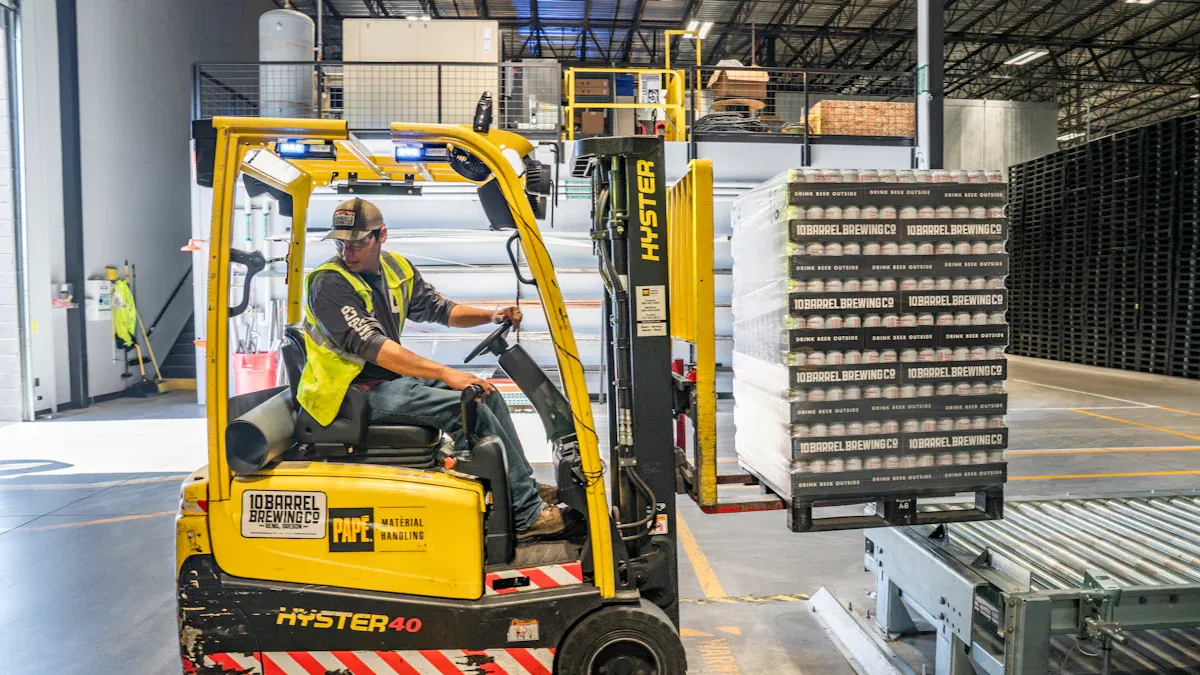
Companies use ai-driven warehouse management to change how they work. JUSDA leads by using robots for picking and sorting jobs. These robots move fast and make fewer mistakes. IoT sensors watch inventory all the time, so teams always know what they have. Ai helps guess demand, so warehouses do not run out or have too much. JUSDA’s JusLink platform connects all the data, making things easy and clear.
Adding ai solutions in warehouses brings big changes. Teams deliver faster and spend less money. Warehouses become smart centers that fit today’s supply chain needs. The table below shows how ai + supply chain automation makes warehouses better.
Metric | Improvement Percentage |
|---|---|
Overall cost reduction | 30% |
Reduction in order picking time | 48% |
Decrease in inventory counting errors | 62% |
Improvement in warehouse space utilization | 37% |
Increase in throughput capacity | 29% |
Reduction in average delivery route distance | 22% |
Increase in deliveries per vehicle per day | 18% |
Decrease in late deliveries | 34% |
Reduction in route planning time | 41% |
Reduction in excess inventory | 32% |
Decrease in stockout incidents | 68% |
Improvement in inventory turnover ratio | 43% |
More accurate demand forecasting | 52% |
Routine inquiries handled by AI | 74% |
Reduction in response time for inquiries | 63% |
Improvement in customer satisfaction scores | 26% |
Decrease in order tracking related calls | 38% |
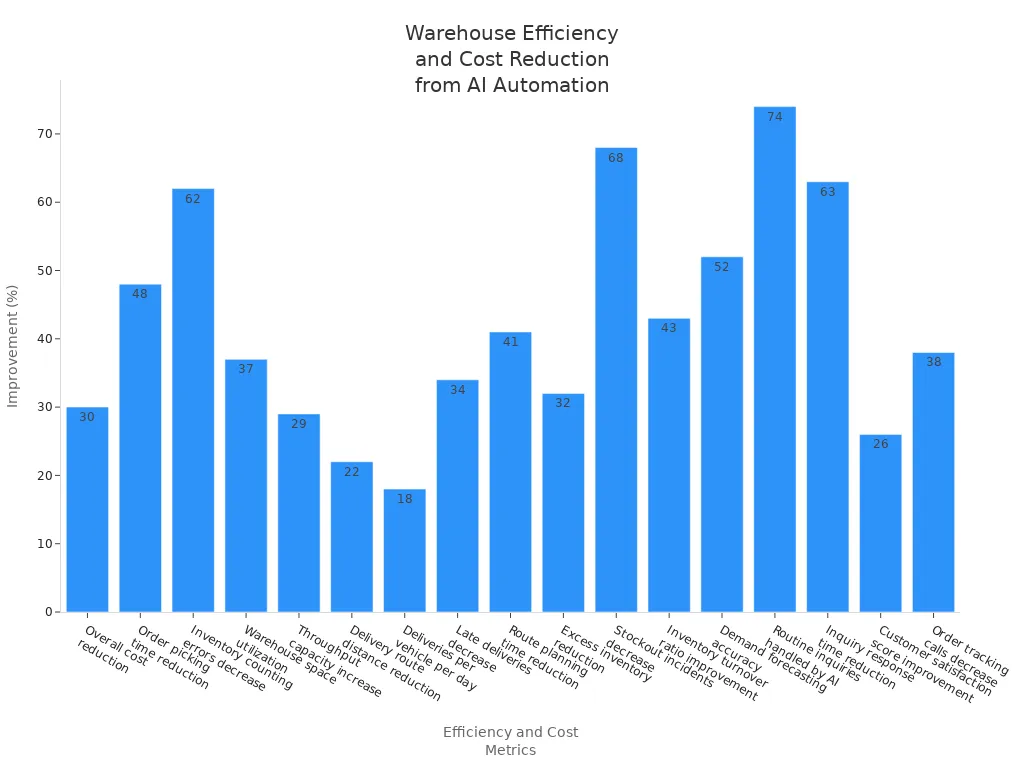
JUSDA’s ai-driven automation helps companies work better, faster, and cheaper in warehouse management.
Demand Forecasting and Inventory Optimization
Ai tools help with demand forecasting and inventory optimization. JUSDA uses smart ai to study demand and sales data. This helps teams know how much inventory they need. Teams save money and avoid running out of products. Ai looks at market trends and weather to make predictions better. Brands using ai demand tools guess demand up to 30% better. This also helps lower inventory costs.
Impact | Reduction in Inventory Holding Costs |
|---|---|
After optimization | 15%–30% |
Ai-driven demand forecasting gives better predictions than old ways.
Ai does simple jobs, so teams can focus on big decisions.
Inventory optimization gets easier, and service improves.
Good forecasting and ai help companies plan well and save money.
Logistics and Route Planning
Ai has changed how companies plan routes and handle logistics. Dynamic route optimization uses ai to pick the best paths for goods. The system checks traffic, weather, and delivery times. Ai changes plans fast, so trucks use the best routes. Companies watch On Time Delivery rates and delivery times. Ai platforms track these numbers and help teams get better.
Amazon uses ai to guess what customers want. This helps them put products in the right place and ship faster. Maersk saves fuel and ships quicker with ai analytics. Procter & Gamble delivers on time more often with ai forecasting. Unilever sends products faster after using ai for route planning.
Ai picks better routes and saves travel time.
Companies save fuel and work more efficiently.
Less waste makes logistics better.
Ai + supply chain technology makes moving goods smarter and faster.
Risk Management and Compliance
Risk management and compliance are important in supply chains. Ai helps companies find risks and follow rules. Tools like SAP Integrated Business Planning and Everstream Analytics help with planning and risk checks. JUSDA’s JusLink and JusElsa give real-time risk alerts.
Tool Name | Key Features |
|---|---|
SAP Integrated Business Planning | Scenario planning, advanced analytics, inventory management, ERP integration |
Jaggaer Supply Chain Risk Management | Supplier risk assessment, performance benchmarking, automated risk response, real-time scoring |
Everstream Analytics | AI-driven risk intelligence, global risk data feeds, predictive analytics, supply chain visibility |
Ariba Network (by SAP) | Supplier collaboration, risk monitoring, automated evaluations, procurement integration |
Coupa | Supply chain optimization, advanced analytics, what-if analysis, end-to-end visibility |
Ai makes following rules easier and more correct. Real-time checks help companies spot problems fast. Predictive analytics warn teams about risks before they get worse. Natural language processing helps with documents. Regular audits make sure companies meet standards.
Ai-driven compliance tools make work more correct and quick.
Companies use data to watch risks and follow rules.
Supply chain work gets safer and clearer.
Ai tools help companies manage risks and follow global rules.
Future of AI in Logistics: Trends and Innovations
Digital Twins and Autonomous Networks
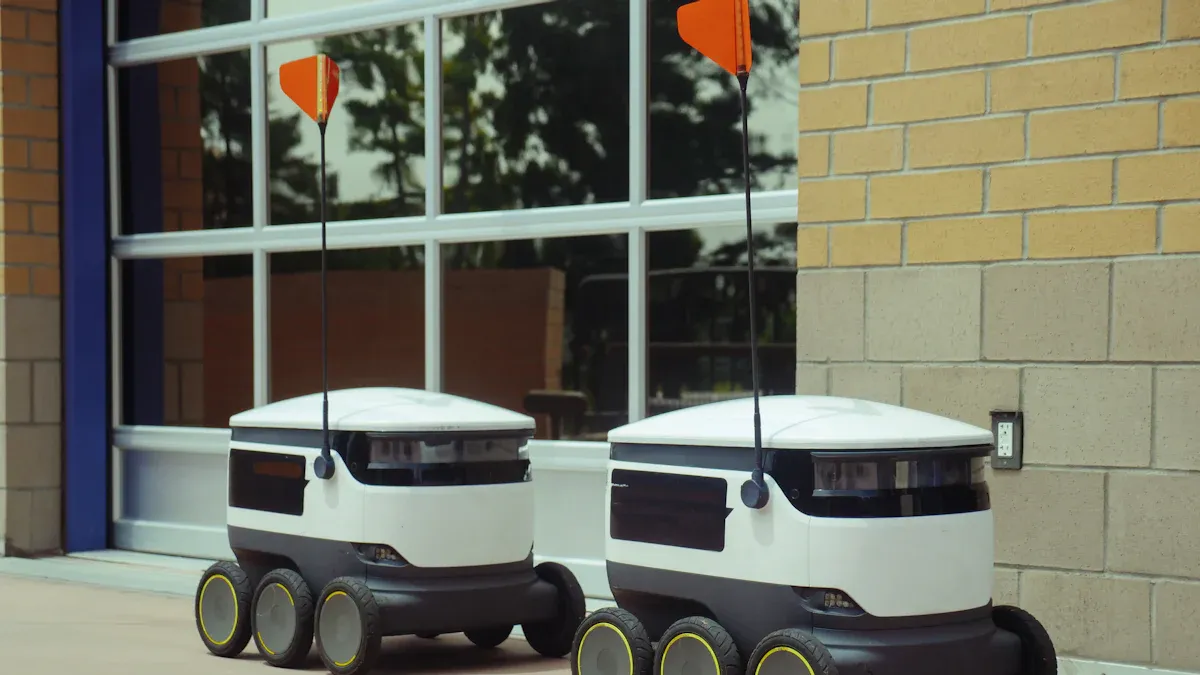
The future of ai in logistics will use digital twins and autonomous networks. A digital twin is a virtual copy of a warehouse, truck, or supply chain. Teams can test ideas and fix problems using this model before making real changes. Autonomous networks use ai to make choices without people. These networks can change shipment routes, update inventory, and react to problems fast. JUSDA’s stories show how digital twins and ai help companies see what is happening and keep profits safe during surprises.
Feature | Benefit |
|---|---|
Digital Twin | Helps plan better by simulating work |
Autonomous Network | Makes quick choices and adapts fast |
Performance Gains | Boosts efficiency by up to 40% |
Cost Reduction | Lowers logistics costs by about 15% |
Digital twins and autonomous networks help companies stay flexible and strong when things change.
Generative AI for Supplier Collaboration
Generative ai is changing how companies work with suppliers. It looks at old data to guess demand and plan inventory. Teams use ai to find risks and make backup plans. Generative ai helps companies talk to suppliers and share news faster. Maersk, Walmart, and Unilever use generative ai to help customers and save money. JUSDA works with schools to use ai for guessing delivery times and handling risks. These tools help companies avoid running out of products and keep goods moving.
Generative ai makes demand guesses and risk checks better.
It helps teams talk and work with suppliers more easily.
Companies use ai to build good supplier partnerships.
Sustainability and ESG Tracking
The future of ai in logistics will focus on sustainability and ESG tracking. Companies use ai to watch carbon emissions and cut waste. AI dashboards collect data and show how close teams are to ESG goals. Teams get updates right away and can fix problems fast. JUSDA’s smart logistics help companies meet world rules and be more responsible. AI helps plan routes that use less fuel and lower pollution.
Application Area | Description |
|---|---|
Watches environmental impact and risks | |
Employee Management | Makes workers happier and improves responsibility |
Internal Audit | Checks accuracy and supports good management |
AI helps companies reach green goals and follow the rules.
The future of ai in logistics will bring smarter, greener, and more connected supply chains. Companies using ai will lead in new ideas and work better.
Best Practices for AI Adoption in Supply Chains
Assessing Readiness and Setting Objectives
Companies need to check if they are ready for ai. They should make goals that fit what the business needs. Leaders must help and promise to support these changes for a long time. Teams should build good data systems and have skilled workers or get help from experts. Using data to make choices helps everyone trust ai. Companies must use fair rules and not expect too much from ai. They should pick tech that can grow and keep data safe. Teams should keep learning to handle new problems.
Make clear ai goals for supply chain work.
Get leaders to help and plan for the future.
Build good data systems and hire skilled workers.
Use data to make choices and follow fair rules.
Pick tech that can grow and keep data safe.
Keep learning and get ready for new ai tools.
Building Data Infrastructure
A strong data base helps ai work in supply chains. Teams need to organize and make data the same everywhere. They should make rules for who uses data and how. Upgrading data systems helps with ai work. Clean and ready data makes ai work better. Real-time data helps teams make fast and smart choices.
Organize and make data the same for all jobs.
Make clear rules for using data.
Upgrade systems to help ai work.
Get data ready and use real-time data for quick choices.
Training and Change Management
Training helps workers use ai in supply chains. Companies should teach new skills and help people learn. Starting with small projects helps teams get used to ai. Change management helps people learn new ways to work. Leaders should explain why ai is important and help change how things are done. Letting workers help build and test tools builds trust and helps teams use ai faster.
Give training to all workers.
Start with small ai projects.
Help teams with changes in how they work.
Let workers help build and test ai tools.
Measuring Success and Continuous Improvement
Checking progress helps companies see if ai is working. Teams watch how fast they finish jobs, how many jobs ai does, and how much money they save. They check if work is right, if customers are happy, and if there are fewer mistakes. Saving money and doing more work shows ai is helping. Surveys help see if workers feel good and supported. Companies should keep getting better by using feedback and real-time data.
Metric | Description |
|---|---|
Process Cycle Time | Time to finish key jobs before and after ai. |
Automation Rate | How many jobs ai does in supply chain work. |
Throughput | How much work is done in a set time. |
Accuracy and Precision Rates | How well ai helps make fewer mistakes. |
Customer Satisfaction (CSAT) | How customers feel about ai in supply chain work. |
Error Rate Reduction | Fewer mistakes after using ai. |
Operational Cost Savings | Money saved by using ai. |
Labor Cost Efficiency | Less time needed for jobs. |
Return on Investment (ROI) | Gains compared to what was spent on ai. |
Employee Output per Hour | Work done by each worker with ai help. |
Training and Onboarding Time | Time to teach workers about ai tools. |
Employee Engagement and Satisfaction | How workers feel about ai tools. |
Tip: Teams that use real-time data, work together, and keep getting better will get the most from ai in supply chain work.
Supply chain operations in 2025 are changing a lot with ai and automation. Big companies like UPS, DHL, and Amazon use smart systems. These systems help them save money and work faster. Many leaders think ai is very important for new technology. JUSDA is special because it gives global solutions. It uses ai-driven tools, cloud computing, and big data analytics.
Aspect | Description |
|---|---|
AI-driven tools | Better demand forecasting, predictive maintenance, and route optimization for global transport. |
Cloud Computing Integration | Moving to cloud platforms for real-time data and flexible operations. |
Big Data Analytics | Helps with supplier performance, inventory management, and risk strategies. |
Sustainability Practices | Uses carbon-neutral warehouses and electric vehicles for last-mile delivery. |
Companies that use ai in their supply chains get a big advantage. The future will have smarter, greener, and more connected logistics.

JUSDA Solutions
To provide you with professional solutions and quotations.
FAQ
What is AI’s role in supply chain management in 2025?
AI helps companies watch goods and guess demand. It helps teams find risks and fix problems. Technology makes work faster and more correct. AI helps leaders make good choices. Companies save money by using AI.
How does technology improve supply chain visibility?
Sensors and software show where products are all the time. Teams get updates right away. This helps stop delays and keeps customers happy.
Why do companies choose JUSDA for supply chain solutions?
JUSDA uses smart technology to link every part of the chain. They give help around the world and share data fast. Companies trust JUSDA to make work easy and smooth.
Can technology help with supply chain sustainability?
Technology watches energy use and waste in the chain. Teams use data to cut emissions and reach green goals. Smart tools help teams plan better and care for the planet.
What are the benefits of using AI in supply chain operations?
AI helps teams guess problems and pick better routes. It helps manage inventory and makes the chain stronger. Companies make fewer mistakes and deliver faster.
Question | Main Point |
|---|---|
AI’s role | Makes supply chain faster and more correct |
Visibility | Technology gives updates right away |
JUSDA | Uses smart tech for global help |
Sustainability | Technology watches chain emissions |
Benefits | AI makes chain stronger and quicker |
Tip: Teams that use technology in supply chains do better and stay ahead.
See Also
Transforming Future Logistics Through AI Supply Chain Solutions
Enhancing Operational Efficiency With AI Supply Chain Advances
Exploring AI Integration for Tomorrow's Supply Chain Success
Changing the Logistics Landscape With Supply Chain Innovations