Changing Currents How Climate Is Reshaping Shipping Routes

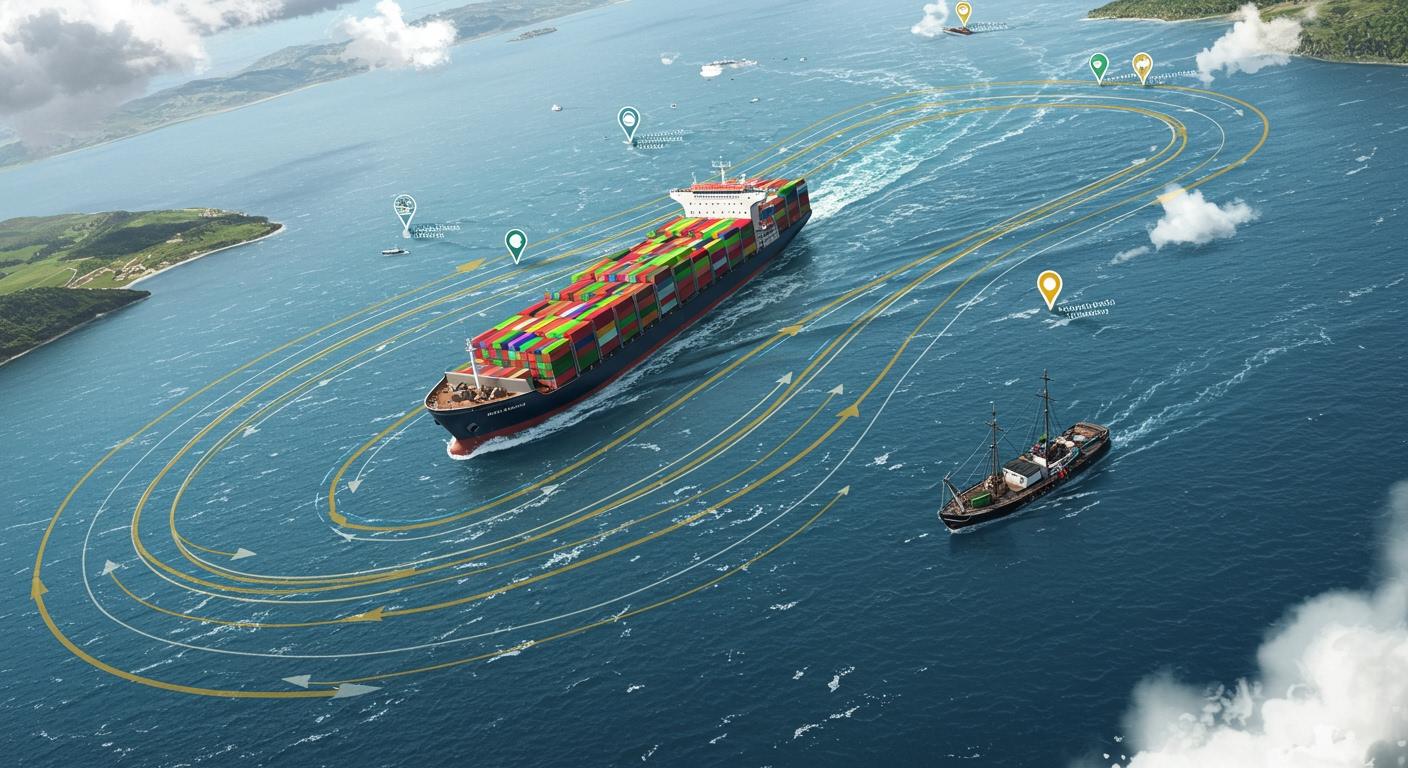
Climate change continues to reshape global shipping routes, forcing the industry to adapt quickly. Recent events like the Panama Canal drought and Arctic ice melt have caused significant disruptions.
Global shipping CO2 emissions increased 1.7-fold from 1970 to 2021.
Container emissions surged 5.1-fold, especially in Asian waters.
Disruption | Impact on Trade Volume | Additional Notes |
|---|---|---|
Drought in Panama Canal | Reduced vessel transits from 36-38 to 32, leading to congestion and increased costs. | Estimated loss of over US$200 million in revenues by 2024, affecting the Panamanian economy. |
Arctic Ice Melt | 25% increase in commercial activity due to navigable Northeast Passage. | Reduced transit time by up to 40% compared to the Suez Canal, opening new shipping routes. |
These changes threaten the stability of global trade and demand urgent action from manufacturers and logistics providers.
Key Takeaways
Climate change is altering global shipping routes, leading to increased costs and delays. Companies must adapt quickly to maintain efficiency.
The Panama Canal drought has significantly reduced vessel transits, causing economic losses and supply chain disruptions. Businesses should consider alternative routes.
Rising sea levels threaten port infrastructure worldwide. Ports must invest in adaptation strategies to protect trade and ensure operational continuity.
Extreme weather events are becoming more frequent, disrupting shipping schedules. Companies need to develop resilience strategies to manage these risks effectively.
Advanced technology, like AI and IoT, can optimize shipping routes and improve supply chain visibility. Embracing these innovations helps businesses stay competitive.
Climate Change Disruptions
Waterways and Canals
Shipping routes depend on stable waterways and canals. Climate change has brought new challenges to these critical passages. In 2023, a severe drought in the Panama Canal reduced daily crossings. Large ships could not pass due to low water levels, which caused major supply chain disruptions. The number of vessels passing through the canal dropped from 38 to 24 per day, a 40% reduction. Draft restrictions forced ships to carry less cargo, affecting schedules and increasing costs.
Evidence Type | Details |
|---|---|
Reduced Daily Transits | Navigation through the Panama Canal has decreased from an average of 38 vessels per day to 24 vessels per day, a 40% reduction. |
Draft Restrictions | The maximum draft for neo-Panamax vessels has been reduced from 50 feet to 44 feet, affecting shipping schedules and cargo loading. |
Economic Impact | Earnings from toll traffic have decreased by about US$100 million per month since October 2023, with potential revenue losses of US$500 million to US$700 million by April 2024. |
Supply Chain Disruptions | An expected 4,000 fewer ships are projected to pass through the canal in 2024, impacting timely deliveries of various goods. |
The Arctic region also shows dramatic changes. Melting ice has opened new passages, increasing commercial activity by 25%. These new routes reduce transit times but bring new risks, such as unpredictable ice conditions and fluctuating temperatures.
Sea Levels and Ports
Rising sea levels threaten port infrastructure around the world. Nearly 90% of the world’s 3,700 major ports face damaging climate hazards. Ports in Africa handle over 90% of the continent’s trade by volume. Climate change puts more than $5.3 billion of African trade at risk each year, with damages possibly reaching $680 million by 2050 if adaptation does not occur.
Ports in low-lying regions have started to adapt. Some raise quay walls and build flood barriers, like the Port of Rotterdam. Others, such as the Port of Sydney, use sea walls and nature-based solutions. Floating structures are now considered a way to cope with rising sea levels, allowing communities to adapt in place.
Historical events show the impact of rising sea levels and storms. Hurricane Katrina shut down Gulf Coast ports, causing severe economic losses. Hurricane Sandy flooded the Port of New York and New Jersey, damaging facilities and halting operations. The Port of Miami has already experienced flooding during high tides and expects more in the future.
Coastal adaptation strategies include:
Adapting shorelines to withstand higher sea levels.
Preserving waterfronts by changing shoreline design.
Using machinery to manage flooding actively.
Floodproofing buildings and moving infrastructure away from high-risk areas.
Extreme Weather
Extreme weather events disrupt shipping schedules and global trade. Hurricanes, heat waves, blizzards, and severe droughts have become more frequent and intense. The frequency of Category 4 and 5 hurricanes has increased by 25–30% per decade. In 2022, Storm Eunice caused major disruptions in Northern Europe, delaying shipments and affecting logistics.
Impact on Shipping | |
|---|---|
Snow | Disrupts rail and road operations, causing delays. |
Ice | Affects cargo handling and port operations. |
Flooding | Leads to unsafe conditions and route changes. |
High Winds | Can cause shipping delays and unsafe conditions. |
Extreme Temperatures | Impacts cargo handling and logistics planning. |
Unexpected blizzards and sweltering heatwaves often throw logistics operations into disarray. Organizations now must adopt adaptive strategies to reduce the effects of these extreme weather events on supply chains.
Ocean Currents
Ocean currents play a vital role in global trade by influencing shipping times and fuel consumption. Recent scientific studies show significant changes in the subtropical North Atlantic Ocean. Long-term cooling and freshening of deep waters have been observed. Warmer, saltier waters from other Atlantic regions may soon influence major currents, such as the Atlantic Meridional Overturning Circulation. These changes could alter shipping routes and affect the stability of global trade.
The climate crisis continues to reshape the world’s oceans. Ongoing monitoring and adaptation remain essential for the shipping industry to manage the impacts of shifting currents and rising sea levels.
Global Shipping Trends
Rerouting and Delays
Shipping companies now face frequent rerouting and delays as they respond to climate change. The Container Port Performance Index (CPPI) shows that operational efficiencies have dropped. Port congestion and unreliable schedules have become common. In 2024, stress on global shipping increased due to crises in the Red Sea and disruptions at the Panama Canal. These events forced vessels to take longer routes, such as around Africa, which adds about two weeks to transit times. The average cost to ship a 40-foot container has doubled. Extreme weather events also disrupt logistics, leading to higher costs and longer delays as companies work to maintain product quality during transit.
Economic Impact
Climate-driven disruptions have caused severe impacts on global supply chains. The availability of essential goods has decreased, and prices have risen. Strikes at major ports add to the complexity, making it harder for businesses to plan. The interconnected nature of global trade means that a single disruption can ripple through the entire supply chain. About half of the total impact of a disruption can spread through the network, causing significant economic activity and price fluctuations. Companies now recognize the need for stronger resilience strategies to manage these risks.
Global supply chain disruptions lead to delays, losses, and increased costs.
These disruptions can halt production lines, affecting both local and international trade.
Understanding and minimizing the impact of these disruptions is crucial for businesses.
Regional Shifts
Recent trends show that some regions have become more vulnerable to shipping disruptions. The Red Sea crisis highlights how geopolitical tensions and climate factors can force vessels to avoid traditional routes. Port congestion in the United States has increased, with average dwell times rising from three days before the pandemic to over nine days during peak seasons. This leads to extra costs for businesses due to demurrage and detention fees. As regions adapt, shipping patterns continue to shift, and companies must stay alert to changing risks and opportunities.
Industry Responses
JUSDA Solutions
JUSDA has developed a comprehensive suite of supply chain solutions to address the challenges posed by climate change. The company leverages its global network, advanced technology, and industry expertise to help clients adapt to shifting shipping routes and unpredictable conditions. JUSDA's services span air, land, sea, and rail transport, supported by cloud warehousing and intelligent supply chain platforms. These solutions enable manufacturers and logistics providers to maintain operational efficiency, even as climate disruptions threaten traditional shipping lanes.
JUSDA's JusLink intelligent supply chain platform integrates IoT, cloud computing, and big data. This platform provides real-time visibility and collaboration across the supply chain. Clients benefit from enhanced risk management, dynamic inventory control, and streamlined customs operations. JUSDA's commitment to innovation ensures that businesses can respond quickly to new risks and opportunities in global trade.
JUSDA's Supply Chain Management Collaboration Platform uses AI and blockchain to optimize global processes, reduce manual handling, and improve transparency. Leading manufacturers rely on this platform to expand globally with lower costs and higher efficiency.
China-Europe Express Rail
The China-Europe Express Rail has emerged as a vital alternative for businesses facing climate-driven disruptions in sea freight. The rail network offers faster delivery times than sea routes and more affordable rates than air freight. Companies use this service to transport electronic products, clothing, and medical supplies efficiently.
The following table highlights key routes that support resilient supply chains:
Route Name | Description |
|---|---|
Hamburg Special | Xi’an → Khorgas/Altynkol → Kazakhstan → St. Petersburg (Russia) via sea → Hamburg (Germany) via rail → Duisburg, Budapest |
Southern Corridor | Xi’an → Khorgas/Altynkol → Aktau (Kazakhstan) via sea → Baku (Azerbaijan) via rail → Akhalkalaki (Georgia) → Istanbul (Turkey) → Budapest → Duisburg, Hamburg, Malaszewicze |
Recent climate disruptions have increased shipping costs and extended transit times for sea freight. The China-Europe Express Rail provides a solution by offering stable and efficient transport. The following table shows how rail usage has changed in response to these challenges:
Metric | Value |
|---|---|
Decrease in Cargo Flow | Over 60% |
Increase in Freight Rate | 78% (to $7,961) |
Time Savings | Rail transport takes less than 10 days compared to 30-40 days by sea. |
The conflict in the Red Sea has led to a significant decrease in cargo flow between China and Europe.
Rail transportation has become more popular due to the desire to avoid safety risks and achieve faster delivery times.
Rail freight rates are significantly lower compared to sea rates, making it a more attractive option.
JUSDA's expertise in customs operations and resource alignment ensures that goods move smoothly across borders. The company continues to expand its rail services, including sea-rail intermodal solutions for markets in Japan, South Korea, and Taiwan.
JUSDASR Logistics
JUSDASR provides specialized cross-border logistics for e-commerce merchants and manufacturers. The service includes direct express lines, first-mile logistics, and overseas warehousing. JUSDASR operates strategic warehouses in the United States, close to major ports and airports. This network enables quick distribution and cost savings for clients.
JUSDASR supports dropshipping and offers specialized storage for high-power energy storage products. The service integrates with major carriers like FedEx and UPS, ensuring reliable last-mile delivery. Competitive first-leg transportation costs help businesses manage expenses during climate-related disruptions.
JUSDASR empowers merchants to respond swiftly to market changes and maintain supply chain resilience. The service streamlines inventory management and supports global expansion, even when traditional shipping routes face uncertainty.
Technology and AI
JUSDA uses advanced technology and AI to optimize shipping routes and manage climate-related risks. JusLink’s AI Solution provides supply chain trend analysis, freight rate prediction, and sales demand forecasting. The platform includes a risk control tower for real-time monitoring and an intelligent assistant, JusElsa, powered by DeepSeek's NLP capabilities.
The following table outlines key AI innovations in shipping:
Innovation Type | Description |
|---|---|
Dynamic Route Optimization | AI optimizes routes based on real-time factors, reducing fuel consumption and emissions. |
Energy Optimization Systems | AI algorithms enhance energy usage across ship functions, lowering fuel consumption and emissions. |
Port Traffic Management | AI manages vessel inflow/outflow, minimizing congestion and waiting times at ports. |
Emissions Monitoring | AI tracks fuel use and emissions, helping companies meet environmental regulations and targets. |
AI-driven solutions predict potential delays before they occur by analyzing weather, traffic, and port congestion data. This proactive approach helps logistics providers manage disruptions effectively. AI utilizes historical and real-time data to forecast the impact of weather events on shipping routes. Supply chain teams can adjust routes and inform customers about potential delays.
AI systems analyze various datasets to forecast delays in real-time.
Logistics providers reroute shipments and anticipate issues, ensuring timely delivery.
JUSDA’s technology empowers businesses to maintain supply chain stability and adapt to the impacts of climate change. The company’s focus on innovation and efficiency positions it as a leader in global trade logistics.
Future of Shipping
New Routes
Climate change continues to open new shipping corridors, especially in the Arctic. The Northeast Passage, Northwest Passage, and Transpolar Sea Route are becoming navigable for longer periods. The following table shows projected accessibility for these routes:
Year | Northeast Passage (NEP) | Northwest Passage (NWP) | Transpolar Sea Route (TSR) |
|---|---|---|---|
2030 | Open for a month | Open for a month | May start to be navigable |
2060 | August to October | August and September | Navigable for some vessels |
2090 | At least three months | At least three months | Regular vessel navigation |
Dr. Sian Prior from the Clean Arctic Alliance has raised concerns about the environmental impact of increased Arctic shipping. The region faces severe stress due to climate change, making responsible operations essential.
Trade corridors connecting emerging economies are growing rapidly, with an average annual increase of 17%. By 2050, the corridor between the United States and Asia is expected to handle the highest flow of goods. Seaborne transportation remains the backbone of global trade, accounting for nearly 90% of international volume.
Resilience Strategies
Shipping companies are adopting robust resilience strategies to manage climate risks. They conduct proactive climate risk assessments and invest in infrastructure upgrades to withstand severe conditions. Scenario planning and early warning systems enhance operational resilience. Many companies transition to electric and hybrid fleets, reducing emissions and operational costs. Data-driven route optimization helps adapt to changing weather and road conditions.
The following table highlights the benefits of these strategies:
Characteristic/Benefit | Description |
|---|---|
Quick reaction to disruptions, improving responsiveness | |
High visibility | End-to-end monitoring for better forecasting |
Diversification | Flexible supplier and route options maximize cost-effectiveness |
Improved business continuity | Smooth operations despite disruptions, reducing shutdown risks |
Better risk mitigation | Proactive identification of risks avoids severe disruptions |
Sustainability and compliance | Ethical sourcing and renewable energy practices enhance reputation |
Smart Supply Chains
Smart supply chains leverage advanced technology to adapt to climate-driven disruptions. Predictive modeling and AI analyze data from multiple sources, helping stakeholders anticipate risks and optimize operations. Digital platforms integrate AI and IoT, allowing real-time logistics adjustments. Early warning systems use IoT and satellite data to provide alerts for environmental threats.
Smart supply chains increase operational efficiency and resilience. Automation and enhanced communication streamline processes, enabling quick adaptation to climate changes.
Case studies show the impact of smart supply chains. Nike in India reduced absenteeism by 45% and increased productivity by 14% through climate adaptation measures. Danone in South Africa secured 100% process water and avoided production shutdowns worth €112 million by investing in micro-grid and water reuse systems.
JUSDA’s JusLink intelligent supply chain platform exemplifies these advancements. The platform uses AI, IoT, and big data to provide real-time visibility, predictive analytics, and risk management. Clients benefit from improved agility, cost reduction, and sustainable operations, positioning them for success in a changing global shipping landscape.
Climate change continues to reshape the global supply chain, demanding innovation and adaptability from industry leaders. Companies now prioritize sustainability and green logistics to meet new expectations:
Sustainability stands as a top priority for businesses and consumers.
Environmental regulations drive greener shipping practices.
Eco-friendly shipping options attract environmentally conscious customers.
Partnerships with green logistics providers build trust and loyalty.
Actionable Insight | Description |
|---|---|
Mitigates risks and ensures optimal product delivery. | |
Predictive insights | Flags delays or environmental changes for proactive action. |
Compliance with regulations | Maintains documentation to meet industry standards. |
Enhanced operational efficiency | Optimizes logistics and minimizes spoilage. |
Scalability of IoT solutions | Adapts technology to diverse supply chain needs. |
Sustainability initiatives | Reduces waste with reusable IoT designs. |
Industry stakeholders who invest in resilient logistics and advanced technology will lead the way as global shipping evolves.
FAQ
What solutions does JUSDA offer for climate-related shipping disruptions?
JUSDA provides a global network, advanced technology, and industry expertise. The JusLink intelligent supply chain platform uses IoT, cloud computing, and big data to deliver real-time visibility, risk management, and dynamic inventory control.
How does the China-Europe Express Rail help businesses during sea freight disruptions?
The China-Europe Express Rail offers faster delivery than sea routes and lower costs than air freight. JUSDA’s expertise in customs operations ensures smooth cross-border movement, supporting stable and efficient supply chains.
What advantages does JUSDASR logistics provide for cross-border e-commerce?
JUSDASR delivers direct express lines, first-mile logistics, and overseas warehousing. Strategic warehouse locations near major ports and airports enable quick distribution and cost savings. Integration with FedEx and UPS ensures reliable last-mile delivery.
How does JusLink’s AI Solution improve supply chain resilience?
JusLink’s AI Solution features supply chain trend analysis, freight rate prediction, and sales demand forecasting. The platform includes a risk control tower and an intelligent assistant, JusElsa, which enhance decision-making and operational efficiency.
See Also
Discovering Innovations in Sea Freight Logistics for 2024
Understanding Current Trends in Logistics Risk Management
Get Prepared: New Transport Technologies Shaping Supply Chains
A Detailed Look at the Future of LTL Freight
Transforming Industries with Cloud-Based Supply Chain Solutions