10 Breakthrough AI Trends Shaping Logistics and Supply Chains in 2025


Predictive Analytics
Autonomous Vehicles and Robotics
Route Optimization
Full-stack AI Capabilities Empowering the Logistics Supply Chain
Real-Time Supply Chain Visibility
Smart Inventory Management
AI-Driven Supplier Management
Natural Language Processing
AI Risk Management
Sustainable Logistics
With Full-stack AI Capabilities Empowering the Logistics Supply Chain, companies are now able to cut costs by up to 50%. Safety improvements reach as high as 90%, and transit times are reduced by 30%. The table below highlights key metrics projected for 2025:
Metric | Value |
|---|---|
AI Adoption Growth | |
Forecasting Error Reduction | 20-50% |
Analytical Decisions Automation | 95% by 2025 |
Key Takeaways
Predictive analytics lets companies guess demand better. This helps cut stockouts by 30%. It also lowers extra inventory by 25%.
Autonomous vehicles and robotics make deliveries faster. They help work get done up to 50% better. They also make fewer mistakes.
Full-stack AI capabilities help teams see the supply chain clearly. Teams can fix problems fast. This makes everything work better.
Predictive Analytics in Logistics Trends 2025
Demand Forecasting
In 2025, companies use predictive analytics to help plan and make choices. JusLink, which is JUSDA’s smart platform, uses ai-driven forecasting to study sales, market trends, and other data. This helps businesses guess demand more accurately. Making choices with data is a big trend in logistics for 2025. JusLink’s forecasting models make fewer mistakes and help things run better. Scenario planning lets companies get ready for surprises. Special forecasting models help control safety stock and how fleets are used.
JusLink’s AI tools help factories stop having too much or too little stock. They find small patterns in data and change with real-time updates. This stops making too much and makes customers happier. Companies like Warby Parker and Amazon had 30% fewer stockouts and 25% less extra stock. Levi’s made inventory turnover 10% better with this technology.
Trend Description | Implications |
|---|---|
Helps guess demand and make work better | |
AI integration | Makes it easier to see the supply chain and guess demand |
Scenario planning | Helps plan and deal with surprises |
Tailored forecasting models | Saves money and helps manage safety stock |
Short-range demand forecasts | Helps plan work and save money |
Inventory Optimization
In 2025, inventory optimization uses predictive analytics and ai trends. JusLink’s restocking plans use data to watch inventory and restock right away. This saves money and helps plan the supply chain. Amazon uses strong forecasting models to save 10-15% on costs and deliver 20-25% faster. Walmart can guess demand right 90% of the time. Zara reacts fast to trends and has less unsold stock. Drink sellers sell more by removing extra SKUs.
AI-powered inventory management cuts stockouts by 30% and extra stock by 25%.
AI models are 20% better than old forecasting ways, so supply and demand match up better.
JUSDA’s customer stories show that predictive analytics in 2025 helps companies grow worldwide and makes supply chains work better.
Autonomous Vehicles and Robotics in AI Logistics
Delivery Automation
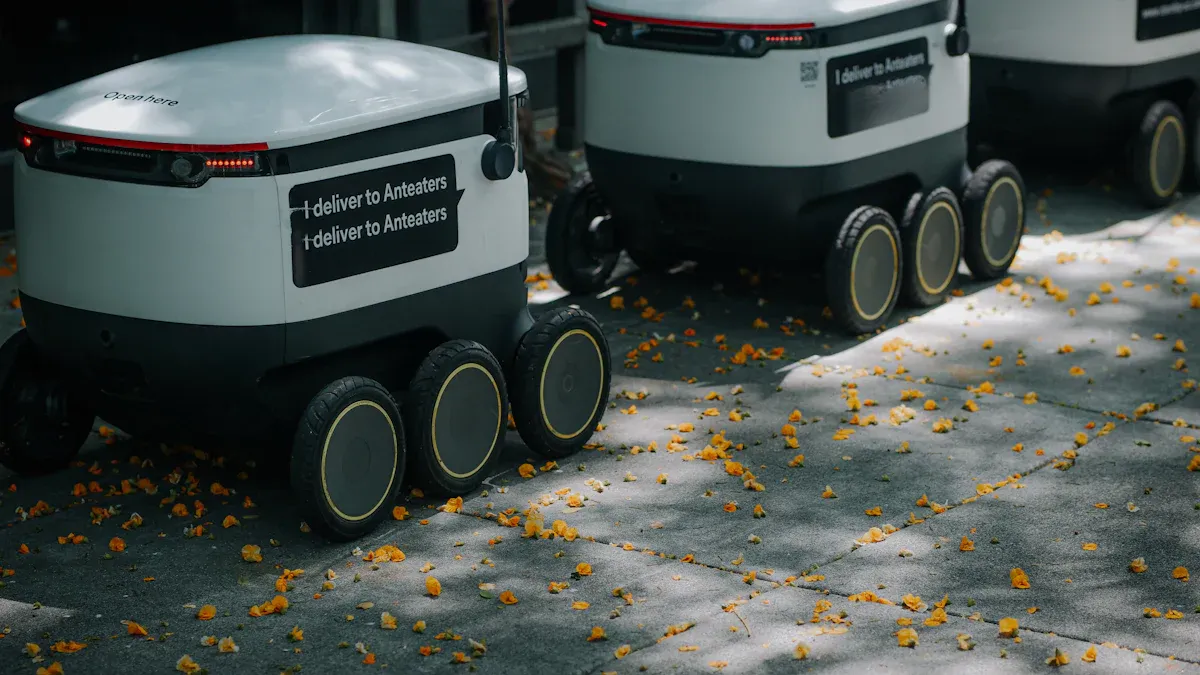
Delivery automation is changing how goods are moved. Many leaders now use automation and robotics for faster deliveries. These tools help make deliveries more accurate. JUSDA’s warehouses use these tools to help with last-mile delivery. Autonomous vehicles and route optimization help drivers pick the best routes. This technology uses ai to change routes right away. Companies get faster deliveries and make fewer mistakes.
The table below shows how delivery automation helps logistics:
Impact Area | Description |
|---|---|
Delivery Speed | Route optimization makes deliveries faster by using real-time data. |
Accuracy of Deliveries | Better planning leads to more accurate and reliable deliveries. |
Cost Efficiency | Optimized routes save fuel and lower costs. |
Customer Satisfaction | Faster and accurate deliveries make customers happier. |
By 2025, experts think the global autonomous truck market will reach $1.74 billion. About 70% of logistics companies think AVs will be normal by 2035. More companies use automation and robotics every year.
Warehouse Robotics
Warehouse robotics is a big part of automation in logistics. JUSDA’s warehouses use robots and AGVs to move goods. They also pick orders and pack shipments. These systems use ai to work with people and do simple tasks. This teamwork lets workers do more important jobs.
Warehouses with robotics see efficiency go up by 30%.
Some places see up to 50% more work done in the first year.
Companies often get their money back from automation in 18–24 months.
Robotic systems help JUSDA handle lots of goods and keep things running well. As more companies use automation and robotics, logistics gets faster and more reliable.
Route Optimization Powered by AI
Real-Time Routing
AI helps companies find the best way to deliver goods. JusLink uses smart computer programs to pick fast routes. These programs check traffic, weather, and road problems right now. Drivers can skip traffic jams and get to people faster.
Evidence Aspect | Description |
|---|---|
AI changes routes if there is traffic or bad weather. This helps drivers take the best roads. | |
Prioritization Logic | The system puts important deliveries first. This makes sure urgent items arrive quickly. |
Incident Response | AI finds new routes if something goes wrong. This keeps deliveries on time. |
Traffic Management | AI helps drivers avoid busy roads. This means packages get there faster. |
Delivery Location Optimization | The system uses maps to plan good routes. This saves time and fuel. |
Vehicle Capacity Optimization | AI checks how full each truck is. It picks routes that fit the load. |
Time Window Adherence | The system makes sure packages arrive on time. This makes customers happy. |
Data-Driven Decision Making | AI learns from past trips and new info. It changes routes to work better. |
Companies using real-time routing deliver faster and make fewer mistakes. They meet customer needs more often. Teams can see every step and change plans quickly.
Fuel Efficiency
Route optimization helps save fuel. AI looks at how much fuel was used before and how drivers drive now. It finds ways to use less fuel by picking better routes. It also teaches drivers not to waste gas. Companies can watch fuel use as it happens and fix problems fast.
AI helps save 10-20% on fuel.
Companies spend 15-25% less on moving goods.
Teams can spot bad driving and keep trucks working well.
AI helps stop breakdowns and keeps fuel use low.
With smart tools, companies save money and help the planet. They also keep customers happy with on-time deliveries.
Full-Stack AI Capabilities Empowering the Logistics Supply Chain
End-to-End Visibility
Full-stack AI capabilities use smart systems to help the supply chain. These systems use the internet of things, cloud computing, and big data. They connect all parts of the supply chain together. JusLink’s platform collects data from sensors, GPS, and ERP systems. This gives real-time updates about where shipments are and their condition. Companies can act fast when problems come up. They stop delays and keep goods safe. Most companies want better visibility. Only a few can see past their second-tier suppliers. Artificial intelligence helps companies see the whole supply chain.
When teams can see the supply chain, they can fix problems right away. AI tools with sensors and data help teams act faster and have fewer problems.
Integrated Platforms
Integrated platforms use artificial intelligence to link suppliers, transporters, and customers. JusLink’s platform and JusElsa AI assistant help automate work. These tools share data right away and help teams work together. Smart systems help people make better choices and respond faster. APIs powered by artificial intelligence help companies handle problems and use resources better. Full-stack AI capabilities make work smoother and keep customers happy.
Component | Description |
|---|---|
Predictive Analysis | Uses past data and machine learning to guess trends. This helps with inventory and delivery planning. |
Computer Vision | Helps see and check packages and track them automatically. |
Autonomous Vehicles | Helps deliver goods with little help from people. This makes things faster and cheaper. |
Big Data | Looks at lots of logistics data to make work better and faster. |
Generative AI | Makes up scenarios to help plan and manage risks in logistics. |
Real-Time Supply Chain Visibility for the Future
Tracking Solutions
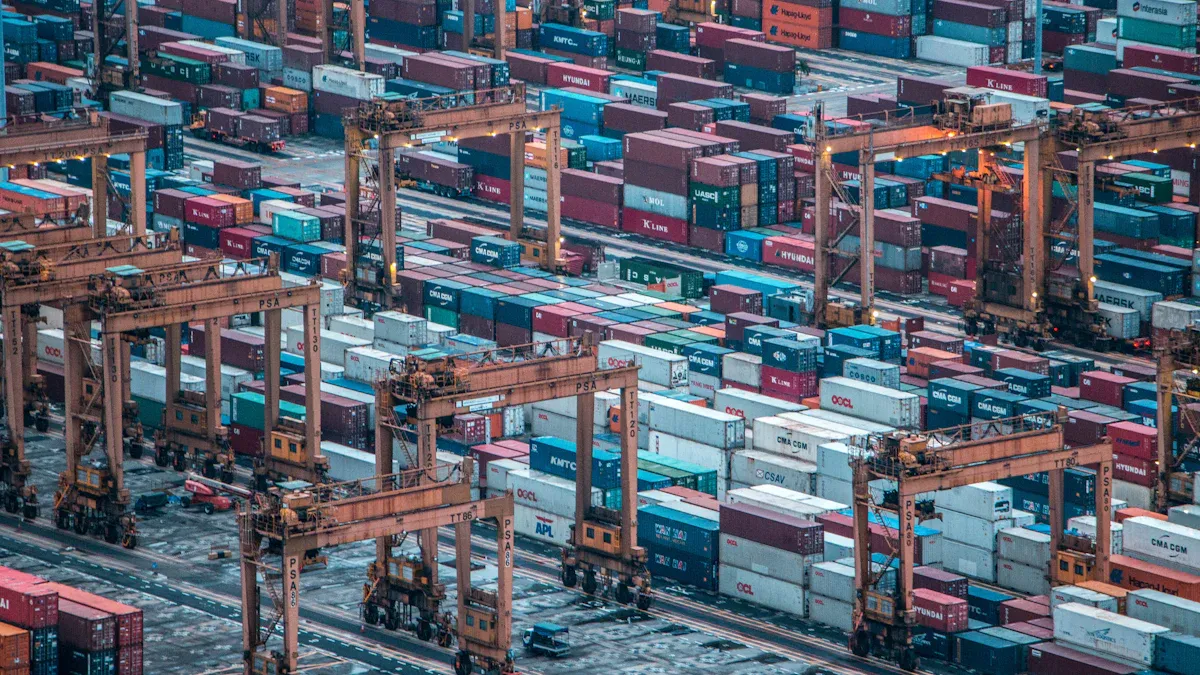
Companies use new tracking tools to see goods at all times. JUSDA’s JusLink Control Tower and data center collect sensor and GPS data. These systems help teams watch shipments and storage right away. Technologies like Ambient Invisible Intelligence track perishable goods. Drones and robots gather information with Autonomous Data Collection. Polyfunctional robots work in warehouses and check inventory. Agentic AI agents make fast choices using live forecasts.
Technology | Description |
|---|---|
Ambient Invisible Intelligence | Watches and senses goods, especially perishables, for quick updates. |
Autonomous Data Collection | Drones and robots collect supply chain data and help teams work faster. |
Polyfunctional Robots | Do many warehouse jobs and lower human work. |
Agentic AI | AI agents use live forecasts to manage inventory. |
Decision Intelligence | Uses AI and analytics to help teams make better choices. |
IoT tools warn teams early about problems. They help companies act fast and keep things running well. Digital supply chain tools like JusLink show inventory levels. Teams can fix issues quickly when they happen.
Transparency
Transparency helps companies find and fix risks early. JusLink Control Tower shows every step from suppliers to customers. Teams can spot problems or bad actions and solve them fast. Good risk management keeps the company safe and steady.
Being open builds trust with customers, suppliers, and partners.
Honest companies get more loyalty from buyers.
Seeing the whole supply chain helps teams work together and feel sure.
Supply chain visibility helps teams manage risks and build strong bonds. Companies with these tools can act fast and keep customers happy.
Smart Inventory Management with JUSDA Warehouse
eVMI and JusLink Systems
JUSDA Vietnam uses smart systems like eVMI and JusLink to watch inventory. These tools help teams see where goods are right now. Staff know the real stock numbers and can fix problems fast. Automation makes checking stock quicker and safer for everyone. Workers do not have to repeat boring jobs. They can focus on more important work. The systems give managers helpful tips to plan better. They help keep the right amount of stock and save money. Companies can grow without making things harder. Automated systems handle new products and places easily. Businesses say they spend less and get their money back faster.
Benefit | Description |
|---|---|
Real-time visibility | Teams always know stock levels and can fix problems fast. This helps orders go out quickly and keeps customers happy. |
Faster, safer, and more efficient | Automation makes stock checks quick and safe. Fewer injuries happen, and work gets done faster. |
Predictive insights | The systems help managers plan ahead. They keep stock at good levels and help save money. |
Enhanced workforce productivity | Automation lets workers skip boring jobs. This makes them happier at work. |
Scalability without complexity | Automated systems help companies grow. They add new products and places without trouble. |
Companies spend less on mistakes and workers. They also get orders right more often and save money. |
Value-Added Services
JUSDA Warehouse gives many extra services for different businesses. Teams handle e-commerce orders and returns for small packages. Staff do simple jobs like putting things together, kitting, and labeling. They can pick and pack lots of orders quickly. New systems connect fast, so work starts right away. Dynamic pricing lets companies pay for what they use. Better data helps teams see how inventory and supply chains are doing. These services help companies work better and make customers happy. JUSDA’s smart warehouse makes moving goods easier and more trustworthy.
E-commerce orders and returns
Extra services like kitting and labeling
Picking and packing lots of orders
Fast setup with new systems
Flexible prices for what you use
Better data for smoother work
AI-Driven Supplier Management
Selection Automation
AI-driven supplier management changes how companies pick suppliers. JusLink’s smart agents help teams find good suppliers fast. These agents use automation to gather and check supplier data. They put all the information in one place and stop mistakes. Teams save time and resources by letting AI do boring jobs. The system also checks if suppliers follow rules and standards. This helps companies trust suppliers and keep strong partnerships.
When things get busy, AI changes warehouse and delivery plans. This keeps orders on time and stops running out of stock. Companies like DHL use AI to find risks early and fix problems fast.
AI helps with just-in-time production by automating orders and finding the best sources. Most supply chain groups now use AI to work better. The supply chain market will be worth over $41 billion by 2030 because of these tools.
AI-driven systems help companies see risks from late suppliers or world events.
Supply chains using AI save money and lower risks by more than 67%.
Performance Monitoring
AI tools help companies watch how suppliers do their jobs. JusLink’s platform uses smart ways to measure quality, delivery, cost, and speed. Teams can see if suppliers meet standards and fix problems fast. The table below shows common ways to check suppliers:
Criteria | What It Measures | Common Metrics |
|---|---|---|
Quality | Meeting specs and standards | Defect rate, compliance, rejection |
Delivery | Timeliness and reliability | On-time rate, lead time, fill rate |
Cost & Price | Price and total cost | Price variance, cost per unit, TCO |
Responsiveness | Speed and support | Response time, resolution time, SLA |
Innovation | Growth and value creation | Improvement suggestions, ESG scores |
AI helps teams get better deals and fix issues quickly. Companies use these ideas to make supplier relationships better and keep supply chains strong.
Natural Language Processing in Logistics
Customer Service Automation
Natural language processing changes how companies help customers. JusElsa is a smart helper on JUSDA’s platform. It uses DeepSeek to answer questions any time. Customers get help right away, even at night. JusElsa understands what people ask and gives simple answers. It can handle easy questions, so people can work on harder ones. The system checks if customers are upset and tells staff if needed.
Benefit | Description |
|---|---|
Chatbots answer questions fast, day or night. | |
Personalization | NLP uses customer data to make each chat special. |
Sentiment Detection | The system senses feelings and can send issues to people. |
Cost Efficiency | Companies need fewer workers, so they save money. |
Faster Resolution | Problems get fixed quickly, so customers are happier. |
NLP reads what customers say and finds ways to help more. This makes things better for everyone.
Internal Communication
NLP tools help teams work together inside companies. JusElsa can share news and updates with everyone fast. It reads long messages and gives short versions, so staff know what is important. The system can translate messages right away. This helps teams in different countries talk to each other. NLP looks through emails and papers to find key facts. This saves time and helps teams make good choices.
NLP chatbots answer first questions, so people can do harder jobs.
The system turns lots of data into tips for managers.
Fast translation and updates keep everyone working together.
NLP makes talking easier and faster, so companies run better.
AI Risk Management for Supply Chains
Disruption Detection
AI risk management helps companies find problems early. JusLink’s Risk Control Tower watches shipments, suppliers, and routes all the time. The system checks data from sensors, weather, and traffic. Machine learning looks for patterns and warns teams about delays or shortages. Blue Yonder’s Control Tower found 96% of problems in one hour for a big company. This made response times 65% faster. IBM Watson Supply Chain Insights helped clients fix issues in hours, not days. AI systems spot changes and give teams advice to keep goods moving. These tools make supply chains stronger and help companies stay ready for anything.
AI uses real-time data, expert knowledge, and predictive analytics.
It finds risks early and helps teams act fast.
Automated monitoring saves money and makes supply chains work better.
Machine learning helps manage hard risks like storms.
Proactive Response
AI does more than just find risks. It helps teams plan ahead and act fast. JUSDA works with top schools to build ETA prediction models. These models use AI to guess when shipments will arrive, even if things change. Teams can change delivery plans or reroute trucks before problems start. AI and machine learning help leaders make better choices and build strong supply chains. Real-time monitoring lets teams fix issues right away. Companies use AI to make better plans and keep goods moving, even during tough times. Planning ahead instead of just reacting makes supply chains safer and more reliable.
AI and ML models make risk management more accurate.
Real-time monitoring and smart planning help supply chains adapt.
AI helps teams build strong backup plans for future problems.
Sustainable Logistics Powered by AI
Green Transportation
JUSDA uses AI to make transportation better for the planet. Smart systems help plan routes that use less fuel. AI tools show drivers the shortest and safest ways. This saves time and cuts down on pollution. UPS uses a system called ORION to plan routes. It saves over 100,000 metric tons of carbon each year. Walmart also uses AI to plan how trucks deliver goods. This helps them use less fuel and lower carbon emissions. AI-powered systems can cut greenhouse gases by 5-10%. Deliveries also get faster and more efficient. These changes prove AI helps companies save money and protect the earth.
Companies using AI for green transportation see big changes. They use less fuel, make less pollution, and deliver faster.
Eco-Friendly Warehousing
JUSDA’s warehouses use AI to help the environment. Smart sensors watch how much energy is used. They control lights and temperature to save power. Automated systems move goods quickly so nothing sits too long. JUSDA’s eVMI and JusLink systems show stock levels right away. This means less extra stock and less waste. Clean rooms follow strict rules to protect the planet. Staff use data to plan and avoid extra trips or storage. These steps help JUSDA lower its carbon footprint and keep the earth cleaner.
Smart planning means less waste.
Real-time data keeps goods moving and saves storage time.
Companies that use new AI trends get ready for what’s next. JUSDA’s full-stack AI tools help teams make logistics stronger. JusLink and smart warehouses give teams more control and help them see things better. Leaders who use these tools change how supply chains work. Teams can get ahead if they start using AI now. People who try new things will do well in the future. Be prepared for changes and show others how to lead.
FAQ
What is JusLink and how does it help supply chains?
JusLink uses AI to guess what customers will want. It helps keep track of inventory and where shipments are. Companies make fewer mistakes and deliver things faster.
How do AI-powered warehouses improve efficiency?
AI systems do jobs like picking and packing by themselves. Workers do not have to do boring jobs as much. They can spend more time on important tasks.
Can AI reduce supply chain risks?
AI tools look for problems and tell teams early. Companies can fix things quickly and keep goods moving.
See Also
Transforming Logistics: The Role of AI in Supply Chains
Discovering AI's Impact on Future Supply Chain Strategies
Enhancing Supply Chain Productivity Through AI Innovations