How to Improve Warehouse Utilization

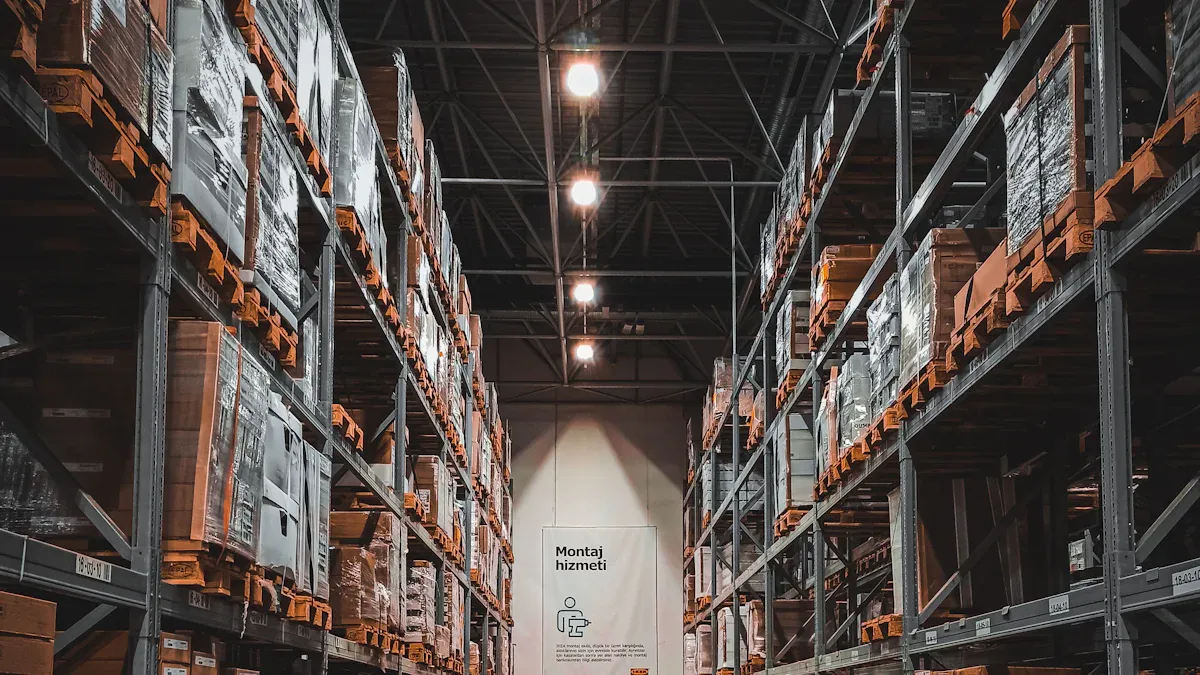
If you want to improve warehouse utilization, start by making the most of your available space and cutting out wasted time. Top-performing warehouses often reach 85-95% utilization, but many struggle because of poor inventory management, inefficient layouts, or manual errors. Look for ways to optimize your layout, use vertical space, manage inventory better, and bring in helpful technology. Small changes today can boost efficiency, save money, and help your warehouse run smoother.
Key Takeaways
Measure your warehouse utilization rate regularly. Aim for 70-85% to avoid wasted space and overcrowding.
Optimize your warehouse layout by creating organized zones and clear pathways. This speeds up picking and reduces errors.
Utilize vertical space with tall shelving and advanced racking systems. This helps store more products without needing extra floor space.
Implement a Warehouse Management System (WMS) for real-time inventory tracking. This reduces errors and improves efficiency.
Conduct regular audits to identify slow-moving stock. Removing obsolete items frees up space for new products.
Assessment
Utilization Rate
You can start by figuring out how much of your warehouse space you actually use. Here’s a simple way to do it:
Measure your total available space in cubic feet or square footage.
Check how much of that space is filled with products.
Use this formula:
Capacity Utilization Rate = (Used Space / Total Storage Capacity) × 100Aim for a utilization rate between 70% and 85%. This range helps you avoid wasted space and overcrowding.
Use your results to spot areas for improvement.
Tip: Tracking your utilization rate regularly helps you make smart decisions and keeps your warehouse running smoothly.
Space Efficiency
Space efficiency means using every inch of your warehouse wisely. You want to make sure your layout supports fast movement and easy access. Many managers look at metrics like average order fulfillment time, inventory turnover ratio, and space utilization to see how well things work. If you use advanced storage solutions and technology, you can boost productivity and make your warehouse more efficient. Businesses often rely on these numbers to find ways to Improve Warehouse Utilization and increase profits.
Note: Measuring efficiency helps you see what’s working and what needs to change. It’s a good idea to check these numbers often.
Bottlenecks
Bottlenecks slow down your warehouse and waste space. You need to spot them early and fix them fast. Here are some ways to do that:
Watch for signs like slow order picking or packing.
Check your data and Key Performance Indicators (KPIs) often.
Use warehouse management systems for real-time tracking.
Map out your processes to find where things get stuck.
Ask your team for feedback and ideas.
Try simulation modeling to test solutions before making changes.
Pro tip: Fixing bottlenecks not only saves money but also keeps your customers happy.
Layout
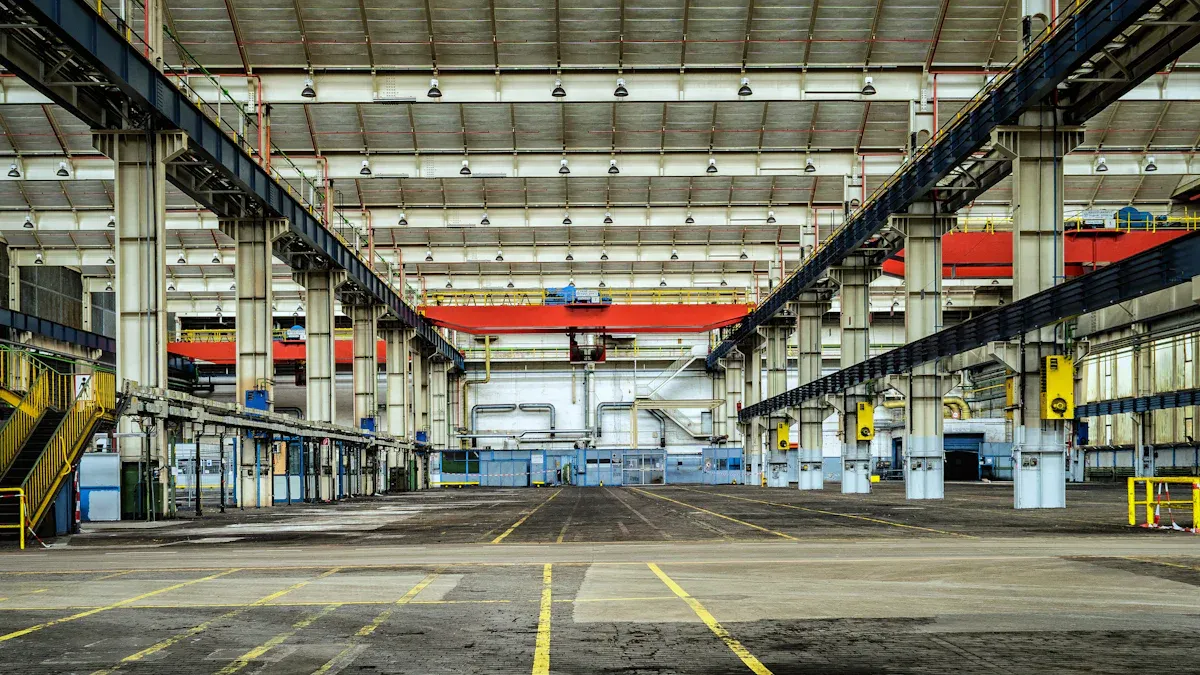
Optimizing your warehouse layout can make a huge difference in how you use space and get work done. When you plan your layout, you want clear pathways, organized zones, and flexible designs that fit your needs.
Aisles
Aisle width matters more than you might think. If you make aisles too narrow, you can fit more shelves, but you need special equipment to move around. Very narrow aisles, under 6 feet, help you pack in more products, but only if you have the right gear. OSHA says your aisles should be at least 36 inches wider than your biggest equipment. You also need to add a few inches for pallet overhang. If you plan your aisle width based on your workflow, you avoid bottlenecks and keep things moving smoothly.
Very narrow aisles increase storage density.
Wider aisles improve safety and make it easier to move equipment.
Always include space for pallets and safe turning.
Tip: The right aisle width helps you balance safety, speed, and storage.
Zones
Dividing your warehouse into zones makes picking and packing faster. Workers focus on their own areas, so they become experts and make fewer mistakes. You do not need everyone to know the whole warehouse. This setup means less walking, less fatigue, and fewer errors. When you group products by demand or order frequency, pickers find items quickly. You also reduce congestion and boost productivity.
Workers stay in their zones, which speeds up picking.
Logical product grouping helps pickers work faster.
High-demand items should be easy to reach.
Note: Organized zones help you Improve Warehouse Utilization by making every step more efficient.
Signage
Clear signage guides your team and keeps things safe. Signs show where products go, how much weight racks can hold, and where vehicles should drive. Good signs help workers find what they need fast and avoid mistakes. They also remind everyone about safety rules and load limits. When you use clear labels and signs, you cut down on errors and make your warehouse easier to navigate.
Vertical Space
Making the most of your warehouse’s vertical space can help you store more products without needing extra square footage. You can use tall shelving, advanced racking systems, and overhead storage to keep your warehouse organized and efficient.
Tall Shelving
Tall shelving lets you stack products higher, which means you use every inch of your warehouse. Safety matters when you go up, so you need to follow best practices:
Know the weight limits for each rack to prevent overload.
Install guardrails and post protectors to keep racks safe from forklifts.
Check racks every year for damage.
Fix problems right away with regular maintenance.
Call a professional for repairs or changes.
Train your team on proper loading and unloading.
Tip: When you keep tall shelving safe, you protect your team and your products.
Racking Systems
Advanced racking systems help you store more in less space. You can use vertical racks to stack products up high. Some systems let you get rid of wide aisles, so you fit more items in the same area. Take a look at how these features help:
Feature | Benefit |
|---|---|
Vertical Space Utilization | You store more by stacking products higher. |
You save space and fit more products. | |
Cost Reduction | You avoid paying for extra warehouse space or off-site storage. |
Automated systems move goods quickly. High-speed shuttles and conveyors cut down handling time. Robots make picking faster and more accurate. These systems can run all day with little help, so you save on labor and keep things moving.
Overhead Storage
Overhead storage uses the space above your head for items you don’t need every day. You can choose from different options based on your budget:
Description | |
|---|---|
Low Budget ($100–$500) | Wall hooks and light racks for small items. |
Medium Budget ($500–$1500) | Modular shelves with professional installation for safety. |
High Budget ($1500+) | Heavy-duty cabinets and racks for large or valuable products. |
Note: Overhead storage helps you Improve Warehouse Utilization without crowding your floor.
Inventory
Remove Obsolete Stock
You can free up space and keep your warehouse organized by getting rid of obsolete stock. Start with regular audits. These help you spot items that haven’t moved in months. Try scheduling audits every month or quarter. Compare what’s on your shelves with your system records. If you find products that haven’t sold in over 90 days, it’s time to act. Cycle counting works well, too. You count a small part of your inventory on a rotating basis, so you always know what’s slow-moving. Demand forecasting helps you avoid overstock by using sales history and market trends. Just-in-time systems let you order products only when you need them, which keeps your shelves clear.
Method | Description |
|---|---|
Regular Audits | Spot slow-moving or obsolete items and keep inventory accurate. |
Cycle Counting | Count small portions often to maintain accuracy. |
Demand Forecasting | Use sales data and trends to prevent excess stock. |
Just-in-Time Systems | Order products as needed to boost efficiency and cash flow. |
Tip: Removing old stock makes room for new products and helps you Improve Warehouse Utilization.
Forecasting
Forecasting helps you keep the right amount of stock on hand. When you use sales history and market trends, you can match your inventory to what customers want. This stops you from overstocking or running out of popular items. Demand planning software makes it easier to predict what you’ll need. You can adjust your orders in real time based on how fast items sell. Accurate forecasting means you use less space and save money.
You avoid stockouts and overstock.
You use warehouse space better.
You respond faster to customer needs.
Categorization
Organizing your inventory by category makes your warehouse easier to manage. You can use the ABC method. Put high-value items in category A, moderate-value items in B, and low-value, high-volume items in C.
Category | Description |
|---|---|
A | High-value items, small volume, big impact on profits. |
B | Moderate value, balance between A and C. |
C | Low-value, high volume, less impact on profits. |
Try the 5S method, too:
Sort: Get rid of things you don’t need.
Set in Order: Arrange items for quick access.
Shine: Keep everything clean.
Standardize: Make rules for how things should look.
Sustain: Stick to your system for lasting results.
Note: Good categorization prevents dead stock, cuts storage costs, and helps you fill orders faster.
Product Allocation
By Criteria
You can make your warehouse smarter by choosing the right criteria for product allocation. High-performing warehouses look at customer data, demand forecasting, and seasonal trends. These factors help you decide where to put each product so you can pick orders faster and keep customers happy.
Criteria | Description |
|---|---|
Historical Customer Data | Uses past buying habits to guide future product placement. |
Demand Forecasting | Predicts what customers will want next, so you stock up in the right spots. |
Seasonal Trends | Moves products around based on holidays or busy seasons. |
If you group products by customer preferences, you can boost your marketing.
Matching your assortment to market needs helps you sell more.
A smart allocation strategy lets you react quickly when things change. You can use real-time data to move products around and stay ahead of demand.
By Size
Sorting products by size makes picking and packing much easier. You can put small items together and keep big items in their own spots. This way, you cut down on travel time for your team and make the most of your space.
Slotting puts popular items in easy-to-reach places, so workers move less.
Dynamic slotting uses live data to shift products around, keeping things efficient.
If you use ABC analysis, you can place fast-moving items close to packing stations. This setup speeds up picking and helps you Improve Warehouse Utilization. When you plan your storage by size, you avoid wasted space and keep your team moving.
Like-Sized Storage
Storing like-sized items together keeps your warehouse neat and organized. You can stack boxes that are the same size, which saves space and makes it easier to find what you need. Workers can grab items quickly without sorting through mixed sizes.
Grouping products by size also helps you spot empty spots and fill them with the right items. You keep your shelves tidy and your workflow smooth.
If you keep reviewing your storage plan, you can adjust as your inventory changes. This habit helps you stay flexible and ready for anything.
Cross-Docking
Reduce Storage Time
Cross-docking helps you move products through your warehouse much faster. You do not need to store items for weeks or months. Instead, you transfer goods from incoming trucks straight to outgoing vehicles. This process can shrink your average inventory holding time to just hours or days.
You see inventory turns improve by 50% or more compared to traditional storage.
Goods flow continuously, so you lower the risk of items becoming obsolete.
Speed and efficiency become the main focus, not storage.
Products spend little or no time sitting in your warehouse.
You can meet fast delivery expectations for your customers.
If you run a retail or B2B operation, cross-docking lets you keep up with demand. You do not need extra warehouse space to handle more products. Costs for handling and storage drop because items move out quickly.
Tip: When you use cross-docking, you keep your warehouse lean and responsive. You can react to market changes without getting stuck with old stock.
Improve Efficiency
Cross-docking does more than save space. It makes your whole operation run smoother. You cut out extra steps, so your team spends less time moving products around. You can see big savings in labor and transportation.
Labor expenses drop by up to 30% because you reduce manual handling.
Shipment consolidation can lower transportation costs by 15-20%.
Handling steps go down by as much as 70%, which means fewer damaged products.
You boost throughput without needing more space.
“Cross-docking fundamentally transforms inventory management by shifting the focus from storage optimization to flow management, significantly reducing average inventory holding times.”
For example, one FLEX Logistics client saw a 17% reduction in transportation spend after using a cross-docking hub. You can achieve similar results by streamlining your process. When you focus on flow, you keep your warehouse efficient and ready for anything.
Technology

Modern technology can transform your warehouse into a smarter, faster, and more organized space. You do not need to rely on guesswork or manual tracking anymore. Let’s look at three powerful tools you can use.
Warehouse Management System
A Warehouse Management System (WMS) helps you keep track of everything in your warehouse. You get real-time updates, so you always know what’s in stock and where it is. Barcode scanning makes tracking easy and cuts down on mistakes. Advanced picking features speed up order processing. Labor management tools help you assign tasks and avoid delays. You can also use built-in shipping functions to move products out quickly.
Here’s a table showing how WMS features help you use your space better:
Feature | Contribution to Utilization |
|---|---|
Inventory tracking and optimization | Prevents overuse or underuse of storage space |
Real-time data access | Improves customer satisfaction and cost control |
Barcode integration | Enables precise tracking and reduces errors |
Advanced picking techniques | Accelerates item movement, minimizing manual checks |
Efficient labor management tools | Optimizes workforce allocation and reduces delays |
Robust reporting capabilities | Facilitates data-driven decision-making for process optimization |
Integrated shipping functions | Streamlines shipping processes, enhancing overall efficiency |
Tip: A good WMS helps you Improve Warehouse Utilization by making every process smoother.
Automation
Automation takes your warehouse to the next level. You can use robots, voice-directed picking, and smart conveyors to handle products. These tools reduce manual labor and speed up every step. You save money because you need fewer workers for picking and packing. Automated systems also help you use your space better by stacking and sorting products more efficiently.
Automated warehouse solutions reduce reliance on manual labor and increase throughput and accuracy in key processes. This is especially important as labor markets tighten and wages rise, leading to significant cost reductions in picking, packing, and inventory management.
Here are some ways automation helps:
Voice-directed picking replaces manual processes, reducing labor needs.
Autonomous Mobile Robots (AMRs) minimize walking and heavy lifting, cutting labor costs.
Goods-to-Person (G2P) systems enhance space utilization and improve picking rates.
Data Analytics
Data analytics gives you the power to spot problems and fix them fast. You can track inventory in real time and forecast demand, so you never run out or overstock. Analytics helps you see which parts of your warehouse slow things down. You can redesign your layout and reduce mistakes. Visualizing space usage lets you find wasted areas and make products easier to reach.
You get better inventory management with real-time tracking and forecasting.
You improve efficiency by finding and fixing slow spots in your process.
You optimize space by seeing where you can store more or move things around.
Note: Using data analytics helps you make smart choices and keeps your warehouse running at its best.
Improve Warehouse Utilization Strategies
Audits
You can’t fix what you don’t see. Regular audits help you spot problems before they get out of hand. When you plan an audit, start by gathering all your documents and past reports. Walk through your warehouse and watch how things work. You might notice slow spots or messy areas. After your walkthrough, write down what you find and share it with your team. Work together to make changes that stick.
Here’s a simple way to run an effective audit:
Collect all your records and previous audit notes.
Walk through your warehouse and observe daily operations.
Talk to your employees. They know where things get stuck.
Use a checklist so you don’t miss anything important.
Try inspection software for faster, more accurate data.
Analyze your findings and create a clear report.
Make improvements with everyone involved.
Schedule your next audit to keep improving.
Tip: Audits work best when you plan ahead and focus on tasks that matter most. Give your team time and resources to do the job right.
You can also use technology to capture data quickly. Cycle counts help you keep inventory records accurate. When you repeat the audit cycle, you build a habit of continuous improvement. This is one of the best ways to Improve Warehouse Utilization and keep your warehouse running smoothly.
Staff Training
Your team is the heart of your warehouse. When you train your staff, you prepare them for anything that comes their way. Training covers leadership, safety, and supply chain basics. A good program uses real-world examples and lets employees give feedback. You want your training to match your warehouse’s needs.
Here’s what happens when you invest in staff training:
Employees use space better, making it easier to move and work.
Mistakes drop, so you spend less time fixing errors.
Productivity goes up because workers know what to do and where to go.
Safety improves, which means fewer accidents and smoother operations.
Note: Training isn’t just about rules. It’s about teaching your team how to solve problems and work smarter.
Review safety protocols often and teach new processes as your warehouse changes. When you keep training relevant, you help your team stay sharp and efficient. This leads to better space use and helps you Improve Warehouse Utilization every day.
Cost vs ROI
You want every dollar you spend to make a difference. Balancing cost and return on investment (ROI) is key when you try new strategies. Sometimes, you face challenges like crowded aisles or high labor costs. Poor space use can lead to congestion and wasted money. If you don’t manage returns well, you might lose customers and spend more than you should.
Here’s a table to help you weigh costs against benefits:
Challenge | Cost Impact | ROI Opportunity |
|---|---|---|
Higher rent and utilities | More storage, faster picking | |
High operational costs | More labor and maintenance | Automation, better training |
Managing returns | Lost sales, extra handling | Streamlined processes |
You can start small with audits and training. These steps don’t cost much but give you big results. When you see what works, invest in technology or new layouts. Always check if your changes save money and make your warehouse more efficient.
Remember: The best strategies help you Improve Warehouse Utilization while keeping costs low and profits high.
You can boost warehouse utilization by making smart changes to your layout, inventory, and technology. When you keep reviewing your strategies every quarter or twice a year, you spot new ways to save space and cut costs. Here are some long-term benefits you’ll see:
Faster order fulfillment
Better space use
Lower costs
Stronger supplier relationships
Higher customer satisfaction
Stay flexible and keep adapting. Your warehouse will run smoother, and your business will grow.
FAQ
How often should you review your warehouse layout?
You should check your layout every six months. If you see slowdowns or clutter, review sooner. Regular checks help you spot problems early and keep your warehouse running smoothly.
What is the best way to use vertical space?
Start with tall shelving and strong racks. Use overhead storage for items you don’t need every day. Always follow safety rules and train your team to handle tall shelves.
Can technology really improve warehouse utilization?
Yes! A Warehouse Management System (WMS) tracks inventory and speeds up picking. Automation and data analytics help you find wasted space and fix slow spots. You save time and money.
How do you handle obsolete inventory?
Run audits every month. Use cycle counting to spot slow-moving items. Sell, donate, or recycle products that don’t move. Clearing old stock frees up space for new items.
What is cross-docking, and should you use it?
Cross-docking means moving products straight from incoming trucks to outgoing ones. You skip storage. If you want faster shipping and less clutter, cross-docking can help your warehouse stay lean.
See Also
Harnessing Robotics To Boost Warehouse Efficiency And Output
Understanding Robotic Automation For Improved Warehouse Efficiency
The Importance Of Warehouse Automation For Business Success
Discover JUSDA's Innovative Warehousing Solutions For Enhanced Efficiency
Exploring Automation Benefits In Modern Manufacturing Warehousing