Mexico nearshoring attracts record $9.2B manufacturing FDI in Q1 2025 although facing New Tariff Risks

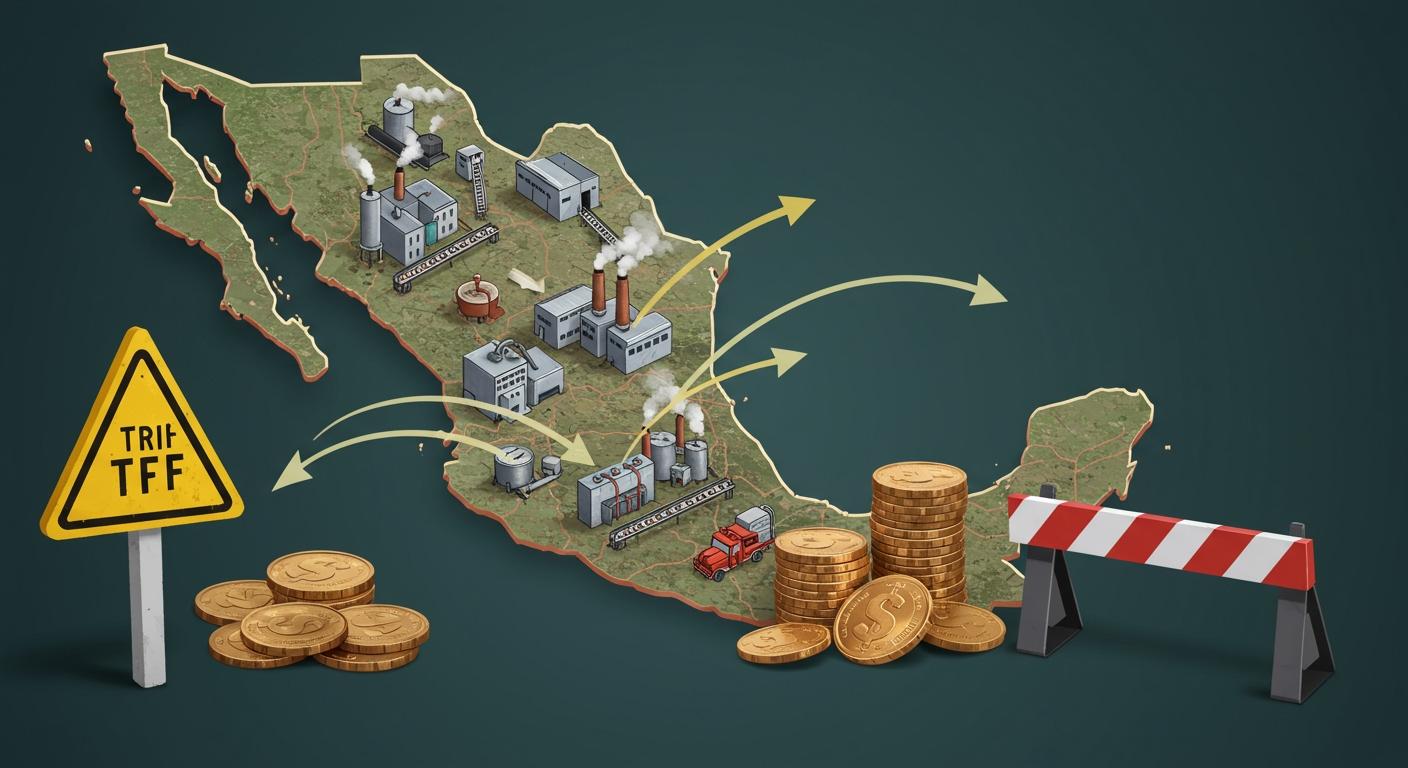
Mexico saw a record $9.2 billion in manufacturing foreign direct investment in Q1 2025, with new tariff risks emerging. President Claudia Sheinbaum Pardo highlighted the country’s resilience, as FDI surged 386% compared to Q1 2012. JUSDA’s supply chain management expertise offers manufacturers and investors actionable insights amid these changes.
Key Takeaways
Mexico attracted a record $9.2 billion in foreign direct investment in Q1 2025, highlighting its growing role as a nearshoring hub.
Companies can benefit from Mexico's strategic location, lower shipping costs, and a skilled workforce, making it an attractive alternative to China.
To navigate tariff risks, manufacturers should invest in digital solutions like JUSDA’s platforms for real-time monitoring and compliance management.
Nearshoring FDI Surge
Key Sectors and Companies
Mexico continues to attract record levels of nearshoring investment. Through June 2025, Mexico captured nearly $34.3 billion in foreign direct investment, marking a 10.2% increase over the previous year. Several factors drive this surge:
Mexico’s strategic position as a bridge between North and South America.
A broad network of free trade agreements.
A stable economic environment and ongoing infrastructure development.
Mexico’s rise as the United States’ largest trading partner, surpassing China.
Automotive and electronics industries benefit from lower costs and close proximity.
Faster shipping times: Mexican goods reach the U.S. in 2–5 days by truck, compared to 15–30+ days by sea from China.
Lower freight costs: Trucking from Mexico costs about $2,500, while shipping from China ranges from $5,000 to $15,000.
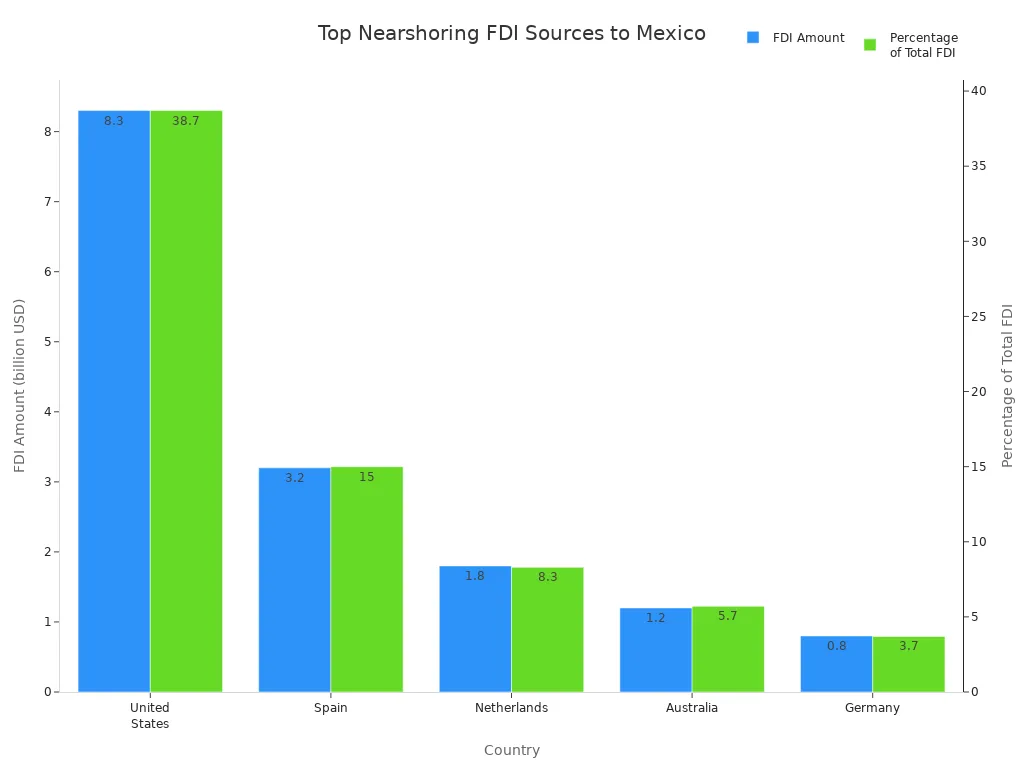
The commercial sector received 42% of all FDI in Q1 2025, while the manufacturing sector captured 24%. North American companies now seek alternatives closer to the U.S. border, shifting investment focus. U.S. companies contributed 38.7% of total FDI, making them the largest investors. In 2025, a diverse range of global companies, from tech startups to small manufacturers, are choosing Mexico for nearshoring.
Country | FDI Amount (in billion USD) | Percentage of Total FDI |
|---|---|---|
United States | 8.3 | 38.7% |
Spain | 3.2 | 15% |
Netherlands | 1.8 | 8.3% |
Australia | 1.2 | 5.7% |
Germany | 0.8 | 3.7% |
JUSDA’s Role in North America
JUSDA plays a vital role in supporting nearshoring strategies for manufacturers in Mexico and across North America. The company provides predictive analytics for demand, inventory, and risk management. JUSDA helps clients build sustainable supply chains with green logistics and carbon tracking. Manufacturers benefit from diversified sourcing, including the "China+1" strategy, and hyper-automation using advanced robotics and AI-driven warehousing. JUSDA’s real-time visibility tools, powered by IoT and AI, give companies smarter control over their supply chains. These services help businesses in Mexico adapt quickly to changing market conditions and maintain resilience in the face of global disruptions.
Tariff Risks for Nearshoring
Impact on Nearshoring Supply Chains
Mexico’s manufacturing sector faces new tariff risks that challenge the stability of the nearshoring boom. The origins of these risks trace back to the Trump administration tariffs, which included a proposed 25% tariff on imports from Mexico. This policy shift disrupted established supply chains, especially in automotive and electronics. The deep economic integration between the U.S. and Mexico means that unilateral trade decisions can quickly affect manufacturing operations.
The 25% tariff could reduce Mexican exports by up to $164 billion annually.
Employment and industrial stability in Mexico remain vulnerable to sudden changes in trade policy.
Mexico’s role as a strategic partner for U.S. manufacturers increases the need for local expertise to manage tariff risks.
The unpredictable nature of tariffs in Mexico complicates strategic planning for manufacturers and investors. U.S.-China-Mexico trade dynamics add another layer of uncertainty. In early 2025, the announcement of a 25% tariff on imports from Mexico raised costs for U.S. businesses. Key industries such as automotive and electronics experienced immediate effects. The current tariff climate has forced companies to reassess their supply chain strategies.
The boom in Mexico's manufacturing sector, driven by U.S. tariffs on China, has made it a critical hub for various industries, but vulnerabilities tied to geopolitical tensions and trade policy shifts could threaten long-term investment stability.
Manufacturers in Mexico have responded by diversifying their supplier base. Many companies now source from Southeast Asia, Eastern Europe, and Latin America to reduce reliance on any single region. Technology plays a vital role in compliance and risk management. Companies optimize logistics to improve operational flexibility and reduce lead times, especially by sourcing from nearby regions. According to recent surveys, 90% of Mexican trade professionals use technology to enhance compliance automation, which is crucial for adapting to tariff rate volatility. Skilled labor also remains essential, with 74% of respondents identifying qualified employees as key to sustained growth.
The financial impact on nearshoring supply chains varies by sector. In the automotive industry, approximately 82% of Mexican automobiles face an effective tariff of about 22%, while the remaining 18% may encounter tariffs as high as 55%. Ongoing negotiations under the USMCA aim to refine content rules and secure better exemptions for critical sectors. Despite these challenges, only 20% of businesses consider full reshoring to the U.S. Most continue to favor Mexico due to its cost-effectiveness and increased demand for Mexican-produced goods.
Risk Type | Description |
|---|---|
Internal Law and Order | Issues related to organized crime and cartel violence affecting logistics and investor confidence. |
Infrastructure Challenges | Insufficient ports, railways, and power supply hindering logistics efficiency. |
Workforce Skill Deficiencies | Lack of skilled labor in high-tech manufacturing fields like robotics and electronics assembly. |
Political and Regulatory Uncertainties | Concerns regarding political stability and regulatory environment impacting investment decisions. |
Aspect | Recent Changes | Historical Trends |
|---|---|---|
Tariffs on Steel | 25% increase | Lower tariffs previously |
Tariffs on Aluminum | 25% increase | Lower tariffs previously |
Tariffs on Automobiles | 25% increase | Lower tariffs previously |
Impact on Supply Chains | Disruption expected | More stability in trade relations |
Production Costs | Expected to rise | More competitive pricing |
Investment Patterns | Potential nearshoring to Mexico | Previous stability in investment |
Affected Sectors | Automotive, electronics, machinery | Broader manufacturing sector stability |
Export Competitiveness | Decreased due to rising costs | Competitive in U.S. market |
Tariffs in Mexico: JUSDA’s Response
JUSDA addresses tariff risks in Mexico with advanced risk management, compliance, and digital solutions. The company’s expertise in North America enables manufacturers to navigate the impact on nearshoring supply chains. JUSDA in North America offers a comprehensive carrier network for cross-border transport, a quote management system for transparency, and specialized services for handling hazardous materials. These features help companies adapt to the unpredictability of tariffs in Mexico.
JUSDA’s JusTrade platform streamlines customs clearance, reducing delays and optimizing logistics. The platform integrates with clients’ ERP systems, providing real-time data and analytics to ensure compliance with changing tariff regulations. JusTrade’s intelligent customs clearance and commodity categorization services allow manufacturers to respond quickly to new tariff requirements. The platform’s AI-driven approach minimizes manual errors and enhances transparency across the supply chain.
Manufacturers benefit from JUSDA’s focus on technology and automation. The company’s digital solutions, such as JusLink, provide predictive analytics for demand forecasting, freight rate prediction, and risk monitoring. JusLink’s AI-powered risk control tower offers real-time alerts, enabling proactive management of tariff risks. The intelligent supply chain assistant, JusElsa, supports decision-making and streamlines operations.
JUSDA’s commitment to innovation and efficiency positions it as a key partner for companies facing tariff risks in Mexico. By leveraging advanced digital tools, manufacturers can maintain resilience and competitiveness in the nearshoring boom. JUSDA’s solutions empower businesses to optimize logistics, enhance compliance, and mitigate the impact of tariffs in Mexico.
Sustaining Nearshoring Momentum
Mexico’s Advantages
Mexico continues to demonstrate strong nearshoring prospects in 2025. The country’s strategic location next to the United States supports rapid supply chain relocation and efficient access to North American markets. Manufacturers benefit from geographical proximity, which allows shipments to reach the U.S. in days. Mexico’s extensive network of trade agreements, including the USMCA, provides favorable trade relations and streamlined customs procedures. Labor costs remain competitive, offering cost advantages over other nearshoring destinations. The skilled workforce in sectors such as automotive and aerospace attracts global investment. Ongoing infrastructure investments and supplier development further strengthen the nearshoring market. Government initiatives, such as the Mexico Plan, encourage nearshoring by offering tax incentives and workforce training grants. Mexico’s focus on sustainability and compliance with ESG standards also appeals to foreign investors. The country’s automotive sector, especially in electric vehicles, continues to evolve, solidifying its role in global electromobility. Economic factors like inflation and currency depreciation may influence nearshoring potential, but Mexico’s advantages remain clear.
Geographical proximity to the U.S.
Favorable trade agreements
Skilled workforce
Ongoing infrastructure investments
Strategic response to geopolitical tensions
Focus on sustainability and ESG compliance
JUSDA’s Digital Solutions
JUSDA supports manufacturers in Mexico by providing advanced digital solutions that address the evolving nearshoring landscape. The company’s JusLink platform uses AI to deliver supply chain trend analysis, freight rate prediction, and sales demand forecasting. JusLink’s risk control tower offers real-time monitoring and early warnings, helping businesses manage risks related to u.s. trade policy and tariffs. JusElsa, the intelligent supply chain assistant, streamlines operations and improves decision-making. JUSDA’s comprehensive logistics network in Mexico ensures cost savings, faster delivery times, and improved supply chain flexibility. The company’s JusTrade platform simplifies customs clearance, enhancing compliance and reducing delays. Logistics providers like JUSDA adapt to nearshoring by addressing customs regulations and infrastructure challenges with technology-driven visibility. These solutions empower manufacturers to optimize operations and maintain resilience in the nearshoring market.
Mexico’s nearshoring boom shows strong growth, yet future success relies on overcoming tariff risks and infrastructure needs.
Key Points | Details |
|---|---|
Strategic Hub | Mexico leads advanced manufacturing near the U.S. |
Opportunities | Lower costs, skilled labor, and trade agreements |
Challenges | Tariffs, energy, and legal stability |
Companies in Mexico invest in digital supply chain solutions, such as JUSDA’s AI-driven platforms, to boost resilience and competitiveness.
Decision-makers should evaluate both opportunities and challenges when planning nearshoring operations in Mexico.
FAQ
How does JUSDA help companies manage tariff risks?
JUSDA uses digital platforms like JusLink and JusTrade for real-time risk monitoring, compliance automation, and predictive analytics. These tools help companies respond quickly to tariff changes.
Solution | Benefit |
|---|---|
JusLink | Predictive analytics |
JusTrade | Streamlined compliance |
What advantages do JUSDA’s digital solutions offer manufacturers?
JUSDA’s AI-powered platforms provide supply chain visibility, demand forecasting, and risk alerts. Manufacturers gain faster decision-making, reduced costs, and improved operational resilience.
See Also
Understanding Current Trends in Logistics Risk Management
Enhancing Supply Chain Strategies for High-Tech Manufacturing
Achieving Success Through Lean Logistics in High-Tech Manufacturing
Addressing Global Supply Chain Growth Challenges Effectively