JUSDA Joins the First 2026 “AI + Supply Chain” Executive Program
2026.06.17
Exploring the Next Leap in Manufacturing Logistics: From Automation to End-to-End Intelligence
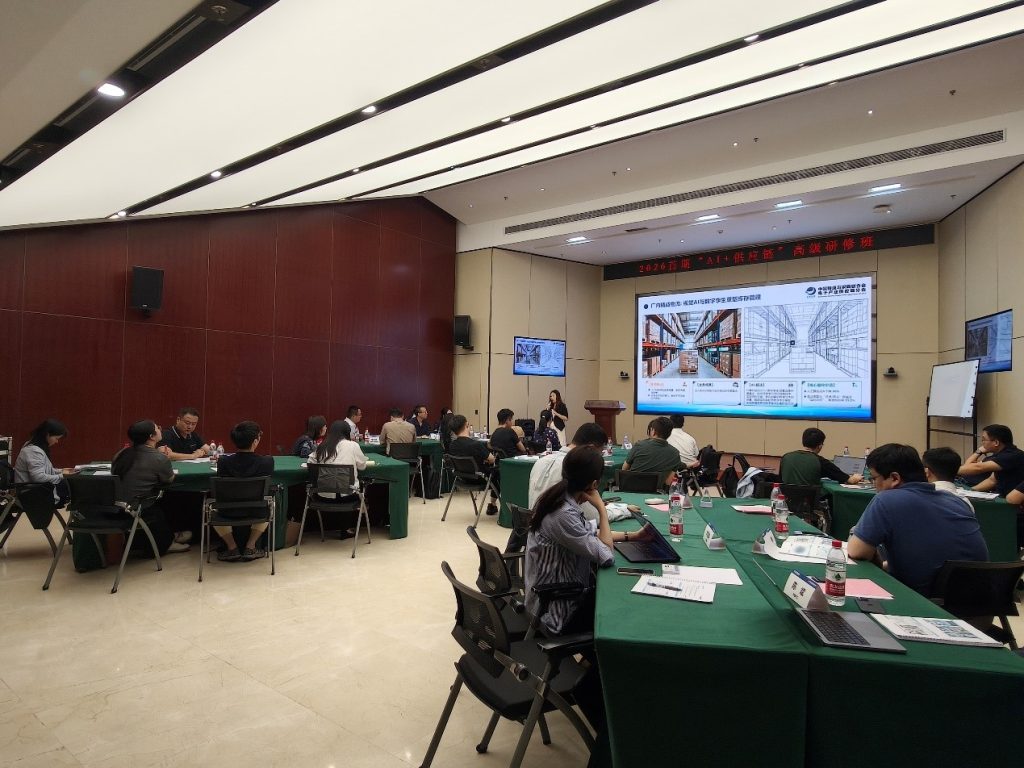
From June 12 to 13, the first 2026 “AI + Supply Chain” Executive Program, hosted by the Electronics Industry Supply Chain Association of the China Federation of Logistics & Purchasing, successfully concluded in Shenzhen.
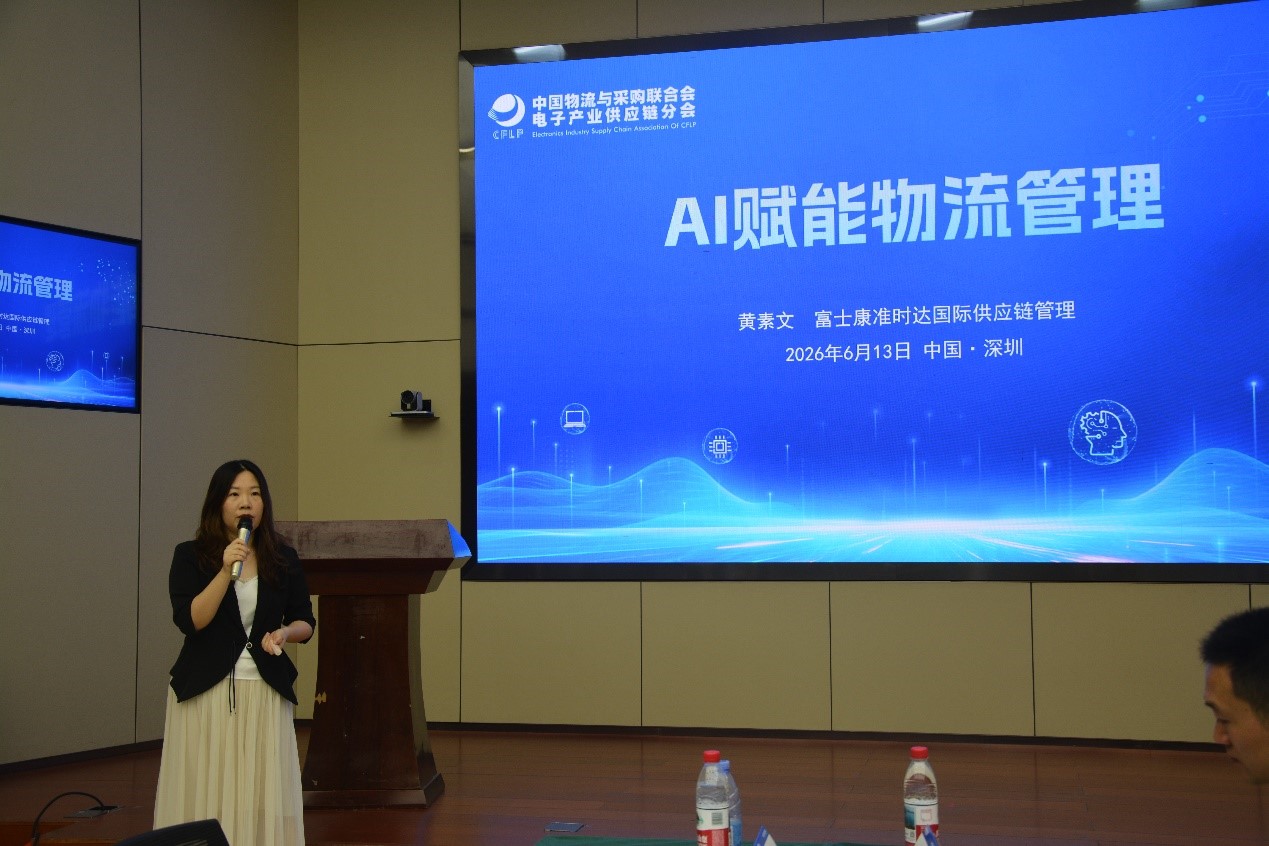
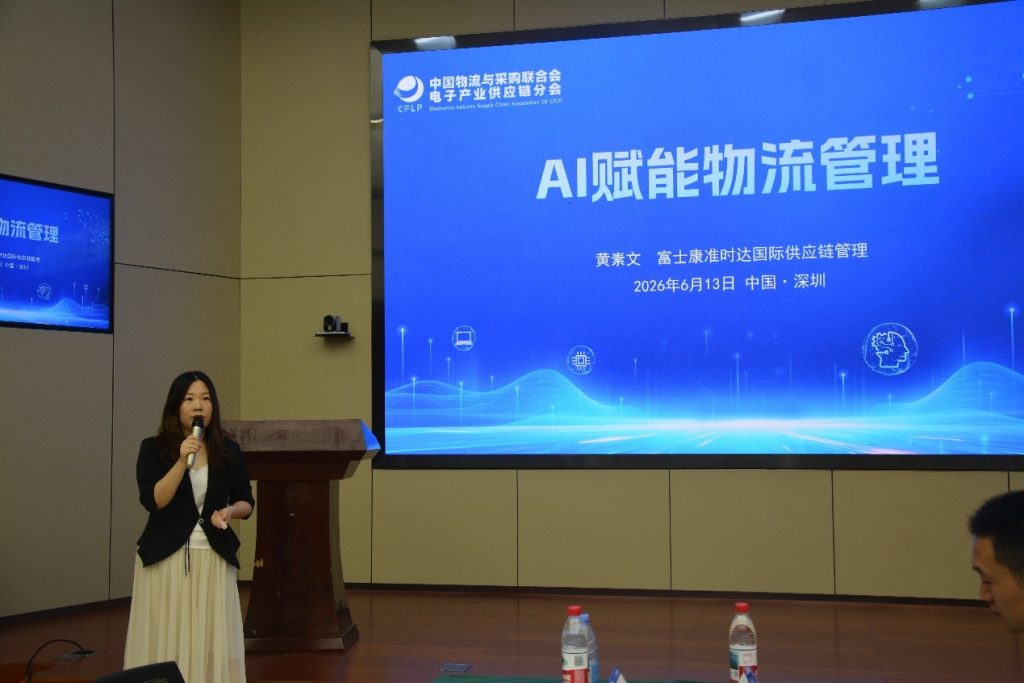
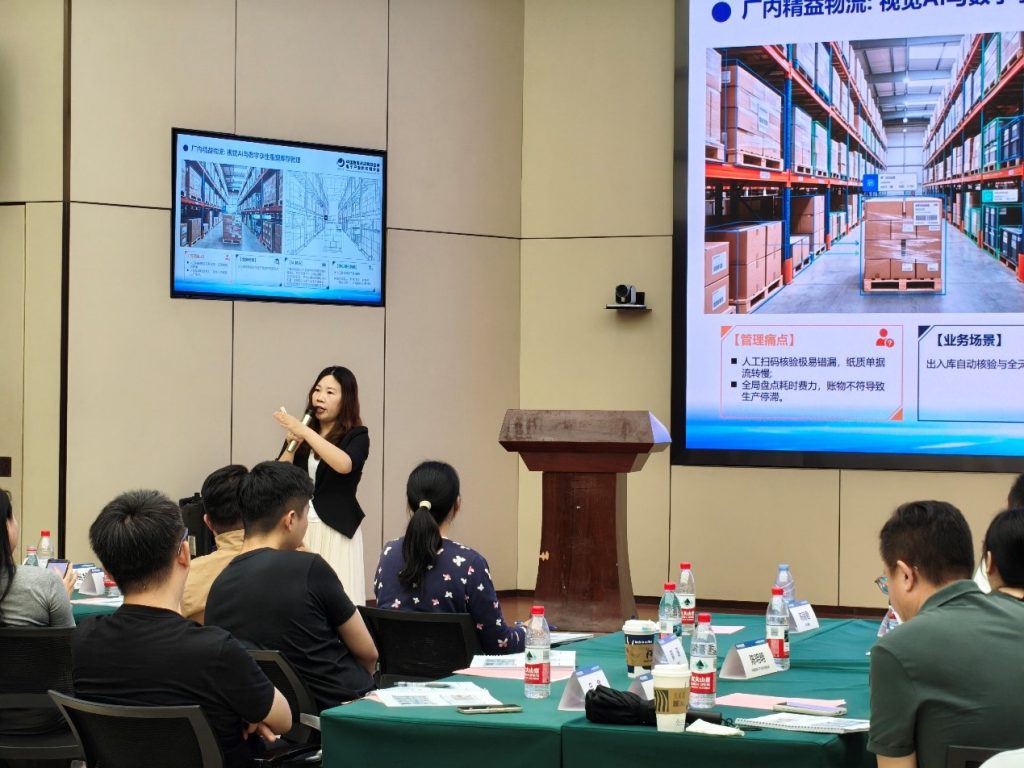
As a representative speaker for the logistics management module, Christine Huang, Chief Solution Expert of JUSDA International Supply Chain, delivered a keynote session titled AI-Empowered Logistics Management. The session focused on how AI is reshaping manufacturing logistics and shared JUSDA’s practical insights into smart logistics and supply chain digital transformation.
The program centered on the integration of AI across the full supply chain landscape, covering five key areas: supply chain strategy, planning, intelligent manufacturing, logistics, and procurement. Nearly 30 representatives from leading enterprises, including China Mobile, Lenovo, ZTE, BYD, Sichuan Changhong, China Great Wall, Unisoc, and China Construction Science & Industry, participated in the program.
During the session, Christine Huang noted that manufacturing logistics is moving from “rule-based automation” toward “data-driven end-to-end intelligence.” In the past, companies mainly improved logistics efficiency through system implementation, process standardization, and automation equipment. However, amid increasing global supply chain volatility, faster order cycles, and frequent transportation disruptions, fixed rules and manual experience are no longer sufficient to manage growing complexity and uncertainty.
JUSDA believes that logistics is, at its core, an information-processing system. The higher the uncertainty, the higher the “information entropy” within the system — and the more companies must rely on inventory buffers, waiting time, redundancy, and emergency responses to offset risk. The core value of AI in logistics lies in its ability to integrate, predict, and infer from multi-source data, compressing high-entropy uncertainty into low-entropy, executable decisions. This enables logistics management to shift from reactive response to proactive warning and intelligent dispatching.
Christine Huang further outlined four key AI capabilities shaping the next generation of manufacturing logistics. Computer vision can support inbound and outbound recognition, touchless inventory counting, damage detection, and on-site monitoring. Operations research and heuristic algorithms can optimize route planning, vehicle dispatching, dock scheduling, and loading plans. Large language models and multimodal AI can help build conversational, reasoning-enabled, and action-oriented smart logistics control towers. Embodied AI and physical AI can further enable AGVs, AMRs, and robotic arms to move beyond rule-based execution toward autonomous perception and multi-machine collaboration.
This means AI is not simply replacing human work. Instead, it is transforming the experience-based judgment of dispatchers, warehouse operators, planners, and transportation managers into reusable, measurable, and orchestratable digital capabilities, forming a complete loop of perception, decision-making, and execution.
In in-plant logistics, AI can dynamically adjust storage locations based on production plans and material consumption trends, reducing unnecessary handling. In inventory management, visual AI and digital twins can enable automated inbound and outbound verification and real-time inventory synchronization. In campus logistics, AI can model vehicle reservations, dock status, and loading workloads to precisely match vehicles, docks, and cargo. In global supply chain control tower scenarios, AI can identify risks such as port congestion, weather disruptions, and transportation delays in advance.
JUSDA’s JusLink Risk Control Tower is a practical example of this capability. Through its global risk radar, order-matching engine, and risk response platform, JusLink can transform fragmented risk signals from public information sources into traceable and actionable order-level instructions, enhancing risk response capabilities across regional and global supply chains.
A key point emphasized by JUSDA is that logistics AI transformation should not simply mean “rebuilding everything from scratch.” For companies already operating ERP, WMS, TMS, MES, and other legacy systems, a more pragmatic path is “software-defined logistics” — adding an algorithmic intelligence layer on top of existing systems and building lightweight, scalable capabilities through Agents and Skills.
In this model, a Skill is the smallest capability unit of logistics AI, such as inbound arrival prediction, route optimization, loading optimization, safety stock calculation, document OCR, anomaly detection, or automated report generation. An Agent is designed around a specific business objective and calls multiple Skills to complete cross-process tasks. For example, an inbound supply assurance Agent can help prevent production line shortages; a transportation dispatching Agent can dynamically balance cost and timeliness; and a logistics control tower Agent can support global alerts and cross-Agent coordination.
As an international supply chain platform deeply rooted in advanced manufacturing scenarios, JUSDA has long served industries such as high-tech manufacturing, consumer electronics, new energy, and semiconductors, where timeliness, coordination, and resilience are critical. JUSDA’s AI value lies not only in technology application, but also in its deep understanding of manufacturing supply chain scenarios — from production planning, material readiness, and inventory strategy to warehousing operations, transportation dispatching, global delivery, and risk control.
The key to AI-empowered supply chains is not the popularity of the concept, but whether AI can truly enter business scenarios, solve operational pain points, and form replicable value loops.
Looking ahead, JUSDA will continue to integrate AI technologies with real logistics scenarios, transforming algorithmic capabilities into operational capabilities and helping manufacturing enterprises build more agile, resilient, and intelligent end-to-end supply chains.