From Logistics Corridors to Integrated Fulfillment: JUSDA Sets Out a New Supply Chain Pathway between China and the Balkans
2026.08.31
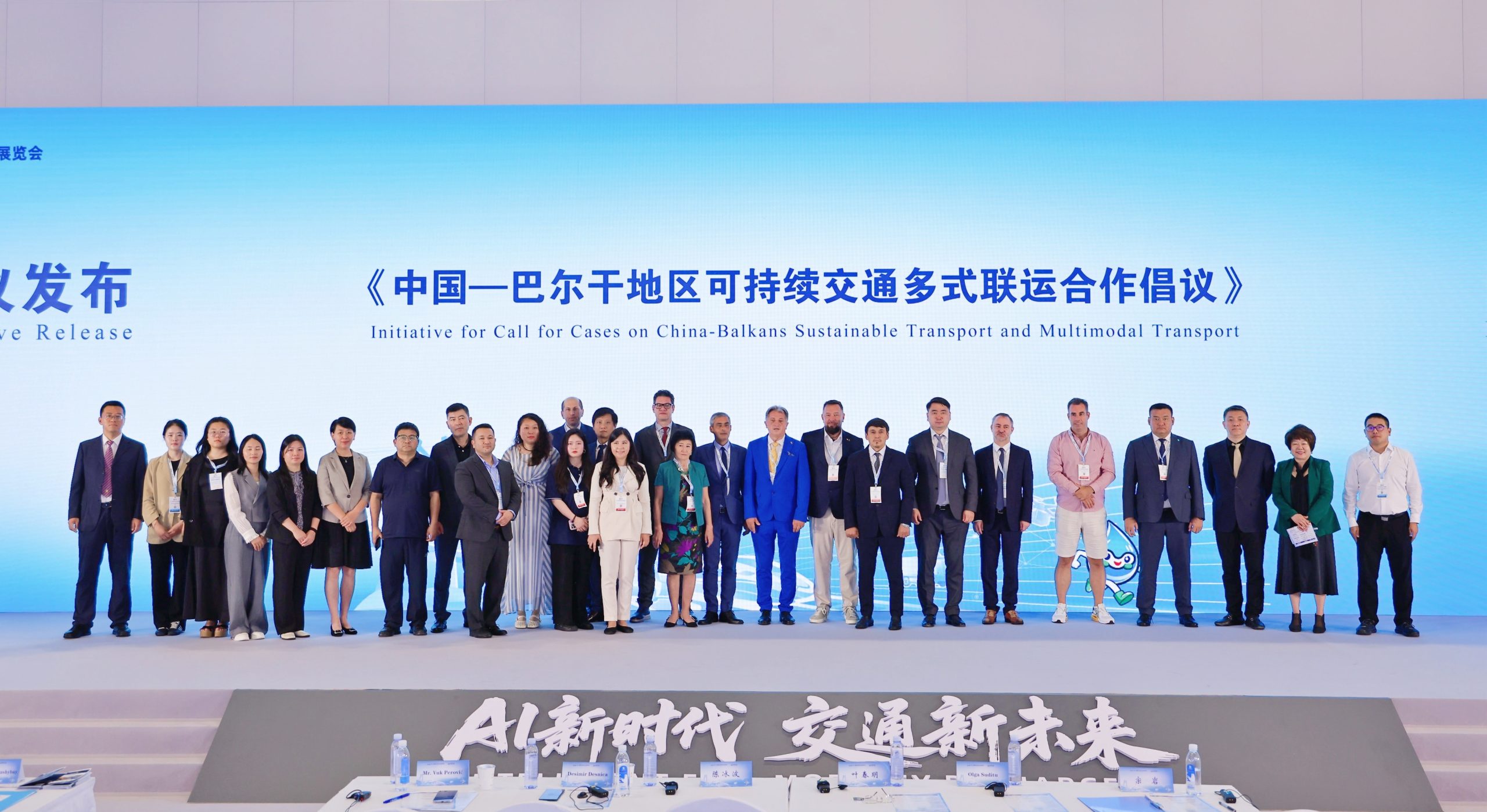
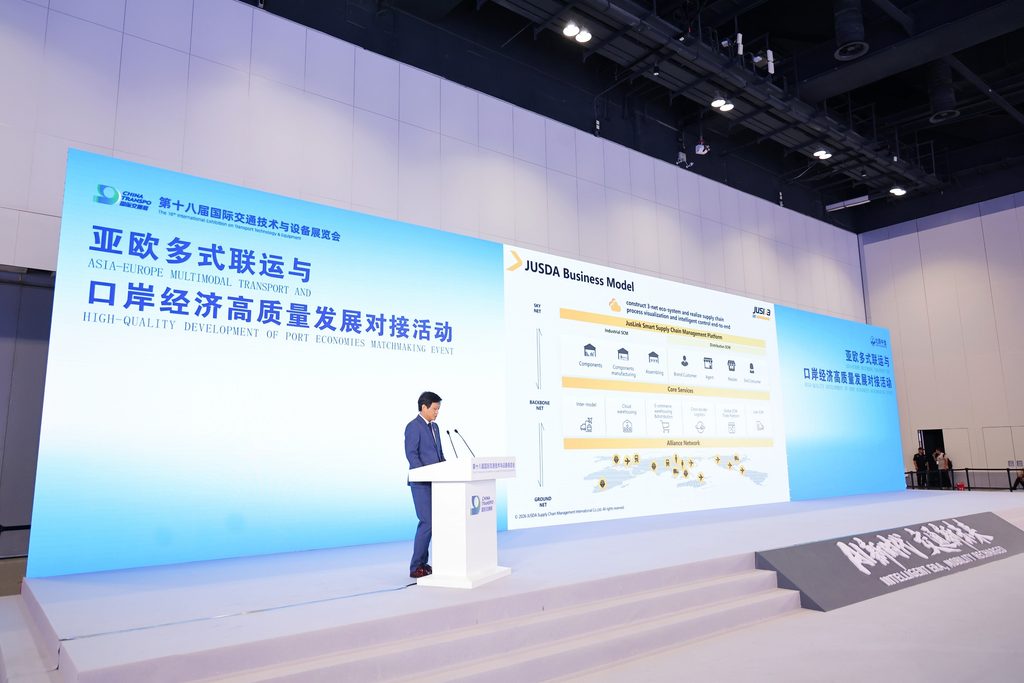
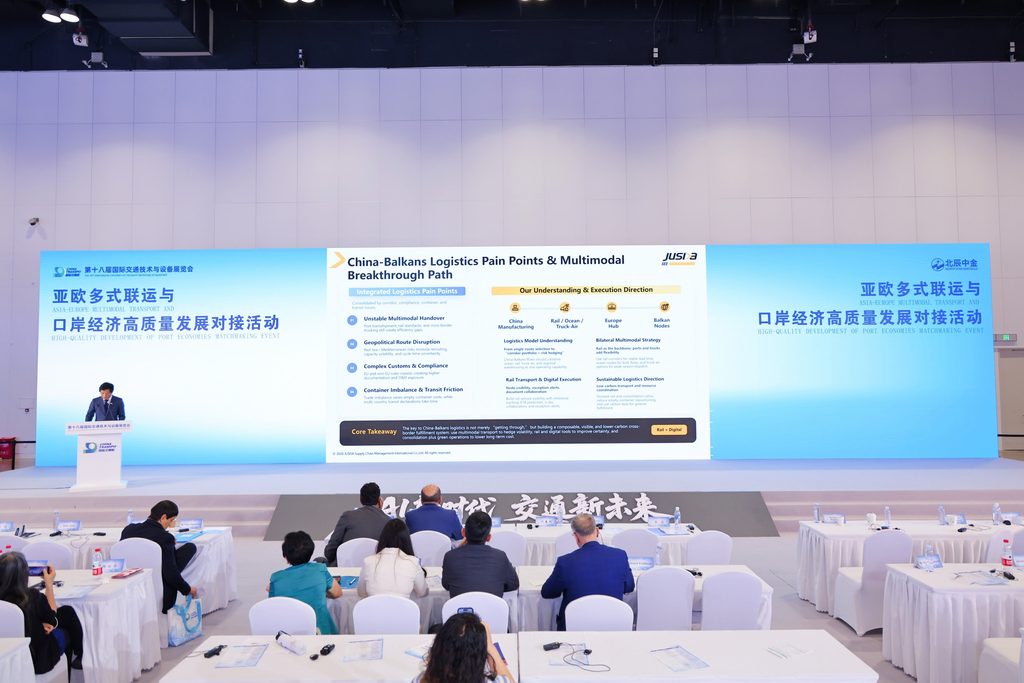
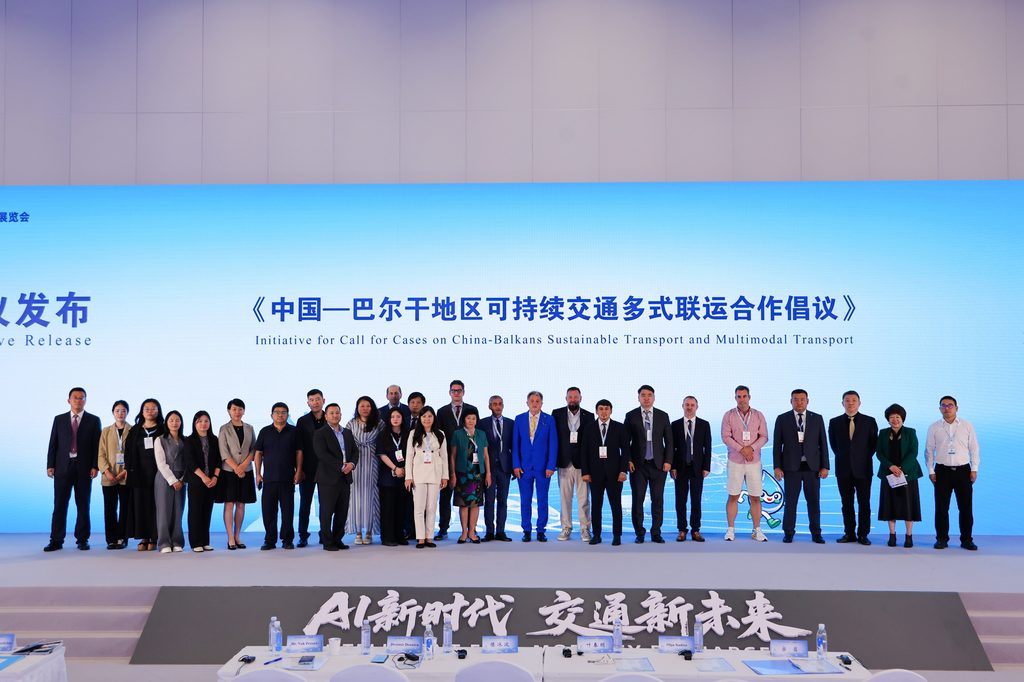
The 18th International Exhibition on Transport Technology and Equipment (CHINA TRANSPO 2026) was held in Beijing from August 26 to 28, 2026. A concurrent event on the high-quality development of Eurasian multimodal transport and port economies brought together representatives from government agencies, industry associations and businesses across China and Europe. JUSDA’s European arm, JUSDA SEE, participated in the event and held in-depth discussions with institutions and delegates from Serbia, the Czech Republic and other European countries. The exchanges focused on China-Europe multimodal transport, coordination between ports of entry and industrial supply chain cooperation, strengthening ties and further expanding JUSDA’s partnership network across Europe.
Opening a route does not mean the supply chain is fully connected. For manufacturers, the value of a cross-border corridor is not measured by how quickly a single shipment arrives, but by whether lead times are predictable, exceptions can be addressed early and costs remain under control. As geopolitical risks, capacity volatility and regulatory differences become the norm, China-Europe logistics is shifting from simply reaching a destination to delivering reliably.
“The key to China-Balkans logistics is not merely moving goods through customs and across borders, but building a flexible cross-border fulfillment system with end-to-end visibility and the resilience to withstand disruption.”
Free Trade Opens the Market; Logistics Determines Whether the Benefits Materialize
The China-Serbia Free Trade Agreement entered into force on July 1, 2024. Under the agreement, the two countries will gradually eliminate tariffs on 90% of tariff lines, with more than 60% becoming tariff-free on the day the agreement took effect. Once fully implemented, zero-tariff treatment will cover approximately 95% of import value. It is also China’s first free trade agreement with a Central and Eastern European country.
Lower tariffs, however, do not automatically translate into business gains. Errors in certificates of origin, HS code classification, commercial documents or shipment data can trigger inspections, document amendments and container detention, disrupting production and inventory planning. The free trade agreement provides the regulatory foundation; the supply chain must turn those rules into reliable delivery capabilities that work in day-to-day operations.
Serbia’s Value Lies in Organizing a Regional Network
Although landlocked, Serbia is connected by rail and road to ports including Rijeka, Koper, Bar and Piraeus, providing access to the Balkans, Central and Eastern Europe, and the wider EU market. The convergence of ocean, rail and road transport with regional warehousing creates the conditions for cargo consolidation, bonded storage, regional distribution and production support.
Location is only the starting point. Serbia has its own customs and regulatory requirements, while goods entering the country for onward distribution to neighboring markets may be subject to multiple regulatory regimes, transit guarantees, carriers and terminals. Only by coordinating these nodes can geographic advantage be converted into supply chain efficiency.
Since establishing its first European vendor-managed inventory (VMI) warehouse in the Czech Republic in 2000, JUSDA has steadily developed its European operating network. With Serbia serving as its operational and distribution hub in Southeast Europe, JUSDA SEE provides cross-border transport, warehousing and distribution, bonded services, JIT/JIS inbound logistics and production support. Its value lies not simply in moving goods through Serbia, but in turning cross-border flows into reliable regional service capabilities.
The Core of Multimodal Transport Is Managing Uncertainty
China-Europe transport currently faces multiple sources of uncertainty, including cargo transfers at ports, differing rail standards, truck queues at border crossings, route diversions, capacity volatility and regulatory differences. A breakdown at any one node can turn a local issue into a delay across the entire chain.
There is therefore no single optimal route for every shipment. Ocean freight is suited to high-volume transport, rail offers comparatively stable transit times on trunk routes, and road provides flexibility for regional distribution. Effective multimodal transport requires a portfolio of routes that can be adjusted as market conditions change, based on lead time, cost, capacity and regulatory requirements.
Supply chain management is consequently moving beyond optimizing individual transport legs to managing the entire journey. When one route is disrupted, the ability to switch transport modes or regional nodes determines whether the risk is contained locally or passed on to customer deliveries.
Solving Problems Before Shipments Reach the Border
Many cross-border delays occur at the border, but their underlying causes often arise at the point of origin. JUSDA’s integrated customs clearance approach treats documentation, physical transport and digital data as a single process: accurate data is prepared before departure, documents are submitted before the goods reach the border, and shippers, carriers, customs brokers, terminals and consignees work from consistent information.
The JusLink global supply chain management platform provides milestone tracking, estimated-time-of-arrival management, electronic document collaboration and exception alerts, giving all parties a consistent view of shipment status. Digitalization does not suddenly make goods move faster, but it allows problems to be identified earlier and gives companies more time to adjust transport, customs clearance, production and inventory plans.
JUSDA recommends beginning with pilot shipments and using operational data to evaluate transport reliability, customs clearance efficiency, total cost and carbon emissions before gradually scaling proven routes and processes. Sustainable transport must likewise be embedded in operations by increasing the share of rail where appropriate, improving load factors, reducing empty runs, using reusable packaging and continuously tracking emissions. Lower costs and lower emissions often result from the same operational improvements.
JUSDA now operates more than 155 service locations worldwide, with over 2.5 million square meters of warehousing and distribution space and more than 2,000 international transport routes. By combining its global network, local operating capabilities in Europe and JUSDA SEE’s Southeast European team, JUSDA is advancing the China-Serbia-Europe corridor from basic route availability toward an operating model built on clear standards, transparent data and proactive exception management. As Chinese companies move from exporting products to building regional operations, logistics providers are also evolving—from delivering a single transport leg to orchestrating supply chain networks that support sourcing, production, inventory and sales. Serbia is emerging as a critical hub for this network across the Balkans and Central and Eastern Europe.