High-Profile Dialogue at the Czech Embassy: JUSDA Assumes Control
High-Profile Dialogue at the Czech Embassy: JUSDA Assumes Control of European Giant's
Supply Chain, Unlocking the Western Balkans Trade Artery
[Introduction] With the accelerated restructuring of global supply chains, "Nearshoring" is evolving from a trending concept into the practical action of multinational companies. As a key geopolitical node connecting Central and Eastern Europe with the vast EU market, the strategic logistics position of the Western Balkans is being re-evaluated. Recently, a high-level industry dialogue held at the Embassy of the Czech Republic in Serbia not only validated this macro trend but also revealed to the industry JUSDA's latest business practices in deeply integrating the core supply chains of local giants in the European hinterland.
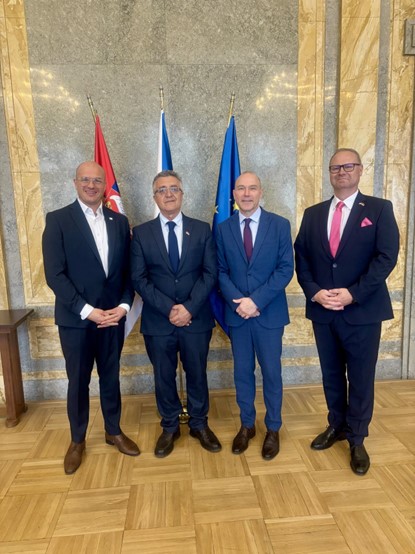
Government-Enterprise Consensus: The Western Balkans is Becoming Europe's New Logistics Hub
On March 17, the "Strengthening EU-WB Logistics Collaboration" industry dialogue, co-hosted by JUSDA Europe and the Czech Embassy, was held in Belgrade. This event went beyond routine corporate promotion, bringing together key decision-makers from both multinational government and corporate sectors.
H.E. Jan Bondy, Ambassador of the Czech Republic to Serbia, and Goran Kanjevac, State Secretary of the Ministry of Construction, Transport and Infrastructure of Serbia, attended and delivered speeches. The high-level interaction between government and enterprise established the tone of this dialogue: in the current complex economic and trade environment, developing regional logistics infrastructure and opening supply chain corridors between the Western Balkans and the EU have become crucial for driving regional economic growth.
Petr Škoda, General Manager of JUSDA Europe, shared the company's strategic roadmap in Europe during the meeting. Through this dialogue, the competition among logistics companies in the European market is no longer limited to a singular contest over mainline transportation capacity. Instead, it has entirely shifted towards comprehensive supply chain takeover and operational capabilities based on geopolitical advantages.
Breaking Logistics Boundaries: Moving Towards Deep "Commercial-Logistics Synergy"
When discussing how logistics translates into industrial competitiveness, a strategic partnership disclosed by Roman Kratochvil, General Manager of Beohemija (a subsidiary of the renowned European holding group CE Industries), became the focal point of the event.
Driven by the need for supply chain stability and localized expansion, Beohemija has transformed its traditional supply chain management model. The company has opted to outsource its warehousing and logistics operations, binding deeply with JUSDA. In the future, we will fully take over the logistics and transportation operations for its core fast-moving consumer goods (FMCG) and household chemical brands across the entirety of Serbia.
The Underlying Logic: Heavy Investment in Infrastructure and Full-Link Digital Integration
The confidence to comprehensively take over the core supply chain of a local European giant stems from JUSDA's deep-rooted localization and solid digital foundation in the region.
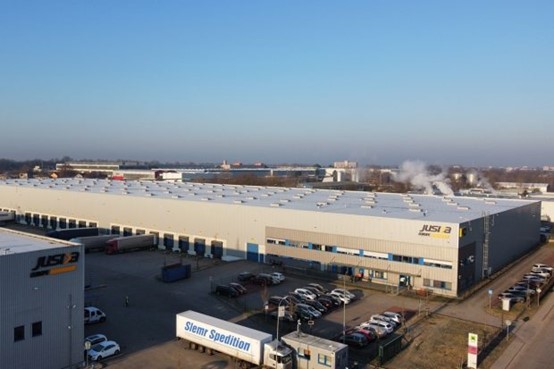
It is understood that to meet the market demand for shortening supply chains and enhancing operational flexibility, JUSDA has gradually taken over the key logistics processes of Beohemija's production plant in Zrenjanin, Serbia. The more critical barrier to entry lies in the interconnection of underlying data and business flows. In this project, JUSDA not only undertakes the physical flow of goods—such as internal logistics, import/export transportation, and domestic distribution—but also achieves deep system integration. The logistics chain is centrally dispatched through JUSDA's unified digital system and is directly integrated with Beohemija's ERP system.
This highly digitalized and centrally managed operational mechanism enables precise visualization of inventory data and significantly enhances the agility of the supply chain. This effectively alleviates the pressure on the production plant and ultimately achieves quantifiable delivery cost savings by optimizing transportation flows.
[Conclusion]
From warehousing infrastructure investments to the underlying direct connection of core systems, the partnership between JUSDA and Beohemija provides a highly valuable reference model of nearshore supply chain restructuring for enterprises expanding into Europe. As globalization moves towards a new stage of regionalized and refined operations, logistics companies equipped with such full-link, integrated delivery capabilities are gradually gaining a greater say in this evolving supply chain landscape.