Building Trust Across Global Supply Chains: Five JUSDA Hubs Complete SGS Multi-Standard Audits
2026.09.07
As supply chains become more interconnected and operationally complex, the central challenge for logistics providers is clear: how can they deliver greater certainty in an increasingly uncertain environment?
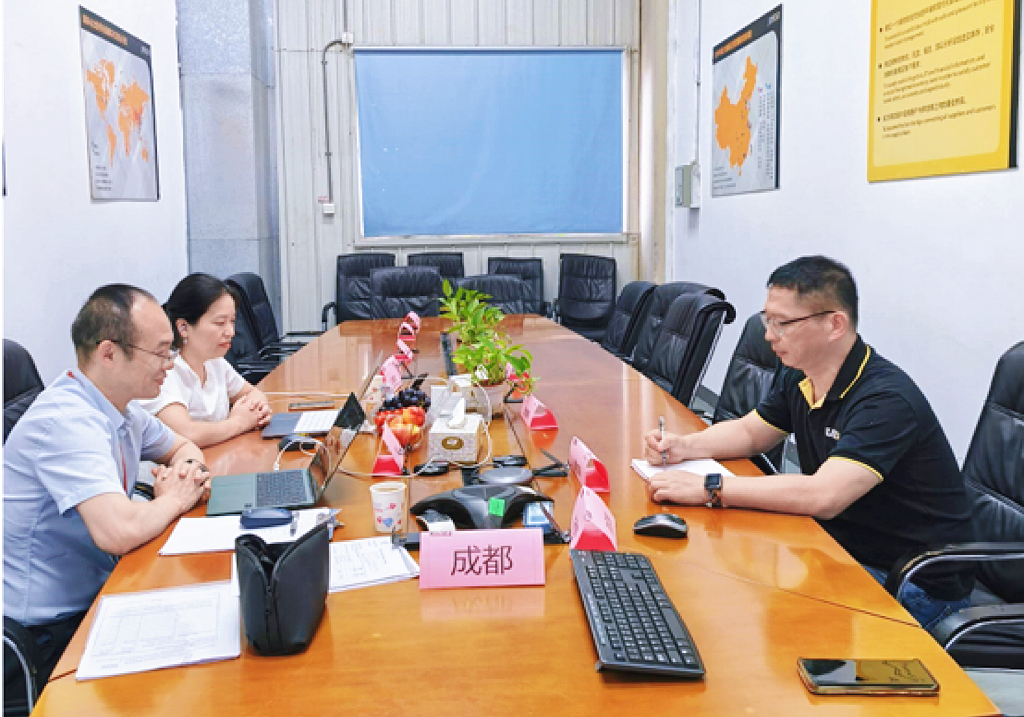
JUSDA’s five key operating hubs in Shenzhen, Chengdu, Taiyuan, Tianjin and Zhengzhou have successfully completed a series of audits and conformity assessments conducted by SGS. The scope covered ISO 28000, TAPA Facility Security Requirements (FSR) and Trucking Security Requirements (TSR), as well as C-TPAT-related requirements.
The results provide independent validation of JUSDA’s approach to supply chain risk management, warehouse and transportation operations, and cross-border trade compliance. More broadly, they demonstrate how consistent standards can be applied across multiple locations and operating environments.
Turning Operational Capability into Verifiable Trust
Founded in 1878, SGS is a globally recognized testing, inspection and certification company. Its long-standing technical expertise, international service network, and commitment to independence and impartiality have made its assessments widely respected across industries and markets.
The SGS review of JUSDA’s five hubs went beyond a routine check of existing procedures. It provided an independent and consistent framework for evaluating how management systems and operational controls function in practice.
This matters because much of supply chain management takes place beyond the customer’s direct view. Independent assessment turns operational capability into evidence that customers and partners can understand, compare and verify. In a multi-party supply chain, that evidence becomes a valuable foundation for trust.
Greater Consistency and Predictability for Customers
For customers, the value of a supply chain partner is not measured only by warehouse capacity, transport coverage or geographic reach. What matters is whether service quality can remain consistent across different locations, teams and operating conditions.
The successful completion of these audits across five hubs reflects JUSDA’s commitment to applying common management principles throughout its network. The goal is not to make every site identical, but to ensure that each operates within a consistent framework for risk management, service continuity and ongoing improvement.
This gives customers a clearer basis for evaluating JUSDA’s capabilities and can reduce the need to reassess operational standards from the beginning whenever a business expands into a new region or moves between locations.
Standards cannot eliminate every supply chain risk. They can, however, make the way risks are identified, managed and addressed more transparent and predictable. For manufacturers, this supports more reliable production planning, inventory management and market fulfillment.
A Common Language for Collaboration
Modern supply chains depend on close coordination among logistics providers, carriers, suppliers, customs specialists, technology partners and other service providers.
International standards create a common language for that collaboration. They help establish shared expectations, clarify responsibilities and provide a consistent reference point for service quality and compliance.
For JUSDA and its ecosystem partners, this can reduce ambiguity, support more efficient onboarding and improve coordination across companies, regions and operational stages. It also helps move collaboration beyond reliance on individual experience toward more transparent and repeatable working relationships.
The result is not simply better compliance. It is a stronger foundation for long-term cooperation and more efficient end-to-end execution.
A Broader Shift in Supply Chain Competition
Supply chain capabilities have traditionally been measured by physical assets: the number of warehouses, transport routes, vehicles or markets covered.
Those resources remain important, but they no longer tell the whole story. As supply chain networks expand, competitiveness increasingly depends on whether distributed operations can be governed consistently, whether services can remain stable through change, and whether successful practices can be replicated across locations.
The completion of multi-standard assessments across five JUSDA hubs offers a practical example of this shift. It shows how internationally recognized frameworks can extend beyond an individual facility and support the governance of a broader operating network.
For the industry, wider adoption of transparent and verifiable standards can improve service comparability, reduce trust barriers among supply chain participants and encourage competition based on management quality, resilience and delivery performance—not resource scale alone.
From Audit Results to Long-Term Confidence
Certificates and statements of conformity record the outcome of an assessment at a particular point in time. Their deeper value lies in how the underlying standards are translated into consistent, everyday performance.
For customers, that means greater confidence in delivery continuity. For partners, it means clearer expectations and more efficient collaboration. For the industry, it provides a practical reference for managing multi-location supply chain operations.
By completing these SGS-led assessments across five key hubs, JUSDA has strengthened more than an internal management baseline. It has reinforced a foundation of trust that connects customers, partners and the wider supply chain ecosystem.
Standards build trust, and trust enables stronger supply chains. JUSDA will continue translating professional expertise into more predictable delivery, more effective collaboration and more resilient supply chain operations worldwide.