Hainan Port Closure: The Next Supply Chain Race Has Begun
JUSDA’s 20 Years of Customs Expertise, Built for First-Mover Advantage
On December 18, 2025, the Hainan Free Trade Port officially launched island-wide “port closure” operations. On the same day, Yangpu Port cleared its first shipment of “zero-tariff” petrochemical raw materials—signaling that Hainan is moving from policy design to institutionalized execution.
This is more than a milestone for China’s high-level opening-up. It is a reset of how supply chains will be designed, governed, and priced.
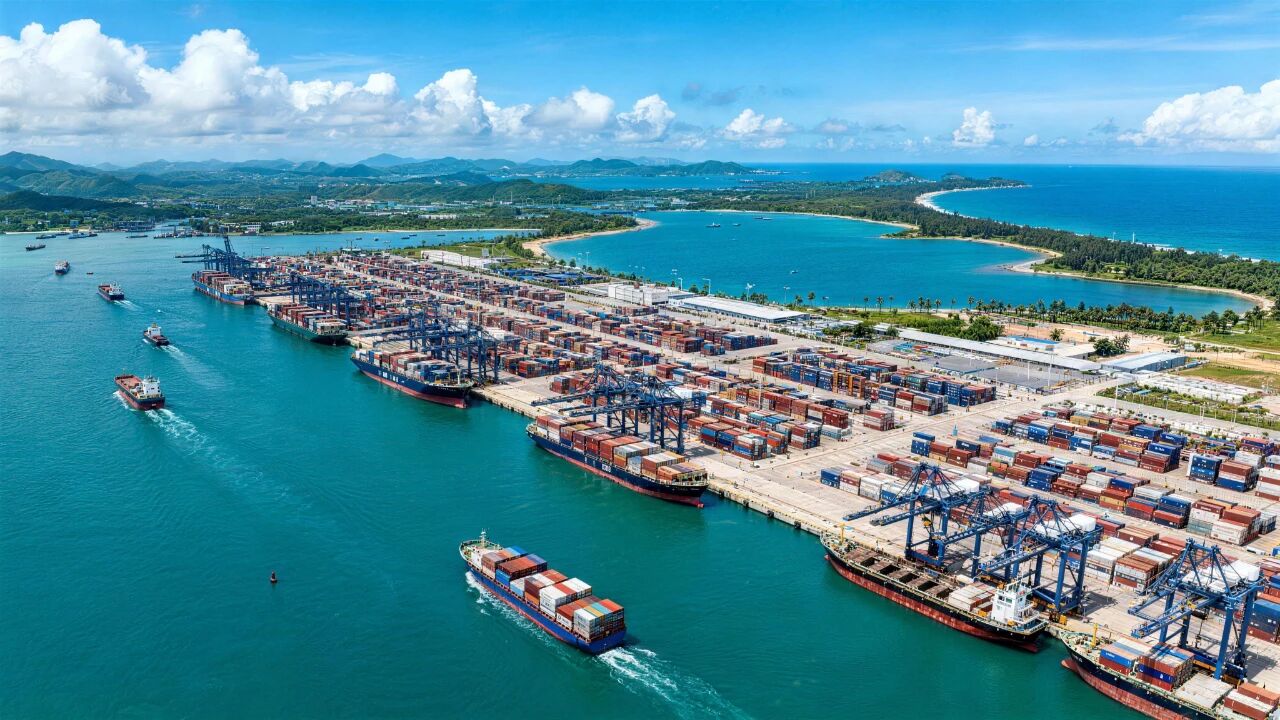
Port closure is not simply about “faster clearance” or “lower cost.” It introduces a “domestic territory, outside customs” framework that reshapes how companies plan procurement, production, warehousing, and distribution. In this new rulebook, competitiveness is no longer defined by being faster or cheaper—but by being more resilient, more governable, and more predictable.
As the Customs Specialist at JUSDA International Supply Chain, puts it:
“The biggest shift is moving from execution efficiency to compliance and data governance. It’s not a process tweak—it’s a capability redesign, from point services to end-to-end coordination and governance.”
New rules: In Hainan, a data error can hurt more than a delayed vessel
Under the “first-line opening, second-line control” model, the supply chain focus is shifting from moving goods to managing data.
“In the past, the biggest risk was delayed cargo,” the Customs Specialist noted. “Today, the biggest risk is a data mistake. Misclassification in your system or a mismatch in the electronic ledger can immediately impact eligibility for the ‘30% value-added, duty-free domestic sales’ benefit.”
That’s why digitalization is no longer optional. It is the admission ticket.
To operate—and to capture the upside—companies need systems that can translate regulatory requirements into executable workflows, and keep business flows and electronic ledgers fully reconciled. This is how policy complexity becomes measurable profit, not operational risk.
The 30% value-added opportunity: Supply chains must not only move fast, but design right
As “second-line control” becomes the operational center of gravity, competition is shifting from momentary speed to long-term stability.
Success depends on whether companies can connect the full chain: declaration → regulatory status → electronic ledger → inventory strategy → delivery SLA.
In practice, the “30% value-added, duty-free domestic sales” policy is redefining Hainan from a logistics node into a value-added manufacturing and supply chain reconfiguration platform. The strategic question is no longer “How fast can you ship?” but “How well can you design the chain?”
That includes: BOM breakdown, value-added calculation, origin rules alignment, traceability, and audit readiness—now part of the delivery system itself.
Why this matters for customers: compliance is becoming the first filter
Customer decision-making is changing fast. Price and speed still matter, but compliance capability increasingly becomes the first gate.
In a more sophisticated regulatory environment, digital compliance is no longer a differentiator—it’s a baseline requirement. Customers want partners who understand the rules, operate transparently, keep data consistent end-to-end, and manage risk proactively.
It’s a shift from “physical delivery” to “compliant delivery.”
JUSDA’s approach: turning rules into repeatable execution
With 20 years of lean manufacturing, bonded operations, and VMI experience, JUSDA focuses on making these requirements executable—helping customers operationalize value-added eligibility through:
·value-added rate calculation and governance
·procurement and production-distribution layout optimization
·integration of processing + warehousing coordination
·closed-loop compliance design
For high-tariff, high-value sectors such as electronics, pharmaceuticals, and medical devices, this type of structural optimization can translate directly into profit headroom and more predictable delivery performance.
The bigger picture
Hainan is quickly evolving from a geographic transit point into a strategic hub connecting China and the world. The companies that win won’t simply be those with larger capacity or lower quotes. They will be the ones who can convert complex rules into stable, repeatable, low-risk supply chain execution.
At the end of the day, certainty is becoming the most valuable product in global supply chains.