Inside the Customs and Compliance Journey of Cross-Border Food Trade
As the Mid-Autumn Festival approaches, the humble mooncake offers a useful example for understanding how food moves across borders—and the customs and compliance requirements behind that journey.
A box of chilled custard mooncakes entering Mainland China from Hong Kong or Macao, or a shipment of traditional mooncakes bound for an overseas market, goes through far more than transportation alone.
Market access, manufacturer eligibility, labeling, documentation, customs declaration, inspection and quarantine requirements, and destination-country regulations can all determine whether a shipment reaches the market smoothly and on time.
A mooncake may be a small seasonal product, but behind it lies an entire chain of customs compliance and cross-border coordination.

Before Customs Clearance Comes Market Access
For food products, the first compliance checkpoint often comes well before the shipment reaches the border.
Imported food must comply with China’s food safety laws, regulations and applicable national standards. Depending on the product category, businesses may also need to verify market-access requirements, overseas manufacturer registration, and importer and exporter filing requirements.
From June 1, 2026, the revised Regulations of the People’s Republic of China on the Registration and Administration of Overseas Manufacturers of Imported Food, issued under GACC Order No. 280, came into effect.
Under the revised rules, overseas manufacturers of imported food are required to register in accordance with applicable regulations. China Customs applies differentiated registration and management requirements based on risk-management principles and the risk profiles of different food categories.
The practical implication is clear: if a company waits until the goods are already on board a vessel to verify manufacturer eligibility or market-access requirements, much of the compliance risk has already been created.
For food imports, customs clearance effectively begins before procurement and production are completed.
The same principle applies to exports, with one additional layer: the requirements of the destination market.
Mooncakes containing egg yolk, meat, dairy products or other animal-derived ingredients may face additional sanitary, quarantine or market-access restrictions in certain countries and regions.
A product being permitted for export from China does not necessarily mean it will be accepted at destination.
Exporters therefore need to understand not only how to ship a product out, but also what the destination market will allow in
.
What Happens Once Food Reaches the Border?
Once a shipment reaches the port of entry, customs declaration is only one part of the process.
Product classification is an important starting point. An HS code determines more than the applicable tariff rate; it may also be linked to specific regulatory, licensing, inspection or quarantine requirements.
Commercial contracts, invoices, packing lists, bills of lading, certificates of origin and other supporting documents must accurately reflect the actual transaction.
In practice, many customs delays are not caused by a missing document, but by inconsistencies between documents.
Differences in product descriptions, specifications, quantities, country of origin or manufacturer information can trigger additional review.
Food products also differ from many industrial goods in another important respect: completing a customs declaration does not mean that all regulatory requirements have been satisfied.
Under China’s current regulatory framework, conformity assessment for imported food may include document review, on-site inspection, supervisory sampling and testing, among other measures.
Only food products that meet the applicable requirements may be released for import.
This is also why there is no single answer to the question:
“How long does food customs clearance take?”
Actual lead time depends on the product category, documentation quality, regulatory requirements, and whether the shipment is selected for inspection or testing.
What ultimately determines clearance time is a combination of product risk, documentation accuracy and regulatory procedures.
Label Compliance Is Also a Critical Part of the Process
For imported prepackaged food, labeling is not simply a packaging or design issue. It is an important part of regulatory compliance.
China abolished the filing requirement for labels of first-time imported prepackaged foods in 2019. However, the removal of the filing process did not reduce the responsibility of importers.
Importers remain responsible for ensuring that Chinese-language labels comply with applicable laws, regulations and national food safety standards, while Customs continues to conduct label inspections as part of its supervision of imported food.
For businesses, this means label compliance should be reviewed as early as possible—ideally during procurement, production and packaging rather than after the goods arrive at port.
Information such as product name, ingredients, net content, production date, shelf life, storage conditions and the responsible domestic entity must comply with the applicable requirements.
The key issue today is no longer “label filing,” but “label compliance.”
For Seasonal Products, Time Becomes Part of Compliance
Mooncakes have another defining characteristic: a limited commercial window.
For an ordinary product, a delay of several days may mainly affect inventory turnover. For a Mid-Autumn Festival product, the same delay can mean missing the core selling period altogether.
China Customs Announcement No. 138 of 2025, effective July 7, 2025, further standardized pre-declaration inspection and quarantine applications for export goods.
Under the announcement, applicants are required to submit inspection and quarantine applications to Customs at the place of production or consolidation. Export goods should generally be submitted for inspection and quarantine seven days before customs declaration or shipment. Products requiring longer inspection or quarantine procedures need additional lead time.
For highly seasonal products such as mooncakes, that advance planning is particularly important.
Companies need to work backward from the required market-entry date and align production, inspection and quarantine, customs declaration, international transportation and destination clearance within the same timeline.
In seasonal food trade, compliance risk can quickly become both a time risk and a commercial risk.
The Details That Most Often Cause Delays
Many food shipments are delayed not by highly complex regulatory issues, but by details that were not addressed early enough.
A shipment may already be in production before a company discovers that the product or manufacturer does not meet market-access requirements.
Information on invoices, packing lists and supporting certificates may not match.
Label compliance may only be reviewed after the cargo has arrived.
An exporter may understand China’s export procedures but fail to check the destination market’s restrictions on animal-derived ingredients.
Individually, these issues may appear manageable. Once they occur inside an international supply chain, however, their impact can multiply through storage costs, transportation delays and missed sales windows.
This is also changing how companies think about customs.
Traditionally, customs was often viewed as an operational step performed once cargo reached the border. As manufacturing and sales networks become increasingly global, customs and trade compliance are becoming capabilities that need to be integrated much earlier into procurement, logistics and fulfillment.
When Customs Becomes a Global Coordination Challenge
For a company handling a limited number of shipments, customs operations can often be managed through experience and manual processes.
But once operations extend across multiple ports and countries, the task changes significantly.
Companies are no longer managing individual customs declarations. They are managing large volumes of HS codes, regulatory requirements, documentation, logistics milestones and exceptions across multiple jurisdictions.
Reducing the information gaps between these processes has therefore become a major focus of customs digitalization.
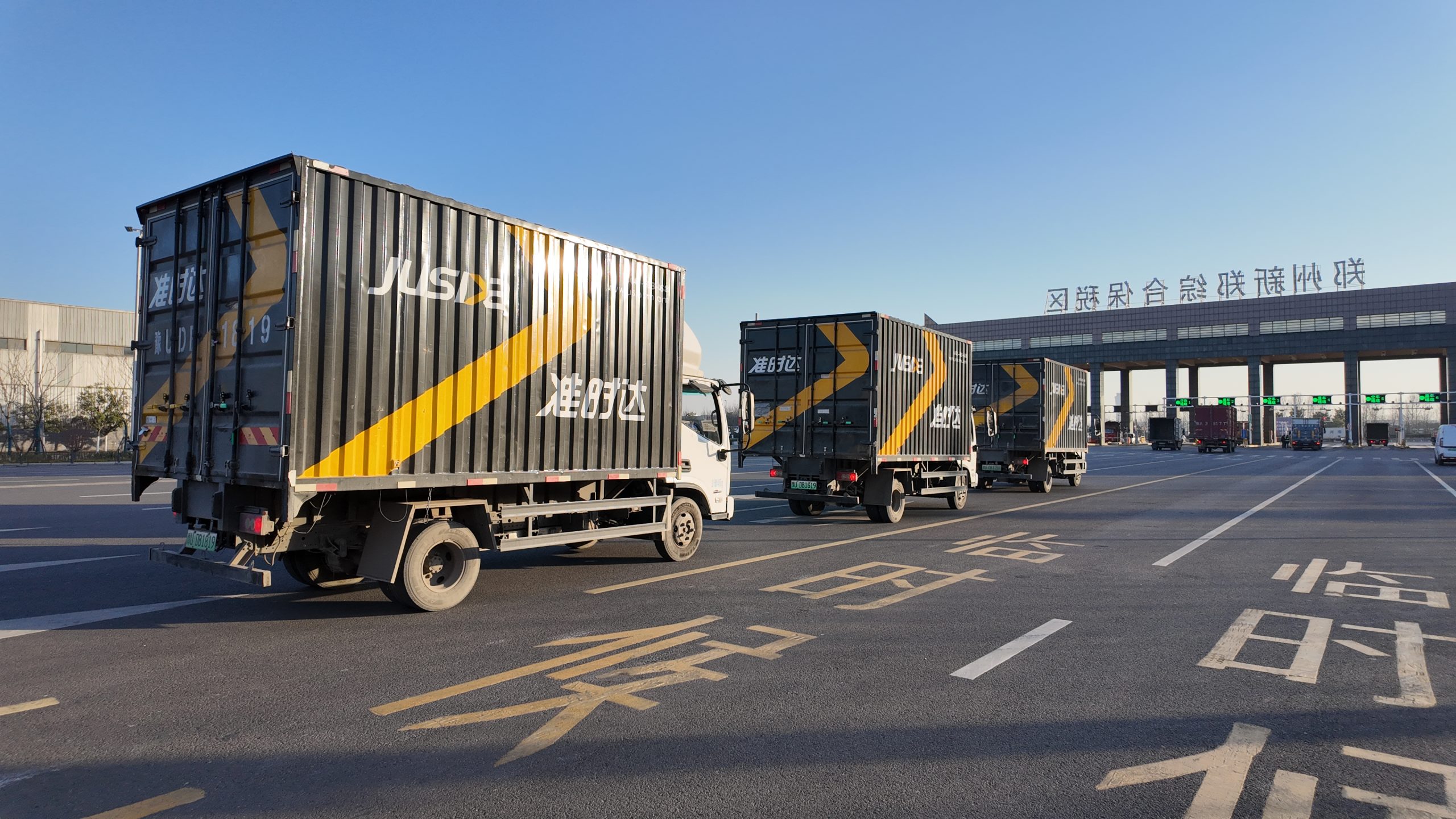
This is the logic behind JusTrade, a wholly owned subsidiary of JUSDA specializing in smart customs clearance and digital supply chain services.
Its proprietary ClickClear intelligent customs clearance platform integrates order management, product data, customs documentation, settlement and logistics coordination into a unified digital workflow.
OCR and large language model technologies are also used to support document recognition, customs-document preparation and data validation, helping reduce repetitive manual work and improve declaration accuracy.
The goal is not simply to prepare customs declarations faster.
More importantly, customs data becomes connected with logistics execution and supply chain visibility.
JusTrade’s services cover ocean, air, road and rail transportation, as well as a broad range of customs scenarios including bonded operations, processing trade and cross-border e-commerce.
Its service network extends to more than 50 countries and regions, supporting a model of “one-point engagement, global response.”
Food trade is a particularly relevant example of where this capability matters. Regulatory requirements are complex, lead times are sensitive, and a single data inconsistency can affect the entire fulfillment chain.
Customs Is Becoming an Upstream Supply Chain Capability
A mooncake may travel only a few thousand kilometers from factory to consumer, but its journey connects production, compliance, customs, transportation and sales.
From that perspective, customs declaration is only one step.
What ultimately determines successful cross-border fulfillment is whether a company can complete product classification, market-access checks, manufacturer verification, label review and document preparation before shipment—and allow that information to move together with the goods.
Logistics answers the question: “How do we move the goods?”
Customs and compliance answer: “Can the goods enter the market?”
As global supply chains become more complex, the boundary between the two is becoming increasingly blurred.
For businesses, more efficient customs clearance rarely begins at the border.
It begins earlier—with the right product classification, accurate documentation, compliant labeling and a sound compliance decision.

JUSDA Customs Capabilities
JusTrade, a wholly owned subsidiary of JUSDA, specializes in smart customs clearance and digital supply chain services. Its network covers more than 50 countries and regions, with annual import and export customs declarations exceeding one million for multiple consecutive years.
Powered by the proprietary ClickClear platform, JusTrade provides integrated customs and trade compliance services for more than 1,000 companies, including Foxconn, across industries such as semiconductors, consumer electronics and precision instruments.
Note: Regulatory requirements vary by product category, origin, trade model and destination market. Businesses should always refer to the latest requirements issued by the relevant customs and regulatory authorities.