JUSDA Joins 2026 Green Supply Chain and Corporate Climate Action Forum to Advance Low-Carbon Logistics
2026.11.05
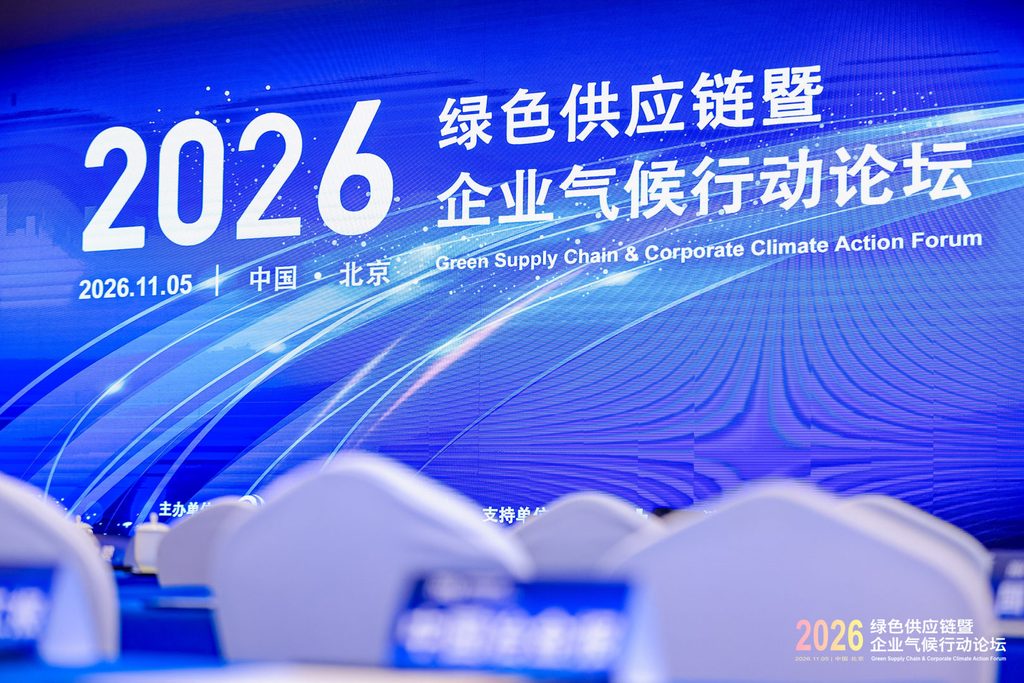
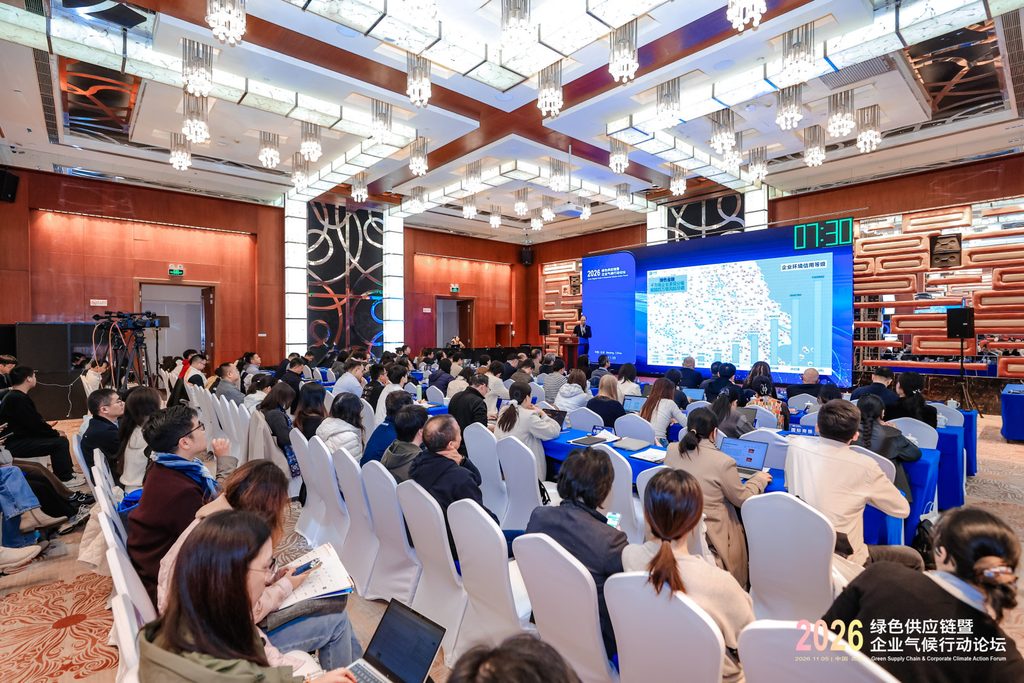
On November 5, the 2026 Green Supply Chain and Corporate Climate Action Forum was held in Beijing, hosted by the Institute of Public & Environmental Affairs (IPE) with support from the International Council on Clean Transportation (ICCT).
The forum brought together policymakers, global brands, logistics providers, research institutions, and environmental organizations to discuss green supply chain development, corporate carbon management, and collaborative approaches to reducing emissions across industrial value chains.
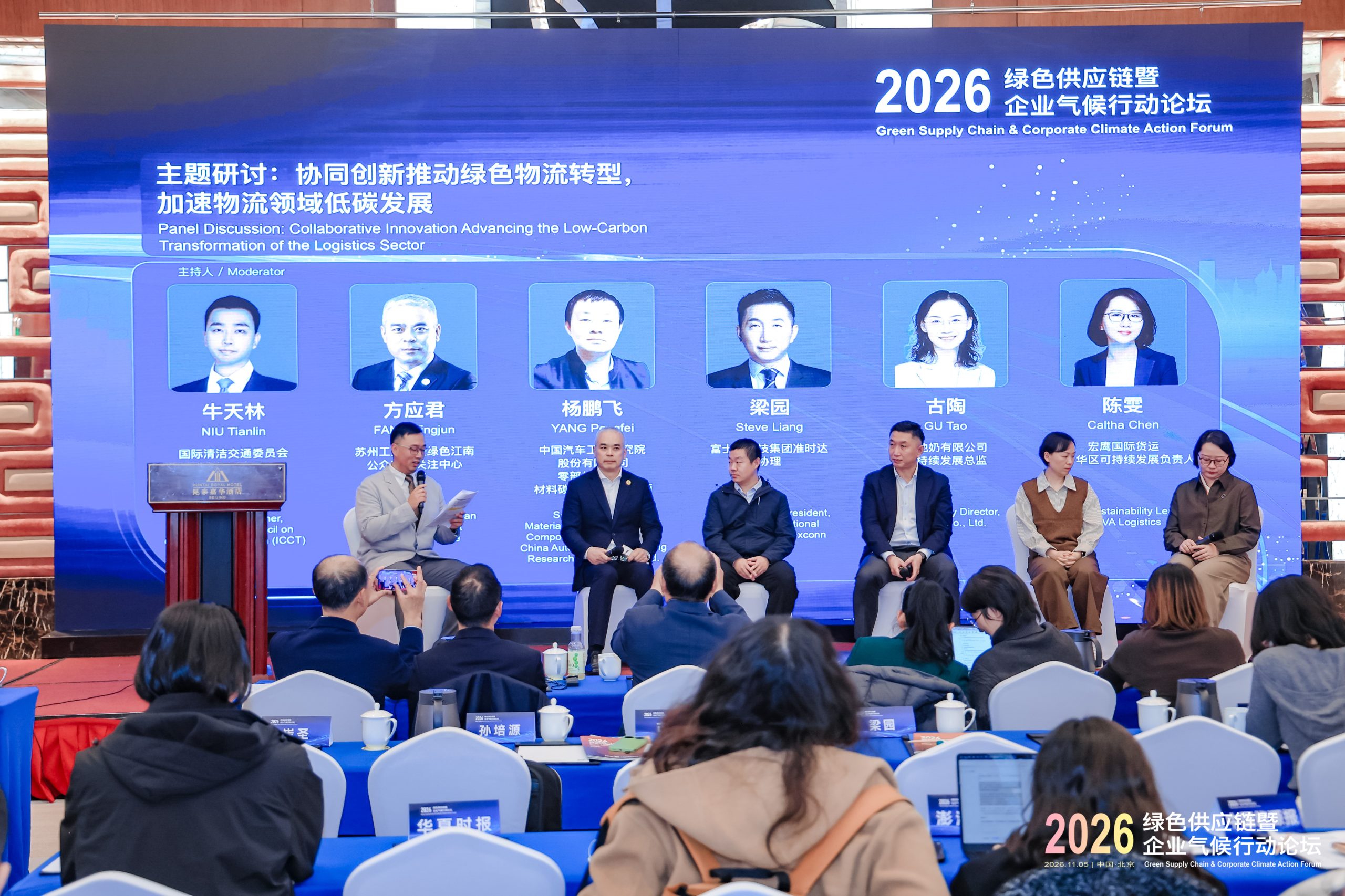
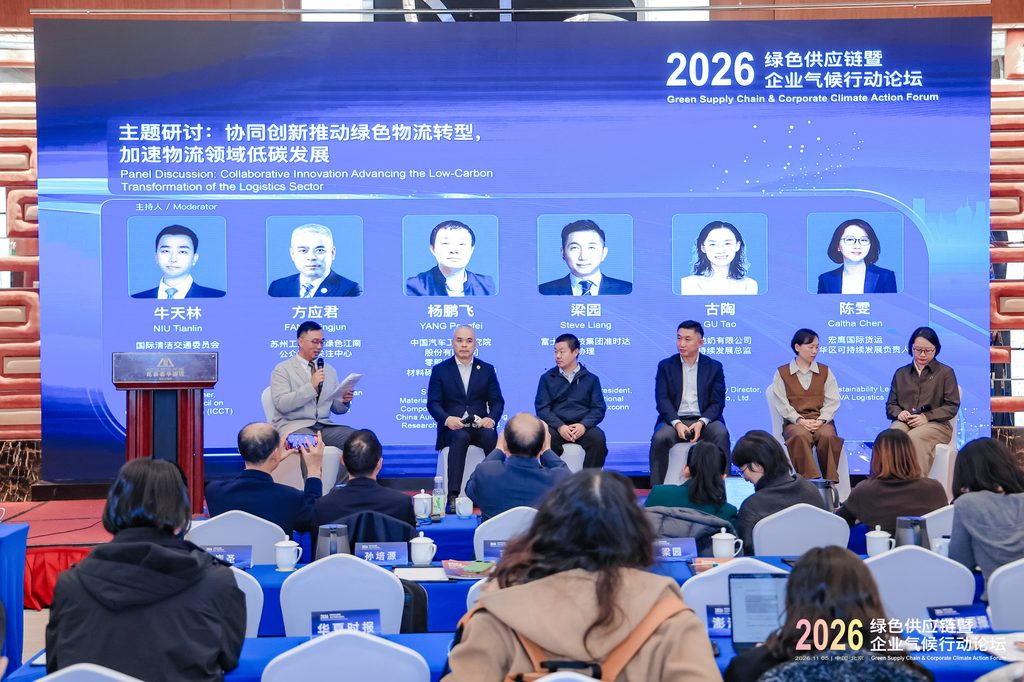
Steve Liang, Assistant Vice President at JUSDA, joined the panel discussion, “Collaborative Innovation for Green Logistics Transformation and Accelerating Decarbonization in the Logistics Sector.” Alongside representatives from the China Automotive Engineering Research Institute, CEVA Logistics, and Green Jiangnan, he shared perspectives on cleaner transportation technologies, operational challenges, and the conditions needed to scale low-carbon logistics solutions.
The forum also featured the release of IPE’s 2026 CITI Green Supply Chain Index and CATI Corporate Climate Action Index research reports, highlighting the growing importance of environmental transparency, carbon accountability, and measurable climate action across supply chains.
As climate expectations extend beyond individual companies to their wider value chains, logistics providers face a critical challenge: how to reduce emissions without compromising delivery reliability, operational efficiency, or cost competitiveness.
Making Low-Carbon Transportation Work for Manufacturing
Drawing on JUSDA’s extensive experience serving the high-tech manufacturing sector, Steve Liang discussed how electric freight vehicles are being introduced across different logistics scenarios.
Manufacturing supply chains involve a wide range of transportation activities, from intra-campus shuttles and component replenishment to long-haul freight and deliveries to airports and seaports. Each presents distinct requirements for distance, vehicle capacity, delivery schedules, and operational flexibility.
JUSDA has been progressively transitioning to electric vehicles for logistics operations within manufacturing campuses and surrounding distribution networks, where predictable routes and shorter distances make electrification more practical.
However, long-haul trucking remains significantly more challenging.
Higher vehicle acquisition and insurance costs, limited driving range, and insufficient charging and battery-swapping infrastructure continue to constrain the wider adoption of battery-electric heavy-duty trucks.
For manufacturers operating time-sensitive supply chains, decarbonization must go hand in hand with service reliability and commercial viability.
The challenge is not simply replacing diesel trucks with electric vehicles. It is building the infrastructure, operating models, and transportation networks needed to make lower-emission freight commercially sustainable.
Extending Decarbonization Across the Supply Chain
Beyond transportation, JUSDA is exploring opportunities to improve energy efficiency and environmental performance throughout its logistics operations.
Steve highlighted the deployment of rooftop solar installations at selected warehouse facilities in China, alongside efforts to explore energy storage integration and extend ESG management expectations to transportation partners, including smaller fleet operators.
He also identified cross-border freight as an emerging opportunity for cleaner transportation.
Two examples discussed were cross-border trucking between mainland China and Hong Kong, and freight movements through Youyi Pass in Guangxi, a major land gateway connecting China with ASEAN markets.
These high-frequency regional trade corridors offer potential opportunities for electric vehicle adoption and more efficient transportation planning. At the same time, customs procedures, infrastructure availability, and cross-border operating requirements introduce additional complexities.
Such examples illustrate why logistics decarbonization requires more than individual technology upgrades. It calls for closer coordination across transportation networks, infrastructure providers, logistics operators, and customers.
JUSDA’s JusLink global supply chain management platform, digital control tower capabilities, and multimodal transportation network spanning ocean, air, road, and rail provide a foundation for improving visibility, coordinating resources, and optimizing logistics operations.
As emissions accounting methodologies and data standards continue to evolve, these digital capabilities can also support the development of more transparent transportation emissions management and informed trade-offs between cost, transit time, service reliability, and environmental performance.
Turning Climate Commitments into Business Value
During the discussion, Steve emphasized that JUSDA’s transition toward cleaner transportation reflects both the Foxconn Group’s ESG commitments and its responsibility to respond to evolving environmental requirements.
He also shared an important observation from customer conversations: manufacturers increasingly expect logistics partners to go beyond simply purchasing cleaner equipment or offering higher-cost green alternatives.
They want solutions that address real operational challenges while delivering meaningful environmental and business value.
This points to a broader shift in logistics decarbonization.
The long-term value of low-carbon logistics will depend not only on the adoption of cleaner technologies, but also on the ability to integrate emissions reduction into everyday supply chain decisions.
Scaling successful initiatives from individual routes to wider logistics networks will require collaboration among shippers, logistics providers, equipment manufacturers, infrastructure operators, and policymakers.
For JUSDA, participation in the forum was an opportunity to bring practical manufacturing supply chain experience into this broader industry dialogue. By exchanging perspectives with cargo owners, researchers, and industry organizations, JUSDA contributed an operational viewpoint to discussions on how emerging technologies, industry standards, and commercial realities can better align.
As global manufacturers place greater emphasis on supply chain emissions, resource efficiency, and resilience, environmental performance is becoming an increasingly important dimension of supply chain competitiveness.
Looking ahead, JUSDA will continue exploring electric transportation, greener warehousing, multimodal logistics, and data-driven supply chain management to help customers pursue their sustainability objectives without losing sight of operational performance.
Moving from isolated emissions-reduction initiatives to coordinated, supply chain-wide improvements is essential to making low-carbon logistics both scalable and commercially viable.
For JUSDA, that transition represents an important part of building more efficient, resilient, and sustainable global manufacturing supply chains.